

A unified process
Conclusion No. 160-KL/TW of the Politburo established a list of 1,060 tasks and responsibilities proposed for transfer to the commune and ward levels, spanning many fields such as civil registration, land, finance, education, health, construction, social security, mediation, urban planning, culture, and judicial-civil registration. The unprecedented workload demands that the commune-level Public Administrative Service Center operate professionally and systematically. After more than two weeks of operation, initial changes have been observed not only in the speed of processing applications but also in service attitudes and the ability to resolve issues directly at the local level.
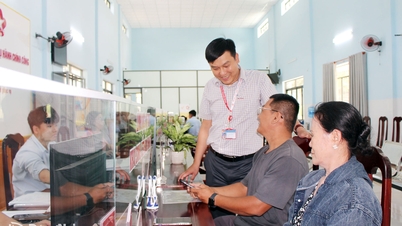
In Minh Tan border commune, the one-stop service model has initially brought about noticeable changes. Every day, from very early in the morning, dozens of people from remote villages arrive at the center to carry out administrative procedures. Mr. Thao Chan Duong, from Tan Son village, was very surprised when he first encountered the new model: "I came to request a replacement birth certificate for my child. Because I don't use a smartphone and didn't know how to log into the public service portal to submit the application, Mr. Duong was quite confused."
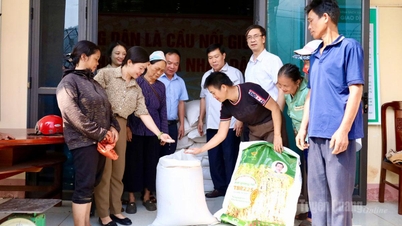
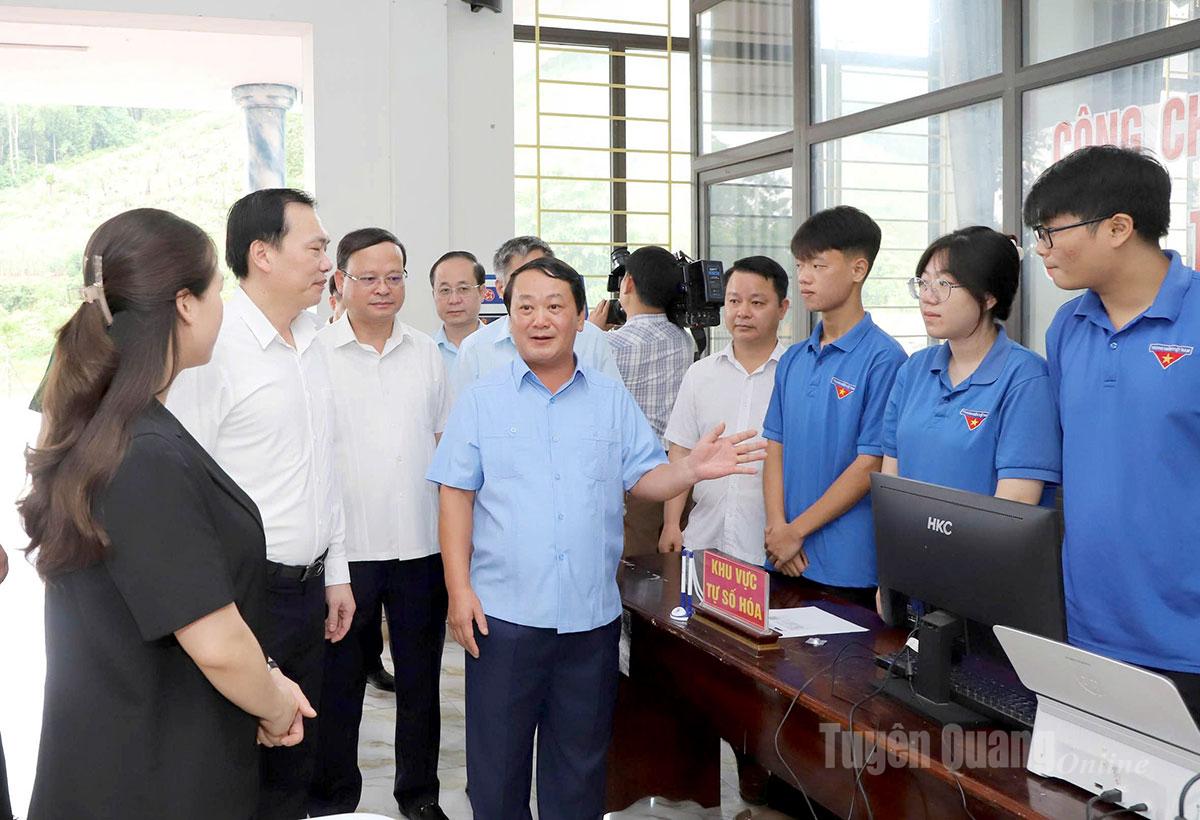 |
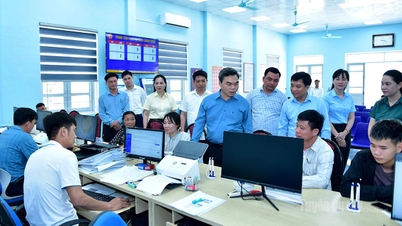
| Comrade Hau A Lenh, Secretary of the Provincial Party Committee, visits and encourages union members assisting people in resolving administrative procedures digitally in Chiem Hoa commune. Photo: Van Nghi |
However, the staff at the Minh Tan Commune Public Administrative Service Center wholeheartedly assisted Mr. Duong in completing the procedures quickly. Mr. Duong shared: "Previously, many procedures required going to the district, which was a long journey and took a whole day. Now, with the new commune and its new methods, it's more convenient for the people. The appointment slip clearly states the date for receiving the results, so I no longer have to go back and forth many times to ask for the information."
The atmosphere at the Binh Xa Commune Public Administrative Service Center is also very bustling with people handling administrative procedures. To ensure smooth government operation, the Vice Chairman of the Commune People's Committee and Director of the Center, Nong Van Viet, regularly inspects and supervises the implementation of tasks at the center, and engages in conversations and dialogues with the people to help them better understand the new government model.
Mr. Nong Van Viet shared: “With many new tasks transferred from the district level to the commune level, it has greatly facilitated the people, shortening distances, saving time, and reducing costs. We have directed the commune's staff to strive to overcome difficulties and complete the tasks, delivering results to the people on time and ahead of schedule.”
In Minh Xuan ward, where the population after the merger exceeds 70,000 people, the workload is enormous. In just the first 10 days of operation, the Center received approximately 3,000 citizens, with some days reaching up to 400. Deputy Director Nguyen Manh Cuong stated: “14 officials and civil servants are assigned according to their expertise, and two information desks are set up right at the entrance to assist citizens in classifying procedures and checking documents early, thereby significantly reducing processing time.”
Working while queuing
Despite initial facilitation, the implementation of the "one-stop shop" model at the commune level still faces many obstacles. The new system must operate under conditions where infrastructure is not yet fully synchronized, technology is still weak, and personnel are not properly trained... As many local officials put it: "We're working while queuing, and we're dealing with problems as they arise."
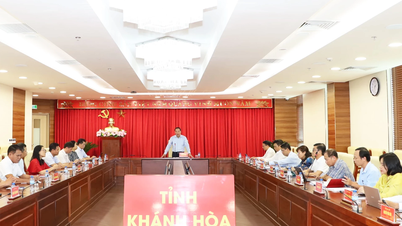
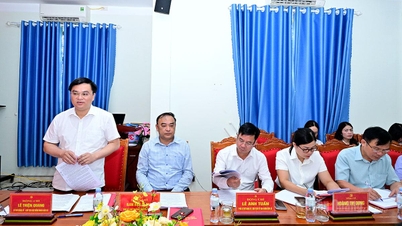
Having clearly identified the initial difficulties, the Provincial Party Standing Committee established 22 inspection teams to review the leadership, direction, and implementation of political tasks after the merger in communes and wards, including inspections of the operation of the commune-level Public Administrative Service Centers.
According to observations from the inspection team of the Provincial Party Standing Committee in Yen Nguyen commune, many offices at the Center are cramped, and the electrical and network systems are frequently overloaded. Equipment such as printers, scanners, and queue number display screens are either missing or malfunctioning. Many staff members have to take on multiple roles and have not received specialized training in new areas such as land management, justice, and civil registration, leading to difficulties in adapting to new tasks.
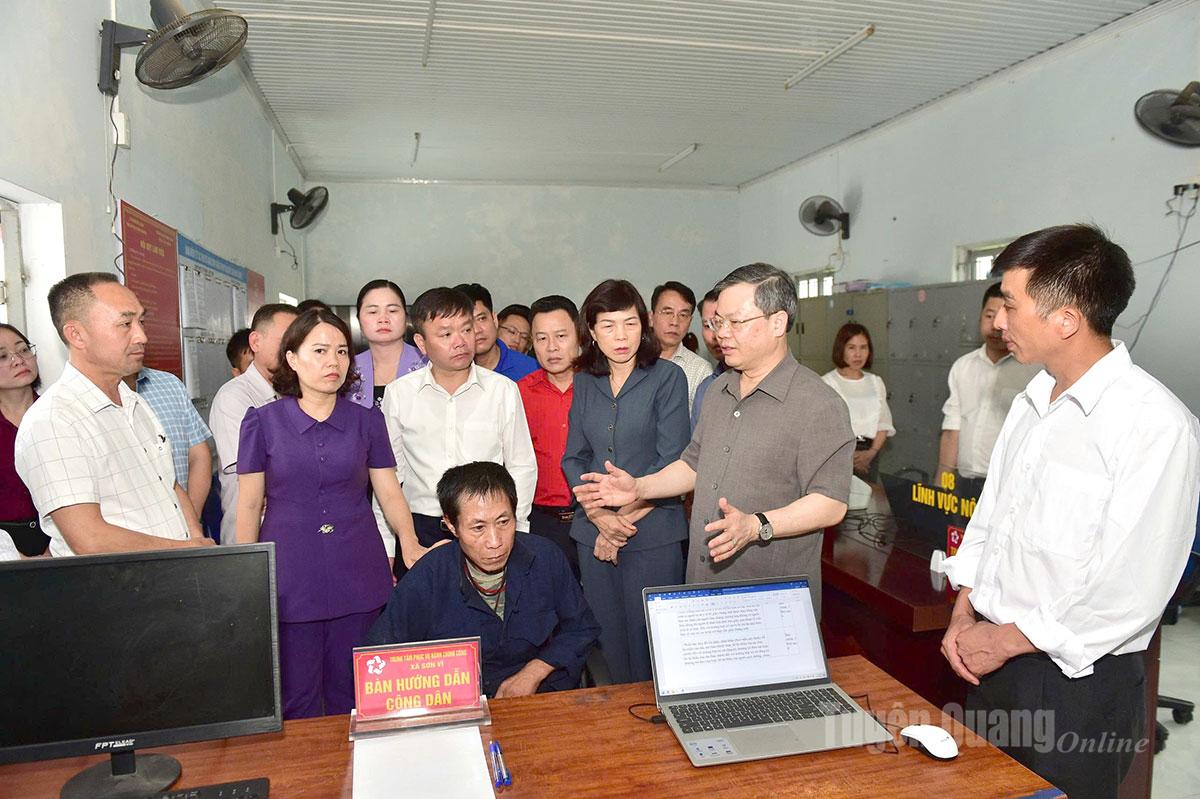 |
| Comrade Nguyen Van Son, Chairman of the Provincial People's Council, inspects the operation of the Son Vi Commune Public Administrative Service Center. Photo: Ma Hung. |
In Hong Thai commune, some specialized software programs are not yet interconnected; information technology equipment is old and outdated, affecting the progress of document processing. This is also the reality in Chiem Hoa commune, where information and data connectivity with the national database is lacking, or the software has not been updated with the commune name and data; leaders, officials, and civil servants have not been granted identification accounts and digital signatures to perform their duties; the digital skills of some officials and civil servants are still limited; and the equipment configuration is low and does not meet the requirements of working in a networked environment…
Elaborating on these difficulties, Mr. Nguyen Son Tung, a specialist at the Minh Xuan Ward Public Administrative Service Center, affirmed: There are many cases where people come to complete land-related procedures, but the original documents have not been handed over, or the information does not match between systems, making immediate processing impossible. The national interconnected system is also unstable and sometimes paralyzed.
Another challenge currently facing mountainous and border communes is the limited understanding of public services and digital technology among the local population. Many people do not speak the common language, are illiterate, and are unable to independently complete procedures through online public service portals.
Ms. Giang Thi Lia (Phin Lo village, Son Vi commune) expressed her confusion: "I can't speak standard Vietnamese, and I don't understand the paperwork, so I have to ask the commune officials to help me." This situation forces commune officials to both guide and assist residents, leading to an overload of work. In some areas, the lack of a well-established community digital technology team – the core force helping people access online public services – makes the situation even more difficult.
Synchronization from policy to action
The difficulties arising during the operation of the new model were quickly recognized and addressed by the political system from the provincial to the grassroots level.
Right in the first week of implementing the two-tiered government model, the People's Committee of Tuyen Quang province established a hotline to receive feedback and provide assistance in answering questions about administrative procedures. Specifically, all feedback and questions related to administrative procedures and public services are received through the Tuyen Quang Provincial Public Service Information Hotline 1022 at the number: 0219.1022 and through the Zalo Official Account: 1022 Tuyen Quang Provincial Public Administrative Service Center.
The provincial police have set up 36 points for issuing identity cards and electronic identification in communes and wards to make it easier for people to access and minimize travel. The Tuyen Quang Provincial Youth Union has also deployed more than 140 volunteer youth teams, with 2,000 members, to support people in using online public services, exploiting the VNeID application, providing on-site technology advice, and training digital skills for commune-level officials - especially in remote and disadvantaged areas.
Specifically in the land sector – a difficult and sensitive area – the Department of Agriculture and Environment has established four special task forces to support communes in operating land databases and handling administrative procedures. According to the Deputy Director, Ms. Nguyen Thi Thanh Thuy: “These task forces will operate regularly, ready to go to communes at any time to provide professional support and retrain land administration officials on procedures. The Department has officially launched an AI-powered virtual assistant software with the domain https://trolyaocanbocongchuc.dx.gov.vn/ to assist officials and citizens in carrying out administrative procedures related to agriculture and environment under the two-tiered local government system.”
In particular, the Ministry of Natural Resources and Environment has just issued the "Handbook on Land Management in Two-Level Government" - a specialized document that provides specific guidance for local officials. Accordingly, the People's Committee at the commune level has up to 45 tasks, and the Chairman of the People's Committee at the commune level has 44 specific tasks related to land matters. This is an important basis for communes to exercise their authority correctly, avoiding overlaps and errors in handling procedures.
At the Public Administrative Service Center of Ha Giang 2 Ward, a computer with internet access is placed near the entrance, allowing citizens to log in and submit applications online. Staff are available to assist if needed. Additionally, two desks are set up in the waiting area for citizens to conveniently complete their paperwork.
Ms. Pham Thi Nguyet, a specialist at the Public Administrative Service Center of Ha Giang 2 Ward, shared: “To overcome initial difficulties, we must constantly learn, improve our skills, abilities, and political qualities, view each citizen as a ‘special customer,’ and use the satisfaction of these ‘special customers’ as a measure of our task completion.”
In addition, to raise public awareness about digital transformation, the Vietnam Fatherland Front Committee and its member organizations are stepping up propaganda and awareness campaigns. Mr. Phan Van Dui, Chairman of the Vietnam Fatherland Front Committee of Minh Tan commune, said: “Most people in the commune are ethnic minorities who do not speak the common language, face difficult living conditions, do not use smartphones, and have little understanding of online public services. To overcome these difficulties, we are going to each house to provide support, aiming to enable people to independently access public services.”
With synchronized and timely solutions, it is believed that the difficulties in the operation of the commune-level Public Administrative Service Center will soon be overcome. As directed by Lieutenant General Trinh Van Quyet, Secretary of the Central Committee of the Communist Party of Vietnam and Head of the General Political Department of the Vietnam People's Army, at the ceremony announcing the Resolution and Decision on the merger of provincial-level administrative units and the rearrangement of commune-level administrative units in Tuyen Quang province on June 30, 2025: All tasks within the authority of both levels (province and commune) must be carried out smoothly, without delay or omission, with the spirit of better serving the people and businesses; maintaining the image and demeanor of officials "from administrative service to serving the people".
For communes lacking specialized personnel, the province must promptly and adequately allocate and reinforce support to ensure smooth and effective work. For border and mountainous communes located far from the provincial center, in some places over 300 km away, it is necessary to vigorously promote the application of science and technology and digital transformation to change the mindset and methods of management and administration, eliminating the gap between the provincial government and the communes and the people.
Source: https://baotuyenquang.com.vn/xa-hoi/202507/mot-cua-nhieu-niem-tin-cf955dc/
![[Photo] The heat at the fireworks display site on the opening night of the Da Nang International Fireworks Festival 2026](https://vphoto.vietnam.vn/thumb/1200x675/vietnam/resource/IMAGE/2026/05/27/1779889741485_ndo_br_z7872039145157-fecaba5112f39e8352544099d7ef4738-5140-jpg.webp)

![[Photo] Life on both banks of the river returns to its bustling pace on the day the Long Bien Bridge opens to traffic.](https://vphoto.vietnam.vn/thumb/1200x675/vietnam/resource/IMAGE/2026/05/28/1779949763708_cau-long-bien-minh-duy-7-3610-jpg.webp)
















































































Comment (0)