

The sun rose over the mountain peaks, its golden rays illuminating the forests on Dat Hop and Tong Nhat mountains like arches embracing the Mong village at the headwaters of Khe Nhoi stream, Trung Son commune, Yen Lap district. Along the roadside, plum and peach blossoms were budding, their pleated skirts fluttering like colorful butterflies as Mong women walked to the market to prepare food for the Tet holiday...
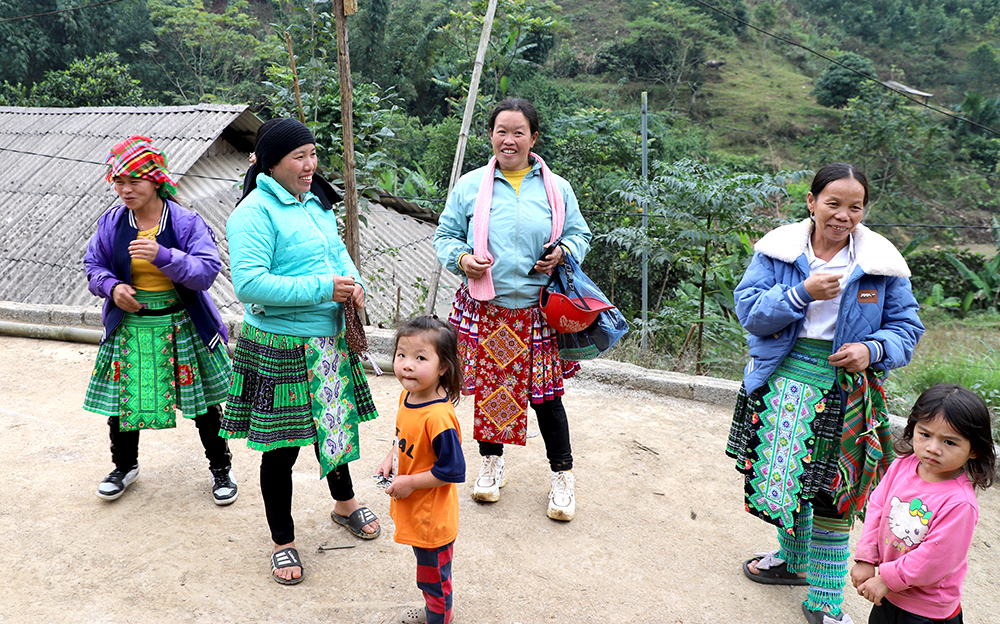
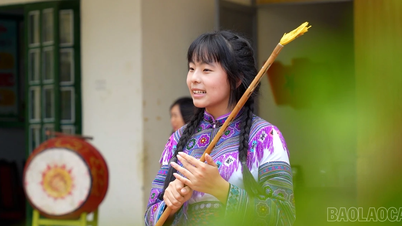
Women and children of the Hmong people in Khe Nhoi village.
Remember the difficult times
My first visit to the Khe Nhoi Hmong village was in 2004. Back then, the road to the village, winding through dense forests, was just a small, newly cleared dirt road. Since then, whenever I have the chance, I visit the Hmong village and witness the changes in the lives of the people there.
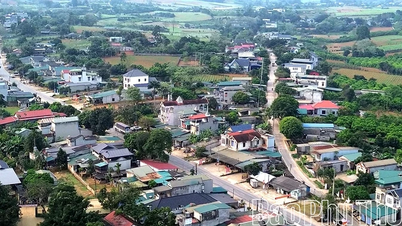
Located at an altitude of over 1,000 meters, nestled against the Dat Hop mountain range, the Khe Nhoi Hmong village consists of nearly 50 houses clinging to the mountainside. Ly A Phang's house – a member of the local security team – is situated halfway up the mountain, but unlike a few years ago, we didn't need to walk; we drove right to the gate. Having just returned from a meeting with constituents and representatives of the commune's People's Council, Ly A Phang greeted us with a warm smile. Inside his two-story wooden house, one of the largest in the village, stories of the past and present flowed endlessly...
Pouring a cup of herbal tea for his guest, Ly A Phang mused: "For generations, our Hmong people have been nomadic, moving from place to place. Wherever there's water and good land, we build houses and clear the land; when the land loses its fertility, we move again. The Hmong people who came to Khe Nhoi in 1995 were also part of such a migration. Initially, there were only 5 households from Nghia Tam, Suoi Bu, and Son Thinh communes in Van Chan district (Yen Bai province). Later, more siblings, friends, and children grew up and separated to form the village as it is today. In the early days of settling in the new land, due to their habit of living off nature, life for the Hmong here was very difficult. Clearing a patch of land, sowing a few kilograms of rice, planting a few holes of corn, and going into the forest to hunt and gather... that's why houses were makeshift, and hunger and poverty still lingered. In some years, the poverty rate in the village was 100%..."
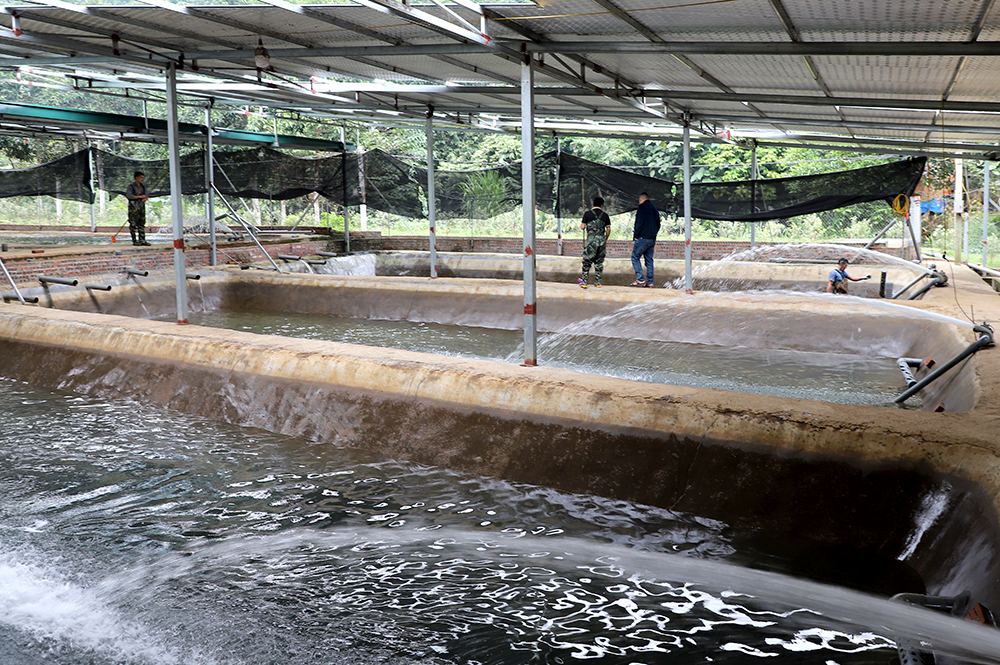
A sturgeon farm in Khe Nhoi Mong village.
The time of prosperity has arrived.
In 2003, following a "trek" through the forest to Khe Nhoi to "inspect" the lives of the Mong ethnic minority people by provincial leaders, the project to resettle the Mong ethnic minority people in Khe Nhoi village, Trung Son commune, was established. The first step was to invest in production development, guiding the people in reclaiming land for rice cultivation and establishing hillside farms. Next, essential infrastructure and welfare facilities were built to serve the production and lives of the people; stabilizing and relocating the population, creating jobs, increasing income, gradually eradicating poverty, and working together to build a new life.
“From a nomadic lifestyle, the lives of the Hmong people in Khe Nhoi have changed day by day. It started with receiving household registration books, then the project's buffaloes, houses with fiber cement roofs, government-provided water tanks, kindergartens and primary schools, methods of forest planting, wet rice cultivation, upland rice farming, pig and chicken raising... and then the ‘ socio -economic development project for Khe Nhoi area’ established under the direction of the Northwest Steering Committee has opened up a path out of poverty for the Hmong village,” – Ly A Cuong (former Deputy Head of the Hmong village from 2006-2012, Head of the Hmong village from 2012-2017) confided as he opened his notebook from his time as a village leader.
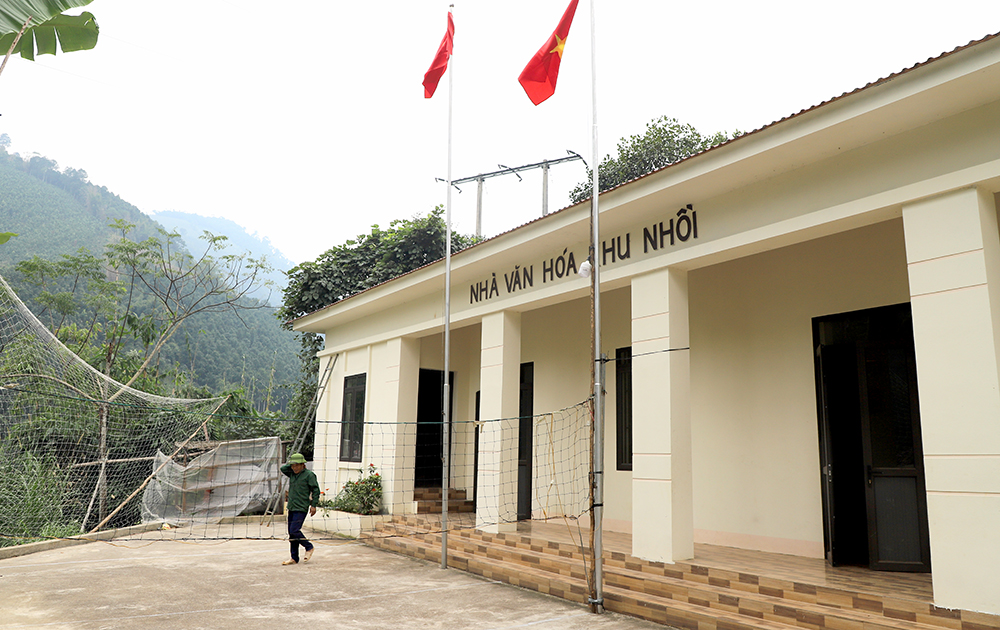
The newly built Khe Nhoi community center is spacious and serves as a meeting place and community center for the Mong, Dao, and Muong people of the villages.
Continuing the story of the new life of the Mong people in Khe Nhoi village, the head of the Front Committee of Nhoi area, Dinh Van Hung, who accompanied us to the Mong village, shared: In 2005, the trail from the commune center to Khe Nhoi was widened, the bends were smoothed, and the slopes were lowered, but it was still a dirt road. In 2012, the road was improved and paved with crushed stone. In 2018, the road to the village was further upgraded, paved with concrete, and sections crossing streams were replaced with sturdy concrete bridges. Along with the new road, in 2018, the national power grid was brought to Khe Nhoi, "brightening up" the entire village and helping it escape from darkness and backwardness.
Many families received government support in the form of televisions and refrigerators, transforming their lives. 100% of children of school age attend school, and the sick are promptly taken to the commune's health station for examination and treatment. Now, every household has a garden, fields, and forests; many families own 3-5 hectares of cinnamon trees...
Thanks to the support of the Party, the State, and the community, the Mong people of Khe Nhoi have gradually escaped poverty, and their material and spiritual lives have improved. Previously, nearly 100% of the Mong households in the village were poor, but now that number has decreased to 29 out of 46 households. After several surveys of water resources, in early 2024, a company from the lowlands invested in Khe Nhoi and collaborated with the villagers to establish a sturgeon breeding and commercial farming farm. To date, the fish have begun to be sold, providing employment with an average income of 10 million VND per person per month for more than a dozen people from the Mong, Muong, and Dao ethnic groups in the area.
Mr. Mua A Su, a resident of Khe Nhoi Mong village, shared: “Previously, my family was very poor, but now things are different. Thanks to the attention of the Party, the State, and all levels and sectors, we received support in the form of loans, training in the transfer of advanced scientific and technical knowledge to cultivate cinnamon, Bodhi trees, raise livestock and poultry, intensively cultivate wet rice, buy a car to transport agricultural products for the villagers, and open a general store... Now, my family's life is much better, and our children can go to school. This Tet holiday, my family will celebrate a prosperous and happy spring.”
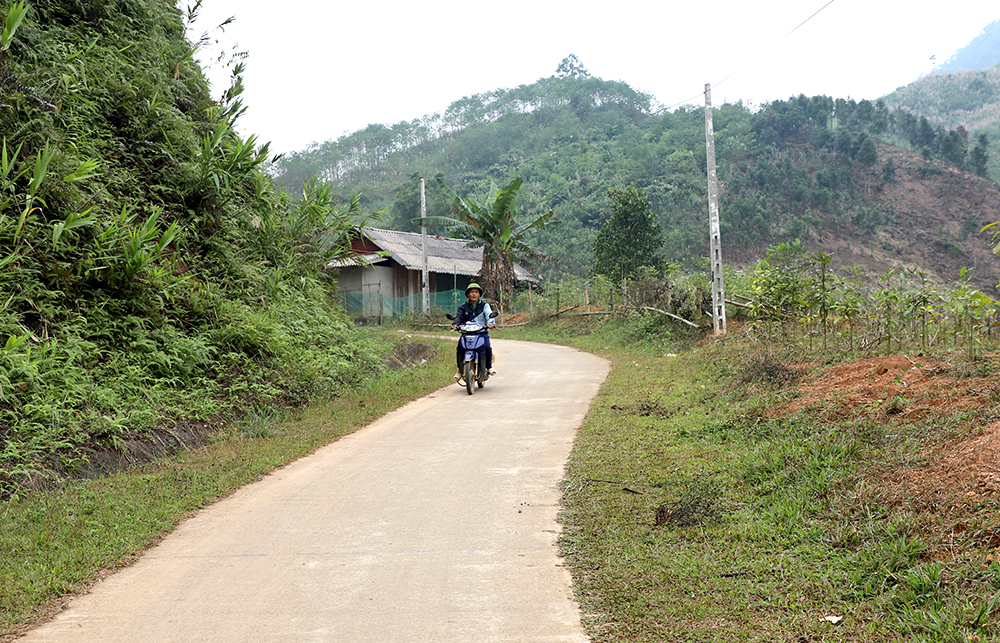
The road back to the Hmong village
Eagerly awaiting Spring
“Brother, Spring is coming/ Wait for me, wait for me by the murmuring stream/ Wait for me, wait for me at the end of the hill/ Brother, Spring is coming, coming by the clear stream”… the singing from a family echoed, filling us all with joy and excitement. Ly A Phang said: “Perhaps this year the Mong people of Khe Nhoi are celebrating Spring the happiest they’ve ever had because no household needs food aid during Tet. Even in Phang’s family, the pigs and chickens were raised throughout the year, kept in pens, just waiting for guests to arrive so we can treat them.”
Sharing about the Hmong New Year customs, Ly A Cuong said: "Previously, the Hmong New Year took place earlier and lasted for months, different from the New Year of the Kinh people and other ethnic groups. Nowadays, the time for celebrating the New Year in Khe Nhoi is the same as in the Muong and Kinh communities. To prepare for the New Year thoroughly, everyone has their own tasks. Women will complete the embroidery and stitching on new dresses and clothes for adults and children to wear during the New Year. Men will go shopping or slaughter pigs and chickens for the family meal. While for the Kinh people, sticky rice cakes (banh chung and banh tet) are indispensable in the New Year's feast, the Hmong New Year must have sticky rice cakes (banh day) to offer to ancestors and the heavens and earth; therefore, pounding sticky rice cakes is an essential part of the New Year's celebration. During the three main days of the New Year, every family burns firewood, keeping the hearth burning continuously, both to keep warm and to ward off evil spirits and pray for peace and good fortune." During the Lunar New Year celebrations, in addition to religious rituals, Hmong boys and girls eagerly participate in many familiar folk games such as tulu, pao throwing, crossbow shooting, tug-of-war, stick pushing, and khen flute dancing... Laughter and chatter fill the entire village.
As spring arrives, the sweet rays of early spring sunshine dispel the chill of the highlands. The Hmong people in Khe Nhoi gather to embroider and go to the year-end market to prepare for a warm and joyful Tet (Lunar New Year) celebration. Hmong boys and girls, dressed in colorful clothes, go out to celebrate the spring; pao balls are passed back and forth; the melodious sounds of the khene flute and other instruments fill the air; and love songs create a cheerful and cozy atmosphere for Tet.
Dinh Vu
Source: https://baophutho.vn/nang-am-ban-mong-29-1-227053.htm
![[Photo] Solemn bathing ceremony and Buddha procession in Hue](https://vphoto.vietnam.vn/thumb/1200x675/vietnam/resource/IMAGE/2026/05/31/1780228263543_1-jpg.webp)


![[Photo] The General Secretary, President and his wife begin their state visit to the Philippines.](https://vphoto.vietnam.vn/thumb/1200x675/vietnam/resource/IMAGE/2026/05/31/1780230559452_anh-man-hinh-2026-05-31-luc-19-28-11.png)
![[Photo] Admire the coral "masterpiece" amidst the million-year-old heritage of Dak Lak province.](https://vphoto.vietnam.vn/thumb/1200x675/vietnam/resource/IMAGE/2026/05/31/1780221235105_anh-man-hinh-2026-05-31-luc-16-53-27.png)








![[Video] Sunset at Lap An Lagoon – Where the sun sets over the fishing nets](https://vphoto.vietnam.vn/thumb/340x192/vietnam/resource/IMAGE/2026/05/31/1780192137701_beach-landscape-sea-water-nature-grass-745871-pxhere-com.jpeg)































![[Photo] Admire the coral "masterpiece" amidst the million-year-old heritage of Dak Lak province.](https://vphoto.vietnam.vn/thumb/402x226/vietnam/resource/IMAGE/2026/05/31/1780221235105_anh-man-hinh-2026-05-31-luc-16-53-27.png)































Comment (0)