

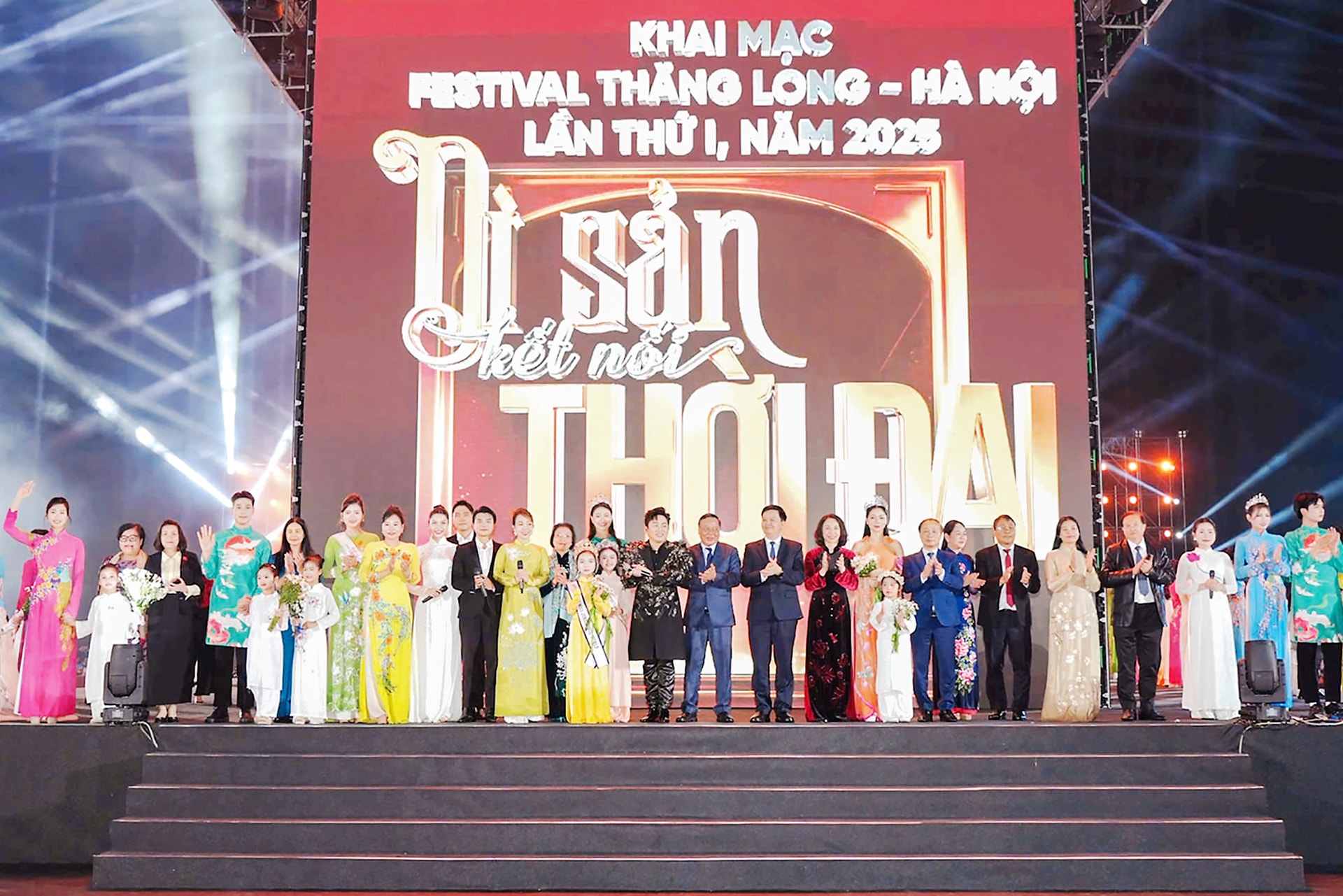
Liberal ideology and revolutionary nature of culture
Looking back at history, the imprint of each period is quite clear in the Party's cultural directives. These directives are always linked to specific situations and tasks; therefore, regardless of the form in which they are expressed, their functional nature and direct service to immediate needs are clearly evident. The "Outline of Vietnamese Culture" of 1943 was within the ideological framework of "culture must guide the nation," but it was linked to the specific tasks of a social revolutionary movement where the task of national salvation was paramount. Its function is evident in its very names. Following "culture of national salvation" came "culture of resistance and national construction, culture of building a new life, culture of building a new life, a new man." Only in recent decades has it gradually moved beyond specific tasks, taking on a more general meaning: Culture is a spiritual resource, an intrinsic strength of development. These names, whether specific or symbolic, are ultimately linked to specific tasks within a certain stage of development and still share a common characteristic: they are a spiritual field, reflecting the spiritual foundation of society, providing ideological and moral guidance for society, and serving as an auxiliary rather than a comprehensive strategic force for development.
It can be said that Resolution 80 is a stepping stone, a foundation for creating breakthrough impetus in socio-cultural development because of its liberal spirit and the very new perspectives it offers.
Firstly, culture is considered a strategic resource for development in the new era. Speaking of strategic resources means referring to the most important, stable, long-term factor that determines the trend and quality of development. Never before has culture been viewed in this way.
Secondly, while previous resolutions on culture have addressed the issue of human beings as the subject, goal, and driving force of culture, it is only in Resolution 80 that the issue of building a comprehensively developed Vietnamese human cultural personality and creating a humane, healthy, civilized, and modern cultural environment is specifically, practically, and feasiblely addressed, closely aligned with the essence of culture.
Regarding the cultural environment, this involves building a system of cultural values (national, democratic, humanistic, scientific ), a system of national values (peace, unity, independence, a prosperous people, a strong nation, democracy, fairness, civilization, happiness), a system of family values (well-being, happiness, progress, civilization), and the standards of Vietnamese people (patriotism, solidarity, self-reliance, loyalty, honesty, responsibility, discipline, creativity). Clearly, at each level of the criteria system, the content is specifically and clearly defined, creating a foundation for the holistic development of individuals.
Another new point is that Resolution 80 also focuses on removing bottlenecks in institutions and mechanisms to create synergy between general laws and specialized laws, with related mechanisms, between the State and the private sector, and between organizations and individuals, in order to pave the way for cultural development.
Thirdly, the Resolution emphasizes the balance between tradition and modernity and integration. Ensuring harmony between national identity and the absorption of the best of human culture, tradition and modernity, is an inevitable rule and a challenge for every nation, because only by doing this well can we avoid being left behind and proactively participate in the new era. The interaction, transformation, and symbiosis of cultures in the digital age demand a new perspective, a new mindset, and a new capacity for adaptation.
Fourth, this is a very new understanding in the assessment of culture: culture is considered a social regulator, capable of creating breakthroughs for development but also helping to create social balance when there is a risk of "deviating" from the trajectory of sustainable development.
Fifth, for the first time, the Party Resolution expands the participation of social forces, especially the role of the private sector and cultural enterprises. This policy innovation (the private sector being a crucial driver of development, including culture) will open a new horizon for investment, product competition, and the development of the cultural industry. The most obvious benefit is that society will have the right to choose the best products.
Finally, the particular emphasis on the role of the environment in the new space (digital space, new media, etc.) will create new prerequisites for development. Most noticeably, the Resolution, for the first time, has shifted culture from a supporting field to a strategic force in development, placing people at the center of this process and expanding the space for creativity and competition, linking cultural products with new, highly competitive markets that require breakthroughs for integration. The challenges are great, but the opportunities are endless, especially in stimulating and creating new creative impetus.
A strategic boost for the cultural industry.
As mentioned above, Resolution 80 has changed the perspective on culture in a revolutionary and liberating way, shifting culture from a supporting field to a leading force with comprehensive strategic importance in development. Here, the issue of cultural industry is no longer posed as a direction for the future, but has become a requirement to solve specific problems of development, considering cultural industry as one of the important pillars.
Resolution 80 stipulates that the cultural industry must become a driving force in national economic development, contributing to GDP growth and creating commercially valuable products. Cultural products are concretely manifested in their defined value: By 2030, the cultural industry is expected to contribute approximately 7% of GDP, building 5-10 national brands such as cinema, cultural tourism, design, fashion, music, and performing arts. By 2045, the contribution is projected to increase to 9% or more of GDP, becoming a pillar of the creative economy in the national economic development model, elevating the status and influence of Vietnamese culture regionally and internationally.
The state plays a "facilitator" role through policies and mechanisms; the state and investors, as well as cultural enterprises, work together to build a new economy that meets the development requirements of the new era. This is the impetus and driving force for the development of the cultural industry. Never before has the issue of building a highly competitive national cultural brand (films, festivals, digital content, creative products, etc.) been as urgent as it is now. Resolution 80 has paved the way for the development of this field, creating mechanisms for investment and institutional reform. The shift from an administrative management perspective to a legal management perspective, from a supporting sector to a strategic driving force, the activities of media, digital content, online entertainment, game, and digital creative enterprises will open up opportunities for entrepreneurial ideas from private businesses, strengthen public-private partnerships, develop human resources, and foster a creative environment. These are major overall impetus, opening doors to welcome new ideas and innovations. Social demand is stimulating development. New mechanisms are giving wings to new ways of doing business. Those who come later face the disadvantages of being latecomers, but they accumulate valuable experience from those who came before, so challenges can be transformed into opportunities if they are proactive and choose the right path. The agility of the Vietnamese people will be an important prerequisite for stimulating the development of the cultural industry. The issue of investment is no longer an insurmountable obstacle. The skills and creative capacity of the Vietnamese people will certainly be important foundations for the development of the cultural industry.
Source: https://hanoimoi.vn/nghi-quyet-80-nq-tw-tao-xung-luc-phat-trien-moi-cho-van-hoa-viet-nam-734177.html
![[Photo] Capturing each moment at the "People We Meet" photography exhibition.](https://vphoto.vietnam.vn/thumb/1200x675/vietnam/resource/IMAGE/2026/04/15/1776245695648_1-8944-jpg.webp)
![[Image] Current status of the land area of over 5.5 hectares that Ho Chi Minh City is considering reclaiming.](https://vphoto.vietnam.vn/thumb/1200x675/vietnam/resource/IMAGE/2026/04/15/1776245690095_1-3102-8409-jpg.webp)
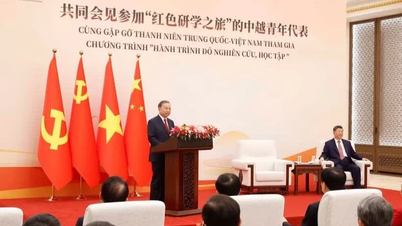
![[Photo] General Secretary and President To Lam and General Secretary and President Xi Jinping meet with youth from both countries.](https://vphoto.vietnam.vn/thumb/1200x675/vietnam/resource/IMAGE/2026/04/15/1776245687540_vna-potal-tong-bi-thu-chu-tich-nuoc-to-lam-va-tong-bi-thu-chu-tich-nuoc-tap-can-binh-gap-go-thanh-nien-hai-nuoc-8702371-jpg.webp)
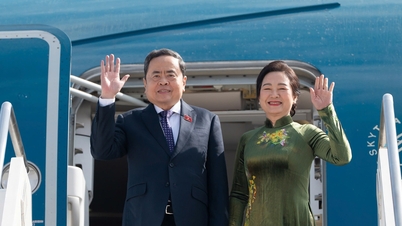
![[Photo] National Assembly Chairman Tran Thanh Man concludes official visit to Italy, departs for IPU-152](https://vphoto.vietnam.vn/thumb/1200x675/vietnam/resource/IMAGE/2026/04/15/1776253436109_vna-potal-chu-tich-quoc-hoi-ket-thuc-tham-chinh-thuc-italy-len-duong-du-ipu-152-tai-tho-nhi-ky-8702876-7969-jpg.webp)
![[Photo] General Secretary and President To Lam and his wife, along with General Secretary and President Xi Jinping and his wife, attending a tea party.](https://vphoto.vietnam.vn/thumb/1200x675/vietnam/resource/IMAGE/2026/04/15/1776245678527_vna-potal-tong-bi-thu-chu-tich-nuoc-to-lam-va-phu-nhan-cung-tong-bi-thu-chu-tich-nuoc-tap-can-binh-va-phu-nhan-du-tiec-tra-8702812-9829-jpg.webp)
![[Image] Overview of the Tam Trinh-Giai Phong connecting road section after land clearance is completed.](https://vphoto.vietnam.vn/thumb/1200x675/vietnam/resource/IMAGE/2026/04/15/1776245679644_ndo_br_dji-0195-jpg.webp)












































Comment (0)