

According to a report from the Ningbo Evening News (Zhejiang, China), Mr. Liu, 60 years old, who suffers from chronic kidney disease, was recently hospitalized after eating a plate of stir-fried spinach without blanching it first. Doctors say this dietary mistake has resulted in him needing dialysis for life.

Illustrative image
Explaining this, Dr. Wang Xinghuan (working in Guangdong, China) said that if a large amount of food with high calcium oxalate content is consumed in a short period of time, oxalic acid will combine with calcium in the human body to form calcium oxalate. Large amounts of calcium oxalate can cause acute interstitial nephritis, especially in patients with any kidney disease.
Experts advise that people with impaired kidney function, weak kidneys, or any kidney disease should be cautious when eating vegetables high in calcium oxalate. It's best to blanch these vegetables before cooking. You should also avoid eating raw or undercooked calcium oxalate-rich vegetables to prevent unfortunate consequences.
Who shouldn't eat spinach?
Spinach is a healthy vegetable. It's packed with nutrients like vitamins A, C, D, E, and K, as well as minerals such as folate, magnesium, plant-based fatty acids, and omega-3s. These nutrients are beneficial for cardiovascular health.
Furthermore, research has shown that spinach contains 10 different flavonoid compounds, which have excellent potential for preventing prostate cancer.
However, these three groups of people are advised not to eat spinach:

Illustrative image
People with diabetes
Spinach may lower blood sugar levels. Some doctors worry that spinach might cause blood sugar to drop too low if you have diabetes. If you consume spinach in the dosage prescribed for you and are taking medication for diabetes, monitor your blood sugar closely. Your diabetes medication dosage may need to be adjusted. Consult your doctor.
People with kidney disease
Spinach is rich in potassium, so consuming too much of it can be harmful to people with kidney problems. This is because potassium crystals can form in the kidneys, which don't dissolve and can worsen kidney disease.
Post-surgery patients
Spinach can lower blood sugar levels. Some doctors worry that it might interfere with blood sugar control during and after surgery. Stop consuming spinach in the dosages prescribed for you at least two weeks before scheduled surgery.
2 things to keep in mind that eating spinach offers health benefits.
Blanch in boiling water before eating.
Illustrative image
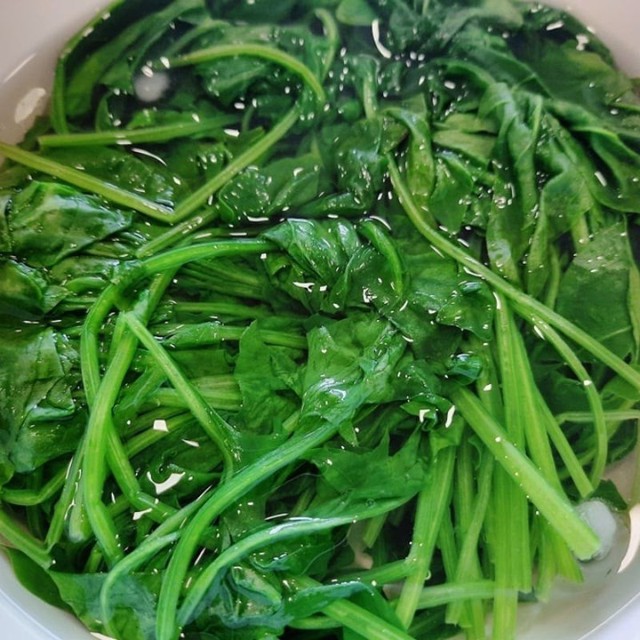
Spinach is one of the seasonal vegetables on everyone's table. Before stir-frying spinach, blanch it in boiling water to remove the oxalic acid it contains. Only by removing the oxalic acid can the body absorb the calcium in spinach. Otherwise, it not only affects the taste but also reduces its nutritional value.
Don't discard the roots when eating.
When people pick spinach, they often throw away the roots. In fact, spinach roots are very rich in nutrients, containing cellulose, vitamins, and minerals. Eating spinach with ginger can help prevent diabetes.
However, spinach's ability to lower blood sugar is limited, and it is typically used in the prevention of hyperglycemia.
Source


































































































Comment (0)