

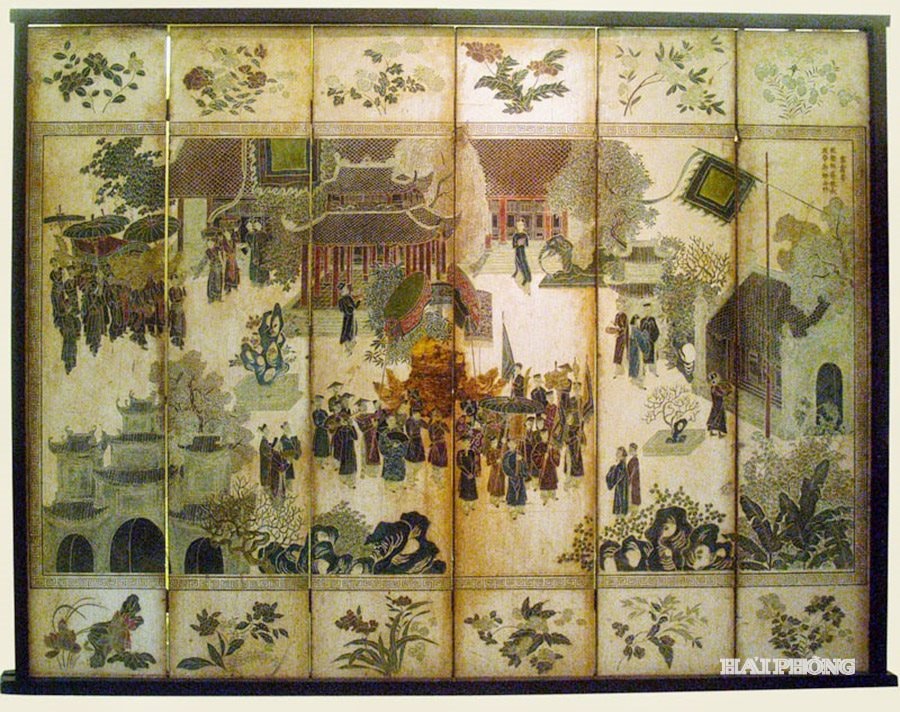
Having studied at the 9th class of the Indochina College of Fine Arts alongside many renowned names of 20th-century Vietnamese art, many of whom still influence today, painter Nguyen Van Bai did not stay in Hanoi after graduation. Fate led him to Hai Phong. The vibrant port city at that time was a gathering place for many talented young artists and writers eager for creative inspiration.
In the 1930s, European educators brought to Vietnam a style of art education that seamlessly combined modern Western techniques with traditional East Asian materials, resulting in a brilliant period of visual arts: the Indochinese Art Period. Painter Nguyen Van Bai did not follow the conventional path of his colleagues; he had a particular fondness for lacquer carving. Using the same "body" as the "foundation" of his paintings as in lacquer painting, Nguyen Van Bai learned from ancient traditions, and with his innate talent and skillful hands, he carved and sculpted the "body" to make its surface vibrant, expressive, and richly expressive.
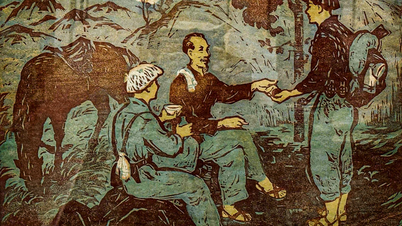
From an early age, artist Nguyen Van Bai diligently studied and honed his skills, mastering the technique of relief carving on wood and other materials. Many of his works, created during this period, such as multi-panel screens, depict the peaceful and warm beauty of natural landscapes and the tranquil, simple daily life of villages and coastal areas of Northern Vietnam—everyday moments that easily captivate the heart. Perhaps that is why artist Nguyen Van Bai is a special case; his works are more widely known abroad than in his own homeland. Many works from decades ago have traveled overseas with merchants, officials in the colonial administration, and collectors. The unique wood carving technique and the East Asian spirit in each of Nguyen Van Bai's works have captivated art audiences beyond national borders.
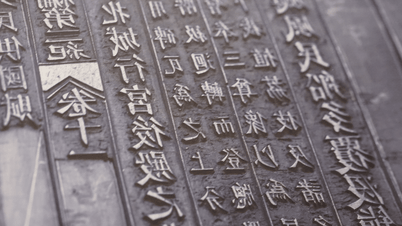
Born in 1912 (some sources say 1915), and died in 1999, artist Nguyen Van Bai spent almost his entire life in Hai Phong, engaging in both artistic creation and teaching. A portion of his emotionally rich works is preserved at the Vietnam Fine Arts Museum and in collections scattered across many countries . He rarely held solo exhibitions or appeared in public, yet his works remain recognized and preserved as a valuable asset, a testament to the powerful expressiveness of Vietnamese woodblock printing art…
LOTUS FRAGRANCESource: https://baohaiphong.vn/nguoi-luu-giu-nghe-thuat-son-khac-go-542450.html
![[Photo] Capturing the moment the tide recedes at Yen Binh Son rapids - a million-year-old scenic spot in Quang Ngai.](https://vphoto.vietnam.vn/thumb/1200x675/vietnam/resource/IMAGE/2026/05/19/1779175463885_yen9-1199-jpg.webp)
![[Photo] National Assembly Chairman Tran Thanh Man attends the groundbreaking ceremony for the National Highway 1A spatial axis project.](https://vphoto.vietnam.vn/thumb/1200x675/vietnam/resource/IMAGE/2026/05/19/1779161360398_ndo_br_bnd-1412-jpg.webp)
![[Photo] General Secretary and President To Lam presides over a meeting on the implementation of Directive No. 34-CT/TW of the Party Central Committee.](https://vphoto.vietnam.vn/thumb/1200x675/vietnam/resource/IMAGE/2026/05/19/1779192417177_anh-man-hinh-2026-05-19-luc-19-06-45.png)


































![[Photo] General Secretary and President To Lam receives Indian Defense Minister Rajnath Singh](https://vphoto.vietnam.vn/thumb/402x226/vietnam/resource/IMAGE/2026/05/19/1779184046302_anh-man-hinh-2026-05-19-luc-16-46-58.png)












Comment (0)