

- The working group from the Ministry of Agriculture and Rural Development surveyed high-tech shrimp farming areas and facilities in Bac Lieu.
- Delegations from Laos and Cambodia learn about high-tech shrimp farming in Bac Lieu.
- Hung My is strongly developing its high-tech shrimp farming area.
Responsibility, understanding, and passion.
Reflecting on her journey, Ms. Mai Xuan Huong sums it up in just three words: Responsibility - Understanding - Passion.
Having been involved in science and technology since 2004, it wasn't until she transferred to the Science Management Department in 2010 that she truly "touched" the realities of production. Field trips and conversations with farmers helped her better understand the hardships of shrimp farming: high risks, fluctuating environmental conditions, and uncertain returns.
"I realized that without science and technology , shrimp farmers would find it very difficult to escape the vicious cycle of risk and unstable income," Ms. Huong shared.
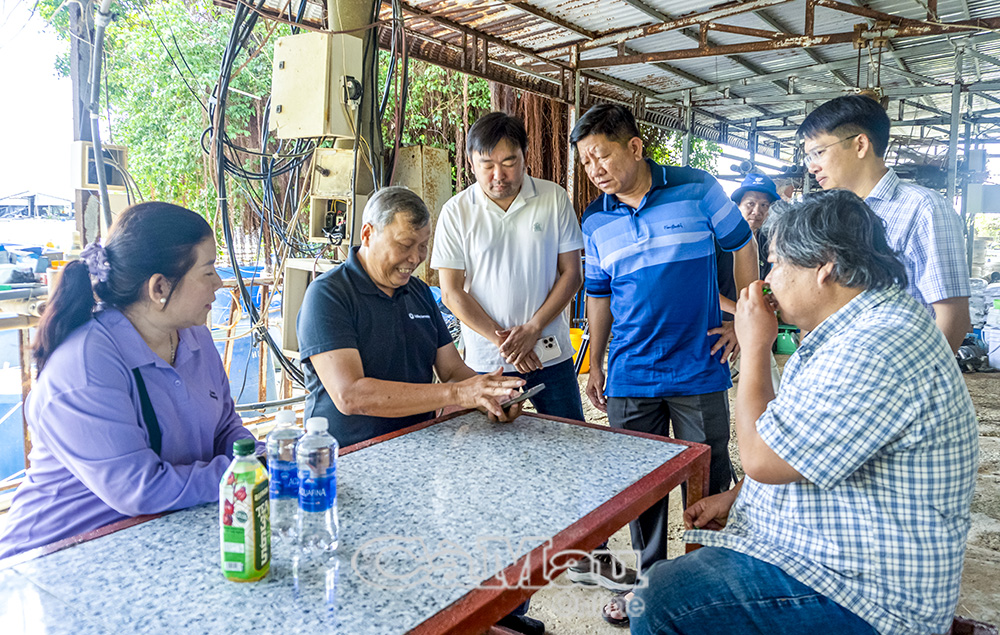 Ms. Mai Xuan Huong (left) and Dr. Nguyen Nhut (right), along with Mr. Mai Huu Chinh (farmer), discuss farming techniques.
Driven by this concern, she began searching for a new direction. The recirculating aquaculture system (RAS) shrimp farming model was initially piloted on an area of only 2 hectares. But through perseverance, proactively seeking solutions and connecting with resources, she and her colleagues gradually expanded the model to 100 hectares, then 1,500 hectares – a figure that not only signifies scale but also marks a fundamental shift in production thinking.
This success lies not only in expanding the farming area but, more importantly, in creating a fundamental shift in production methods. RAS technology reduces water changes, effectively controls the farming environment, and enhances biosecurity; thereby increasing productivity, quality, and economic efficiency, while minimizing negative impacts on the environment. This not only helps super-intensive shrimp farmers improve their economic efficiency but also protects the environment, safeguarding over 350,000 hectares of improved extensive and traditional shrimp farming, reducing the impact of waste discharge and pathogens. This is considered an inevitable direction in the context of climate change and the increasingly urgent need for sustainable development.
"My commitment to science and technology in the aquaculture industry is not only a professional duty but also a passion. I hope to contribute my small efforts alongside farmers to transform potential into a sustainable growth engine for this Ca Mau region," Ms. Mai Xuan Huong shared.
When the reward is the smile of the farmer.
Ms. Huong's efforts have been recognized with numerous commendations from the Chairman of the Provincial People's Committee. In 2025, her project "Mobilizing resources to replicate high-tech shrimp farming processes" was recognized as a provincial-level initiative. But for her, the greatest reward is not just on paper.
What makes me most proud isn't the figures of 100 hectares or 1,500 hectares, nor the reports of annual shrimp production growth, but rather seeing the transformation in the mindset and smiles of the farmers. From the early days of hesitation and skepticism, farmers are now confidently mastering new technologies and boldly participating in sustainable production chains to improve their income and stabilize their lives. The shift from traditional production methods that have existed for many years towards modern, green, and circular approaches is not an easy journey. Changing a practice that has existed for decades requires a lot of time, patience, and faith. But when I see clean, green shrimp ponds, more stable harvests, and families less worried about losses – all the effort becomes worthwhile.
That success is also the result of the collaboration of like-minded friends, from scientists like Dr. Nguyen Nhut and businesses like De Heus Co., Ltd., to the support of the government and the collective efforts of the people. All of this has created an interconnected ecosystem where science and technology truly enter into life.
Putting faith in the younger generation.
Looking back on the journey so far, Ms. Mai Xuan Huong calls it "a glorious but challenging journey." And to young people pursuing the field of science and technology, she advises: "Be proactive, persevere, and don't be afraid to innovate. Dare to think, dare to act, and become a connector."
Her faith is not only in the next generation, but also in the future of Vietnam's fisheries industry – where science and technology will continue to play a key role in enhancing value, adapting to climate change, and integrating internationally.
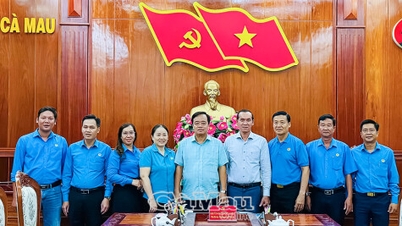
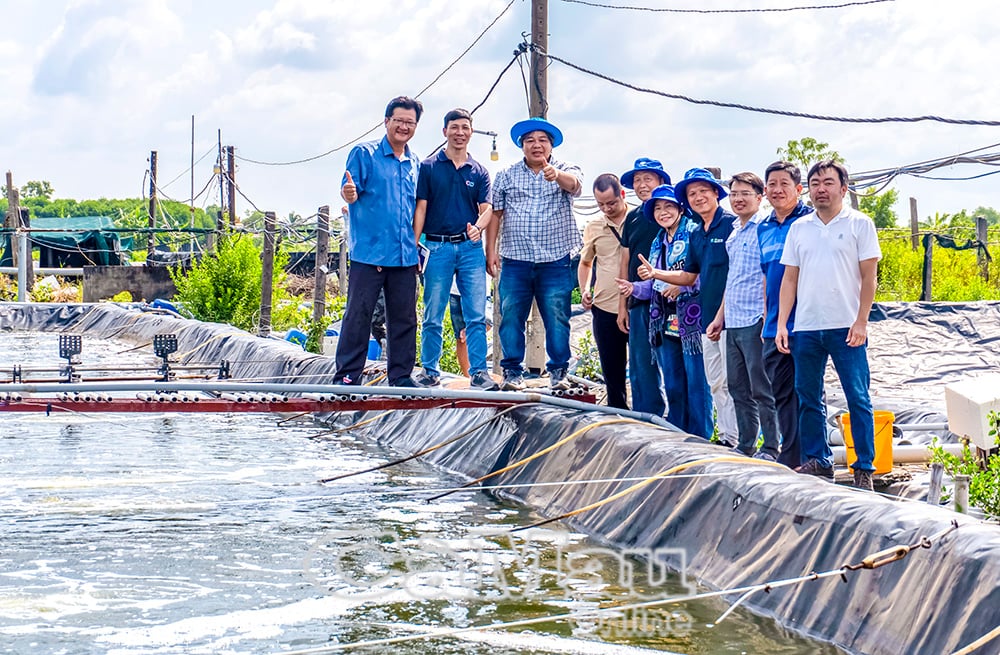 Ms. Mai Xuan Huong (fifth from the right) and her delegation visited the model site.
From the first fish ponds to large-scale production areas, from initial skepticism to today's belief, Ms. Mai Xuan Huong's journey is proof of a simple truth: When science is combined with practice and people dare to pursue their passion to the end, even the most seemingly difficult things can become a reality.
And above all, it is a journey of sowing hope – starting from the drops of water in the shrimp pond, spreading into smiles on the faces of farmers in the southernmost tip of the country.
Ha Giang
Source: https://baocamau.vn/nguoi-mo-loi-nuoi-tom-cong-nghe-tuan-hoan-ras--a128500.html

![[Image] Pleasant weather helps students enter the 10th grade entrance exam with confidence.](https://vphoto.vietnam.vn/thumb/1200x675/vietnam/resource/IMAGE/2026/05/29/1780034401612_ngay-1-thi-lop-10-minh-duy-8-5009-jpg.webp)
![[Photo] Ba Lang An Lighthouse - the "eye of the sea" amidst the "rock museum" of Quang Ngai province.](https://vphoto.vietnam.vn/thumb/1200x675/vietnam/resource/IMAGE/2026/05/29/1780038698840_anh-man-hinh-2026-05-29-luc-14-10-42.png)








































































Comment (0)