

Deeply understanding the lessons on preparing cadres for the Party's establishment taught by Nguyen Ai Quoc, our Party has always paid attention to leading and directing, and has made important strides in, the work of cadre development.
In the late 19th and early 20th centuries, the colonial exploitation policies of the French led to profound social stratification in Vietnam. The failure of the patriotic movements of the Vietnamese people influenced the awareness and decision of the young man Nguyen Tat Thanh to leave Vietnam in search of a way to save the country.
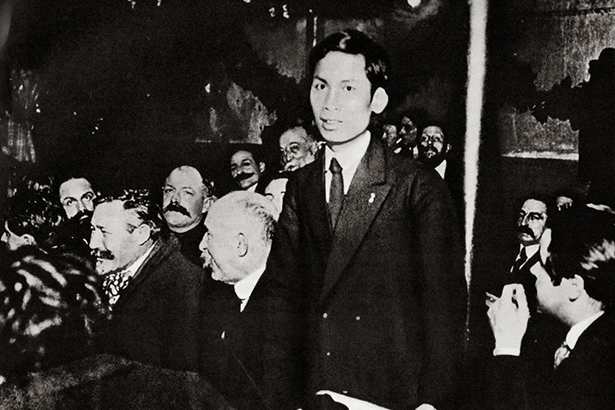
Nguyen Ai Quoc speaking at the French Socialist Party Congress in Tours, December 1920. (Archival photo)
On his journey to find a way to save the country, Nguyen Ai Quoc (Nguyen Tat Thanh) came into contact with Marxism-Leninism. This was a crucial event that created a turning point in his political stance, marking the beginning of preparations for the birth of a political party of the Vietnamese working class.
In July 1920, Nguyen Ai Quoc read Lenin's "First Draft of the Theses on the National and Colonial Questions," and he realized that this was essential for Vietnam, the path to its liberation. Through various activities, Nguyen Ai Quoc actively propagated Marxism-Leninism in Vietnam. He selected the most outstanding individuals, those with the most resolute and revolutionary spirit, to train them in revolutionary methods and organization, preparing them for the establishment of the Party.
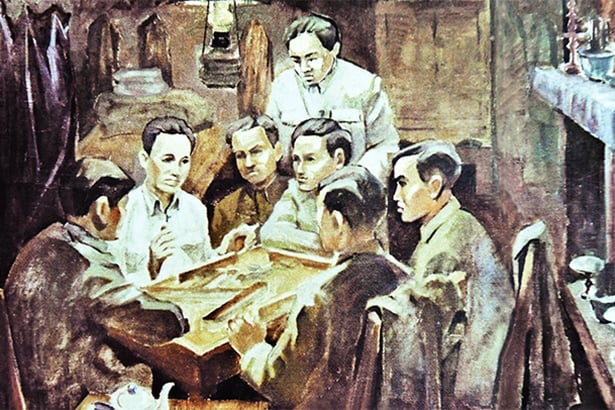
The founding conference of the Communist Party of Vietnam in 1930. Painting by Phan Kế An.
The Party Founding Conference was held from January 6th to February 7th, 1930, in Hong Kong, under the chairmanship of Nguyen Ai Quoc. The conference unified communist organizations, establishing a single communist party, named the Communist Party of Vietnam. The birth of the Communist Party of Vietnam affirmed the immense role of leader Nguyen Ai Quoc, who prepared the political, ideological, organizational, and personnel foundations.
In particular, regarding personnel work, he selected the right people, organized training courses, provided theoretical training for cadres, sent them for further education to improve their skills, put them into practical work, and assigned them to positions suitable for each individual...
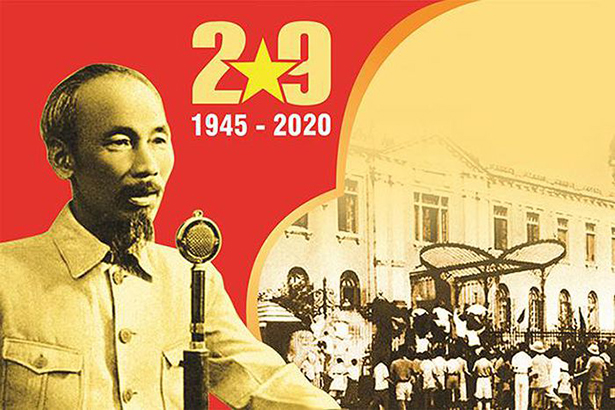
President Ho Chi Minh reads the Declaration of Independence, giving birth to the Democratic Republic of Vietnam. (Archival photo)
Nguyen Ai Quoc's activities have left our Party with many valuable lessons in Party building in general and in building a contingent of cadres at all levels, especially at the strategic level, to meet the requirements of the cause of reform, industrialization, modernization and international integration in the current period:
First, identify cadres as the "root of all work," "the success or failure of all work depends on whether the cadres are good or bad"; "Cadres are those who explain the Party and Government's policies to the people so that they understand and implement them. At the same time, they report the people's situation back to the Party and Government so that they understand and set the right policies" ( 1 ) .
In reality, all policies and guidelines of the Party and Government are researched and proposed by cadres based on the opinions and aspirations of the people, and are also organized and guided by cadres in their implementation. Whether the Party's policies are right or wrong, and whether their implementation is successful or not, depends on the cadres. Recognizing this, our Party pays special attention to cadre work, especially the selection, training, development, and planning of cadres. Throughout its leadership, the Party has issued numerous resolutions on cadre work, setting forth criteria and standards for cadres appropriate to each historical stage of the country.
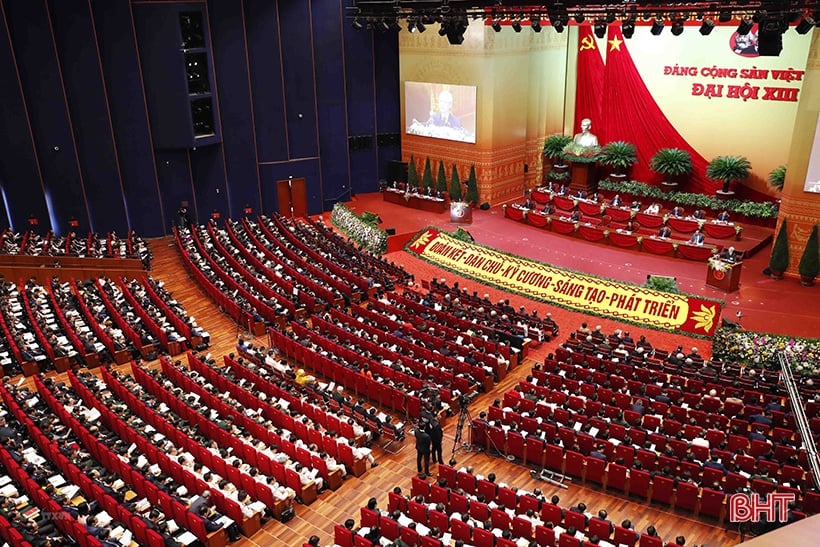
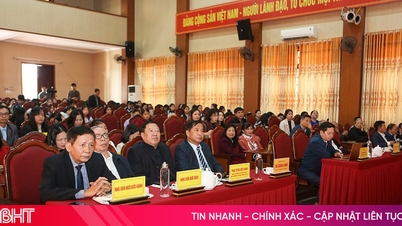
Overview of the 13th National Congress of the Communist Party of Vietnam.
Secondly, it is essential to regularly cultivate cadres who are politically steadfast, morally upright, possess a firm revolutionary stance, build strategic vision and thinking, cultivate revolutionary ethics, work style, leadership and management skills, and problem-solving abilities. They must be proficient in their professional fields, possess the necessary qualifications and capabilities, especially intellectual capacity and practical experience in their specialized work. Training and development should be comprehensive and practical, encompassing both theory and practice; linking training and development with the utilization of cadres. Training, development, and updating knowledge should be linked to job titles, planning, and the utilization of cadres, especially for strategic-level cadres, to meet the increasingly demanding requirements of national construction and defense.
Thirdly, the placement and utilization of cadres must be based on the right person, the right job, and their strengths, in order to best utilize their abilities; the placement and utilization of cadres must ensure a reasonable structure between leadership and management positions in terms of professional qualifications and fields of work; young cadres should be boldly appointed so that they can be trained, tested, mature, and have the opportunity to participate in Party committees. A plan should be developed and implemented for cadre rotation according to the established plan; the number and projected list of cadres to be rotated throughout the term and each year should be determined. Those subject to rotation must truly possess the necessary capabilities and potential for development.
The 13th Party Congress determined that it is necessary to “focus on building a team of cadres and civil servants with sufficient qualities, capabilities, and prestige to serve the people and the development of the country. There must be a mechanism for selecting, training, attracting, and valuing talents, encouraging and protecting cadres who dare to think, dare to speak, dare to act, dare to take responsibility, dare to innovate, dare to face difficulties and challenges, and be decisive in action for the common good” ( 2 ) .
Deeply understanding the lessons on preparing cadres for the Party's founding taught by Nguyen Ai Quoc, our Party has always paid attention to leading and directing, and has made important strides in its understanding of cadre work. Looking back at the glorious historical journey of the nation, closely linked to the growth and strength of the Communist Party of Vietnam, we are even more impressed by the thoughts, stature, and immense contributions of President Ho Chi Minh throughout the country's revolutionary process, in his meticulous preparation of cadres for the birth of the Communist Party of Vietnam, and in the Party's creative and flexible application of these principles to each historical period in leading our country to become increasingly prosperous, beautiful, and civilized.
---------
(1) Ho Chi Minh, Complete Works , National Political Publishing House, Hanoi, Vol. 5, p. 269.
(2) Communist Party of Vietnam, Documents of the 13th National Congress of Delegates , Volume I, National Political Publishing House - ST, Hanoi 2021, pp. 178-179.
Related news:
Nguyen Thi Lam
Tran Phu Political School
Source

![[Image] Central Party Office summarizes work in 2025](/_next/image?url=https%3A%2F%2Fvphoto.vietnam.vn%2Fthumb%2F1200x675%2Fvietnam%2Fresource%2FIMAGE%2F2025%2F12%2F18%2F1766065572073_vptw-hoi-nghi-tong-ket-89-1204-jpg.webp&w=3840&q=75)





























































Comment (0)