

In 1926, Nguyen Cong Hoan graduated from teacher training college and worked as a teacher in various places (Hai Duong, Lao Cai, Nam Dinh , etc.) until the success of the August Revolution. He began writing early; his first work, * Kiep Hong Nhan* (written in 1920 and published by Tan Da Bookstore in 1923), was a significant contribution to Vietnamese prose in the Quoc Ngu script. Before 1945, he was already a sharp journalist, constantly publishing short stories with a social and current affairs focus in well-known newspapers such as: Phong Hoa, Ngay Nay (Tu Luc Van Doan); Tieu Thuyet Thu Bay, Trung Bac Chu Nhat, Ban Dan; Ich Huu, Ha Thanh Ngo Bao, Dong Tay …
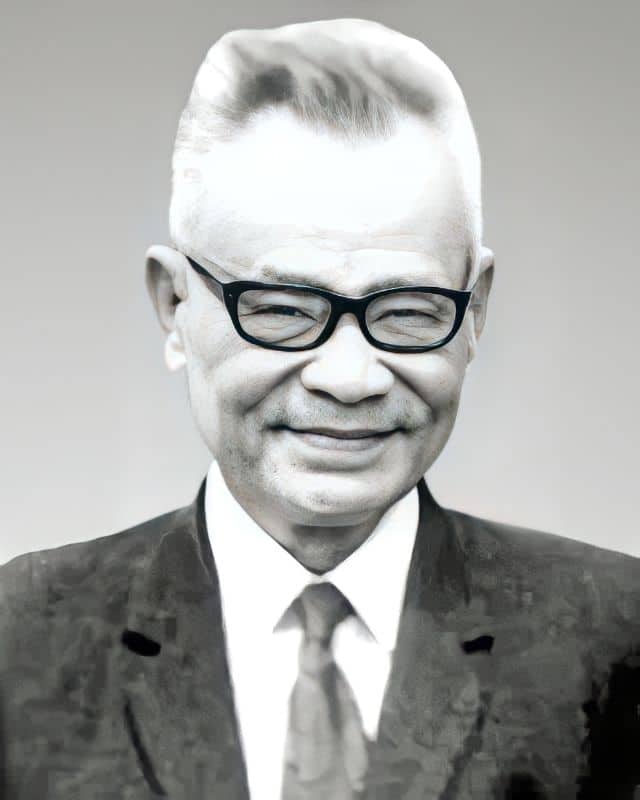
Writer Nguyen Cong Hoan
Photo: archive
Nguyen Cong Hoan was a storyteller who exposed social reality, and many of his short stories are highly journalistic because they directly address contemporary issues, reflecting social realities quickly and concisely, creating both humor and pain. Some of his famous short stories include " Kep Tu Ben" ( Phong Hoa , 1935), which depicts a stage actor forced to "laugh" on stage while his mother is dying beneath the theater. The work criticizes a society that is indifferent and inhumane, turning artists into mere entertainment tools regardless of their personal suffering. Although a short story published in a newspaper, it clearly reflects social issues, highlighting the devaluation of artists' lives and the commercialization and distortion of their profession.
In the short story "A Kind Heart" ( Today , 1937), with a cold, satirical tone, Nguyen Cong Hoan tells the story of a soldier who beats his wife to death because of "excessive love." The work reflects a flawed feudal mindset and violence disguised under the guise of morality. This is a form of "newspaper in short story form," both reflecting social reality and evoking quiet indignation in the reader.
With a tragicomic tone, the short story "The Spirit of Physical Education " ( Saturday Novel , 1939) tells the story of an entire village being forced to "practice physical education" as a formalistic movement. The weak, the sick, even those near death, were forced to participate in exercises to achieve "performances." The work exposes the formalization, mechanization, and absurd humor within the French colonial administration. His writing, both tragicomic and realistic, reflects a society that is "acting" instead of living. Nguyen Cong Hoan's journalistic style is characterized by sharp satirical humor and a witty, simple, and dramatic writing style. He avoids flowery language and uses concise, clear, and easily understandable everyday language, yet full of drama. The situations in his journalistic stories are often introduced very quickly, drawing the reader directly into the "social conflict" within just a few lines. This approach is very similar to modern journalistic narrative writing, which emphasizes an impressive opening and a rapid introduction to the topic.
With a satirical yet humane tone, Nguyen Cong Hoan possessed a unique talent for satire without cruelty. His writing style was like a magnifying mirror, highlighting the absurdity of wrongdoing, falsehood, and absurdity, allowing readers to laugh and recognize the issues themselves. His satirical style did not aim to slander individuals, but rather to expose the decay of the system, from officials and the legal system to healthcare and education ...
Nguyen Cong Hoan's works demonstrate that journalism must strike at the absurd and the artificial. He taught that journalism should not only reflect "true events" but also expose "the truth beneath," especially the distorted values, formalism, and hypocrisy in society. To achieve this, journalists need keen observation and a sharp, humorous eye. He often used laughter to stir emotions, avoiding sensationalism, allowing the situation to speak for itself. This is a lesson for journalists: journalistic language doesn't need to be noisy; being in the right place at the right time is enough to be persuasive.
Another characteristic is that journalistic writing also requires storytelling, and Nguyen Cong Hoan skillfully combined journalism with literature and theater, making each story published in newspapers resemble a short play reflecting social life.
Nguyen Cong Hoan was a master of realistic satirical journalism, using short stories as a means of criticizing society, fighting against absurdity and corruption with clever humor. His journalistic language was unpretentious and straightforward, both sharp and humane, always siding with the marginalized and voiceless.
In today's journalistic landscape, which sometimes falls into superficiality, the journalistic lesson from writer Nguyen Cong Hoan serves as a reminder: an everyday story, if written accurately and truthfully, can become the most powerful indictment of social injustice. (to be continued)
Writer Nguyen Cong Hoan was a member of the Vietnam Labor Party from 1948. In 1951, he worked at the Education Sector's Book Publishing Center, compiling textbooks and books on modern Vietnamese history from the French colonial period to 1950 for the 7th grade of the nine-year system. After 1954, he returned to writing as Chairman of the Vietnam Writers Association (first term 1957-1958), and a member of the Standing Committee in subsequent terms of the Vietnam Writers Association Executive Board. He was also a member of the Executive Board of the Vietnam Union of Literature and Arts, and editor of the weekly newspaper Van (the predecessor of the newspaper Van Nghe). Nguyen Cong Hoan passed away in 1977 in Hanoi . He was awarded the Ho Chi Minh Prize for Literature and Arts in the first round in 1996.
Source: https://thanhnien.vn/nha-van-nguyen-cong-hoan-ket-hop-bao-chi-va-van-hoc-trao-phung-185250615224215692.htm













































































Comment (0)