

|
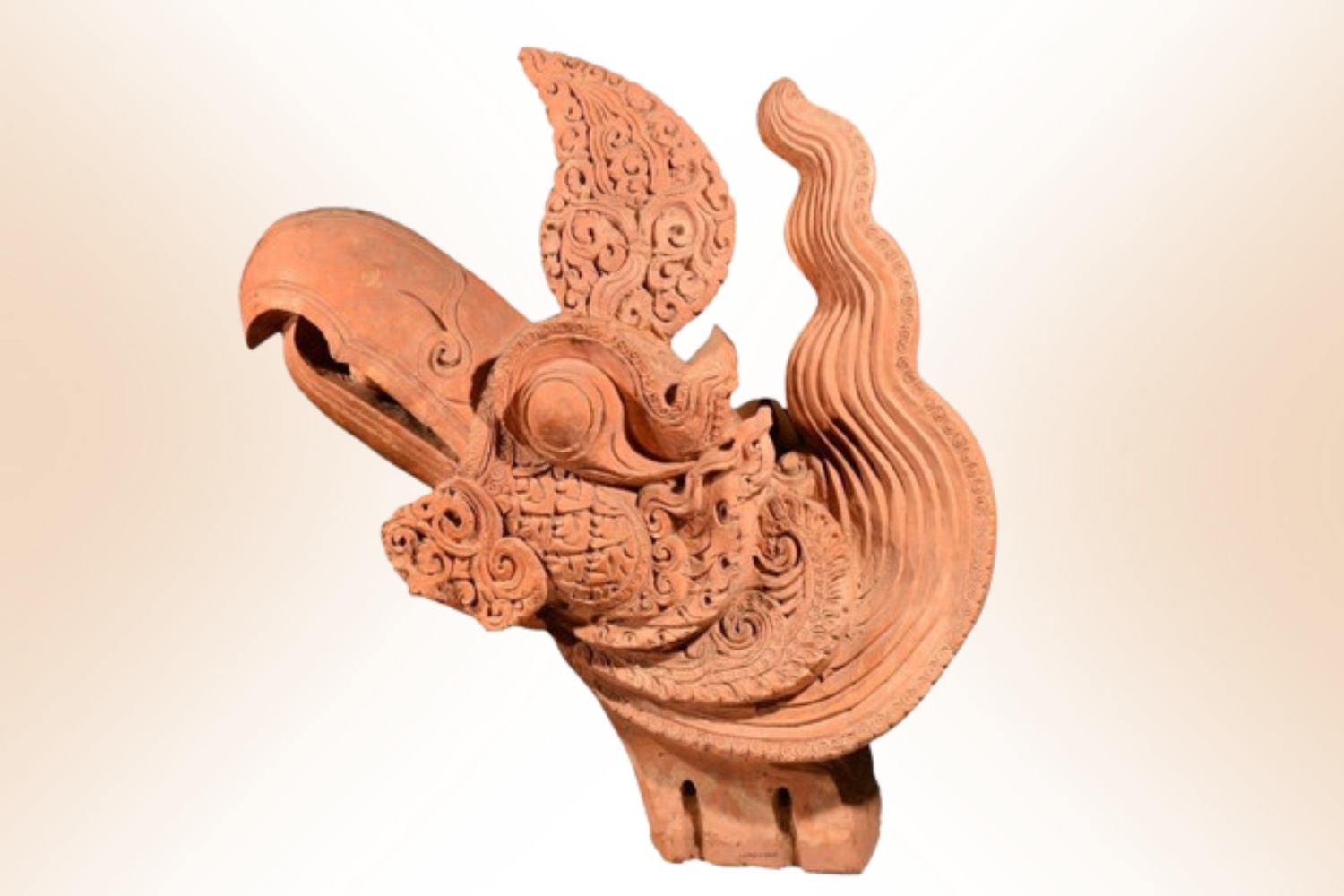
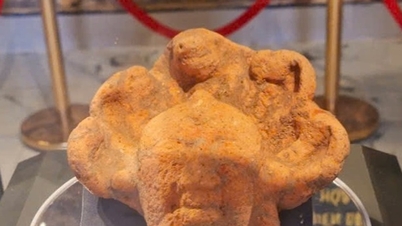
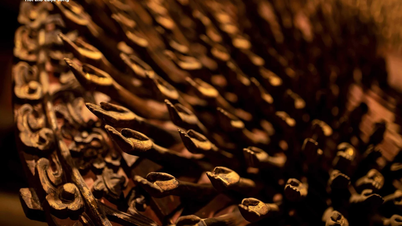
Phoenix head from the Ly Dynasty. |

As of early 2025, Vietnam had undergone 13 rounds of national treasure recognition based on decisions of the Prime Minister , bringing the total number of recognized artifacts and groups of artifacts to 327.
In the most recent recognition, the Prime Minister issued Decision No. 1742/QD-TTg on December 31, 2024, officially acknowledging 33 artifacts and groups of artifacts from the 13th batch as national treasures. These artifacts possess exceptional historical and cultural value.
Notably, among them are three collections of artifacts from the Thang Long Imperial Citadel Heritage Site in Hanoi , each collection carrying its own unique and representative significance.
The three collections include a phoenix head from the Ly Dynasty (11th-12th century), a royal vase from the early Le Dynasty (15th century), and a Truong Lac pottery set from the early Le Dynasty (15th-16th century).
According to the Thang Long - Hanoi Heritage Conservation Center, the originality and uniqueness are the most outstanding values of these three collections. Not only do they have immense artistic significance, but these artifacts also serve as invaluable historical documents, making a crucial contribution to the study and reconstruction of Vietnam's cultural development stages.
Phoenix head from the Ly Dynasty (11th-12th century)
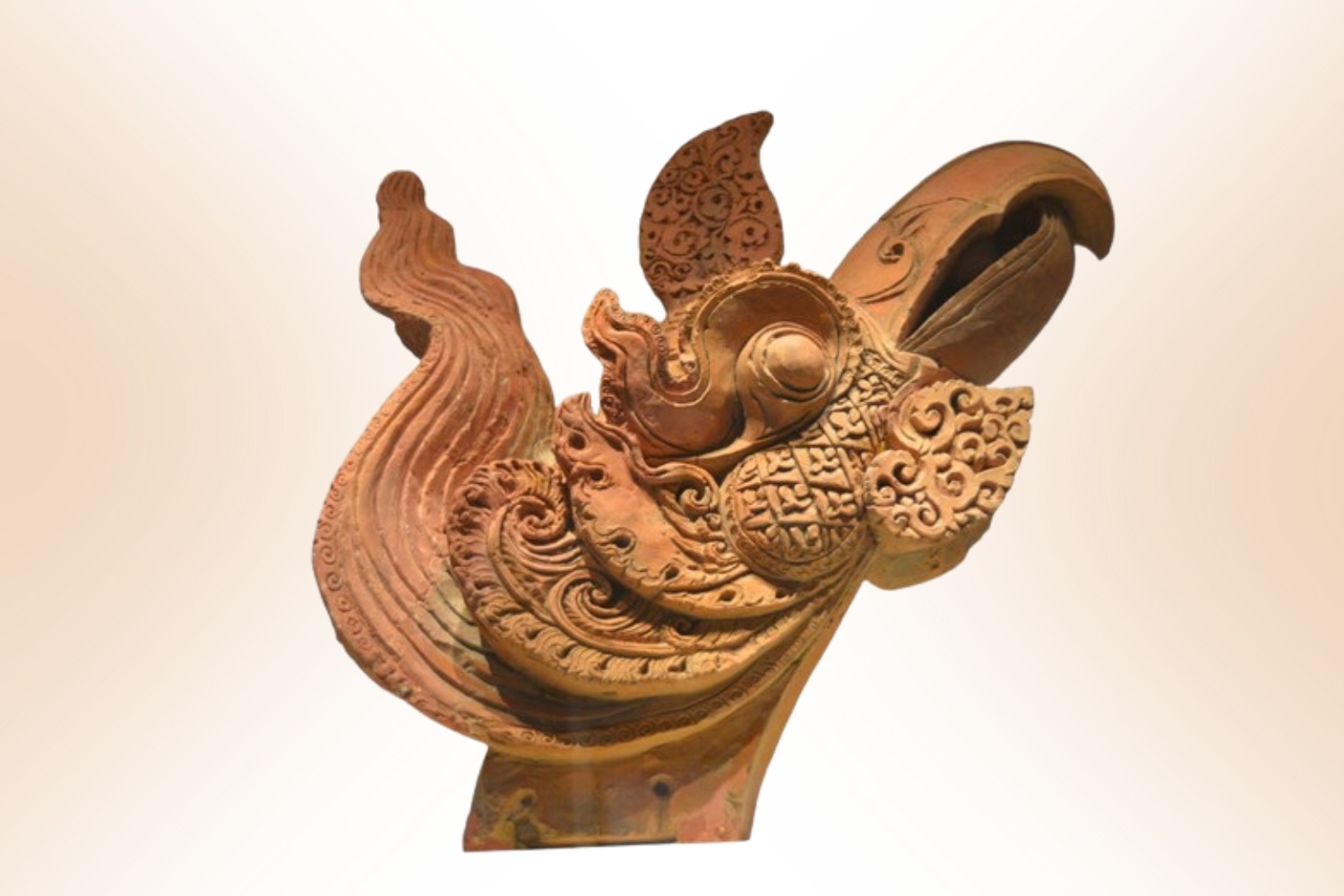
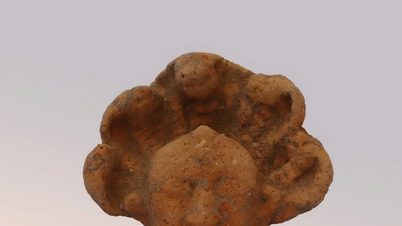
The collection of phoenix heads from the Ly Dynasty, dating from the 11th-12th centuries, includes five terracotta artifacts discovered at the 18 Hoang Dieu Archaeological Site, located in the central area of Thang Long Imperial Citadel.
These artifacts are clear evidence of the sophistication of Ly Dynasty sculpture, with their rounded shapes and diverse sizes demonstrating exceptional skill.
|
Phoenix head from the Ly Dynasty. |
This collection not only emphasizes uniqueness but also reflects the brilliant development of Đại Việt sculpture, while simultaneously demonstrating the profound intermingling of Buddhist and Confucian ideologies. In court culture, the phoenix and dragon played a symbolic role in the royal family, with the phoenix associated with the empress. The image of the phoenix-dragon pair represents complete happiness and balance.
It is precisely because of this special symbolic meaning that the image of the phoenix was widely used in architecture during the Ly Dynasty and continued to appear during the Tran Dynasty. These images not only served a decorative purpose but also conveyed the close connection between Buddhism and Confucianism, between divine and secular authority, as expressed in contemporary art and sculpture.
Each phoenix head sculpture is crafted with a powerful, energetic pose. In particular, the phoenix's mane curves into many graceful lines extending forward, its long beak is elegant, its cheeks are full, and its leaf-shaped crest is slightly tilted forward, creating a truly lifelike effect.
The highlights lie in details such as the prominent, large, round eyes, the eyebrows forming soft, upward-swept lines, and the large ears with wavy contours. All are executed with exquisite precision, showcasing the high level of skill of the artisans of the Ly Dynasty, leaving a profound mark on the history of Vietnamese art.
Royal vase used during the early Le Dynasty (15th century)
A royal vase from the Thang Long Imperial Citadel during the early Le Dynasty, unearthed through excavations at archaeological site No. 18 Hoang Dieu (Ba Dinh District, Hanoi), located within the central area of the Thang Long Imperial Citadel during the Ly, Tran, and Le Dynasties, holds special value for the study of Vietnamese history and culture.
This is vivid evidence of the brilliant development of ceramic craftsmanship during the early Le Dynasty.
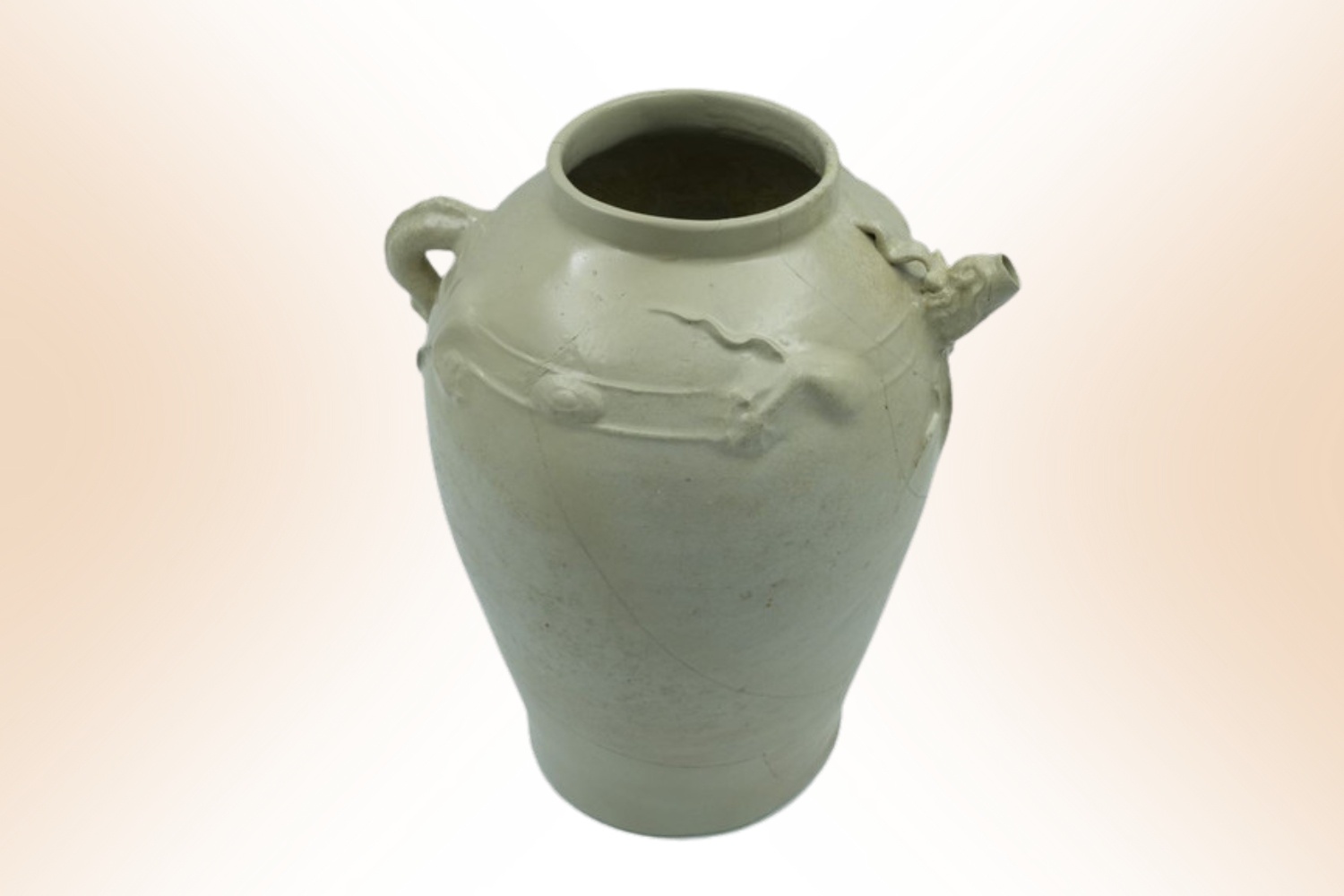
This 15th-century royal vase is not merely a ceramic piece but a unique work of art with an elaborate design. Its structure, including the base, body, shoulder, mouth, spout, and handle, is meticulously crafted, exuding majesty and elegance.
|
Imperial vase. |
In particular, the aesthetic highlight of the artifact lies in the hidden dragon motif. The spout of the vase is shaped like a dragon's head raised high with raised horns and mane, the handle resembles a dragon's body with raised fins, and the four dragon legs are sculpted on either side of the shoulders, depicting a powerful, dynamic posture. Furthermore, on either side of the vase, the image of four powerful dragon legs is depicted in a vigorous, dynamic pose.
These characteristics reflect the exceptional level of ceramic craftsmanship during the early Le Dynasty. The production process of the vase demonstrates a sophisticated combination of high-level technique and artistry, from the manual shaping on the potter's wheel, the elaborate assembling of individual parts, to the firing process.
In particular, the technique of firing at high temperatures in separate kilns contributed to optimizing product quality, affirming the important role of ceramics in contemporary social and spiritual life.
Collection of Truong Lac pottery from the early Le Dynasty (15th-16th centuries)
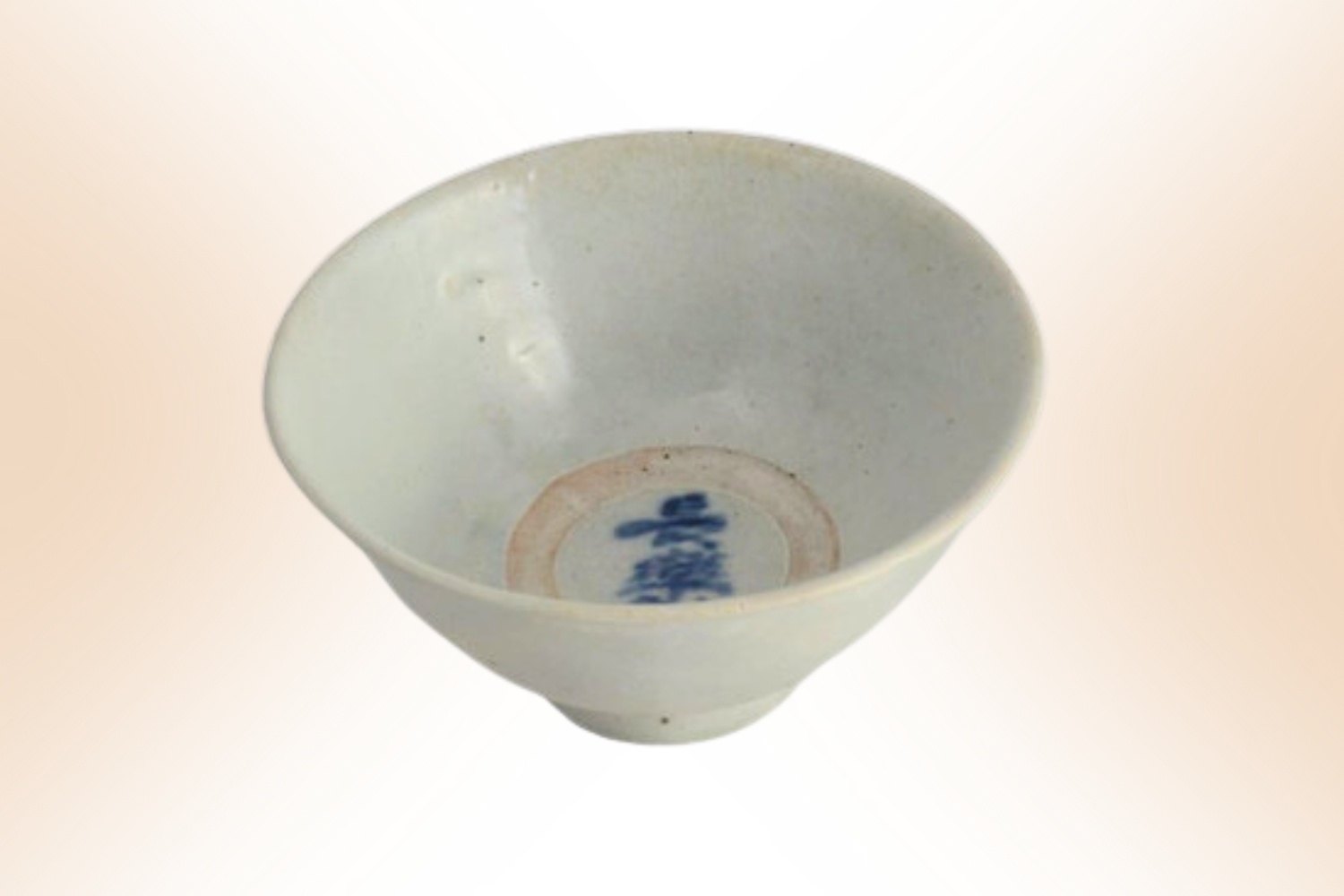
The Truong Lac pottery collection, dating from the early Le Dynasty (15th-16th centuries), was found at the 18 Hoang Dieu historical site and comprises 36 artifacts, including 9 cups, 6 bowls, 20 plates, and 11 plate body fragments. All artifacts are handcrafted, making each piece a unique, one-of-a-kind item; no two pieces are exactly alike.
The highlight of this collection lies in the Chinese characters inscribed on the artifacts. Specifically, 31 artifacts bear the inscription "Truong Lac," 4 artifacts are marked "Truong Lac Treasury," and 1 artifact bears the inscription "Truong Lac Palace."
|
Truong Lac ceramic bowl. |
The placement and manner of inscriptions on pottery carry distinct meanings. Inscriptions inside bowls and plates, etched beneath the glaze before firing, signify authenticity. Conversely, inscriptions on the bottom of plates, added after firing, serve as a mark of ownership.
The decorative patterns on the artifacts in the collection hold special historical and cultural value. The Truong Lac pottery collection not only helps to recreate the structure and spatial organization, but also clearly reflects the daily life within the imperial palace during the early Le Dynasty. This is a valuable source of information contributing to the reconstruction of the appearance of the ancient Thang Long capital.
The recognition of these three collections as national treasures not only clearly demonstrates their exceptional cultural and historical value but also plays a crucial role in preserving and promoting the nation's cultural heritage. At the same time, they serve as important sources of information for research, helping to shed light on a glorious period in the country's history.
Source: https://lifestyle.znews.vn/3-bao-vat-quoc-gia-gan-1000-nam-tuoi-tai-hoang-thanh-thang-long-post1566905.html
![[Photo] Prime Minister Pham Minh Chinh holds a phone call with the CEO of Russia's Rosatom Corporation.](/_next/image?url=https%3A%2F%2Fvphoto.vietnam.vn%2Fthumb%2F1200x675%2Fvietnam%2Fresource%2FIMAGE%2F2025%2F12%2F11%2F1765464552365_dsc-5295-jpg.webp&w=3840&q=75)

![[Photo] Closing Ceremony of the 10th Session of the 15th National Assembly](/_next/image?url=https%3A%2F%2Fvphoto.vietnam.vn%2Fthumb%2F1200x675%2Fvietnam%2Fresource%2FIMAGE%2F2025%2F12%2F11%2F1765448959967_image-1437-jpg.webp&w=3840&q=75)








































![[OFFICIAL] MISA GROUP ANNOUNCES ITS PIONEERING BRAND POSITIONING IN BUILDING AGENTIC AI FOR BUSINESSES, HOUSEHOLDS, AND THE GOVERNMENT](https://vphoto.vietnam.vn/thumb/402x226/vietnam/resource/IMAGE/2025/12/11/1765444754256_agentic-ai_postfb-scaled.png)






















![[Photo gallery] Long Thanh Airport 'lights up' ready to welcome its first flight](https://vphoto.vietnam.vn/thumb/402x226/vietnam/resource/IMAGE/2025/12/11/1765467251707_bia_20251211222704.jpeg)















Comment (0)