

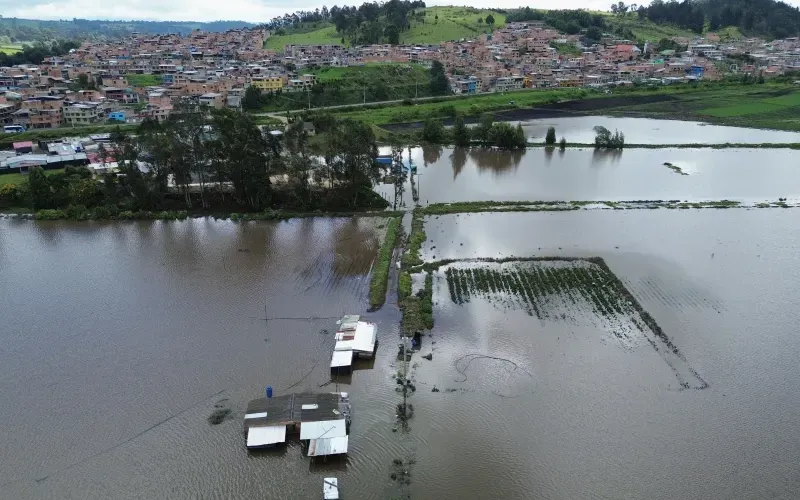
A strawberry farm is flooded after heavy rains in Facatativa, Colombia, on March 20, 2026. (Photo: AP)
A new climate report shows that scientists are discarding the most extreme scenarios for global warming, as the use of green energy has helped to mitigate some of the highest carbon emission predictions.
According to the Associated Press, researchers believe that the worst-case and best-case scenarios used in climate policy planning are no longer considered reasonable. The shift to energy sources such as solar, wind, and geothermal energy has helped reduce the risk of the world following the highest-emission scenario. However, progress in reducing emissions is still not fast enough to keep global temperatures within international targets.
The 2015 Paris Climate Agreement aimed to limit global warming to 1.5 degrees Celsius above pre-industrial levels, or mid-19th century. However, scientists believe that even the best-case scenarios currently in place still exceed this threshold.

People cool off under public showers during a heatwave in Rio de Janeiro, Brazil, on January 15, 2026. (Photo: AP)
According to climate scientist Detlef Van Vuuren of Utrecht University, the lead author of the study on future scenarios, the new worst-case scenario forecasts warming by about 3.5 degrees Celsius by the end of this century, 1 degree Celsius lower than the previous scenario. Meanwhile, the best-case scenario is slightly higher than previously predicted and still exceeds the target of the Paris Agreement.
Johan Rockström, Director of the Potsdam Institute for Climate Impact Research in Germany, stated that the future of climate is narrowing and the situation "cannot be as bad as feared, but also cannot be as good as expected."

Workers inspect the quality of solar panels at the ReNew factory on the outskirts of Jaipur, India, on August 21, 2025. (Photo: AP)
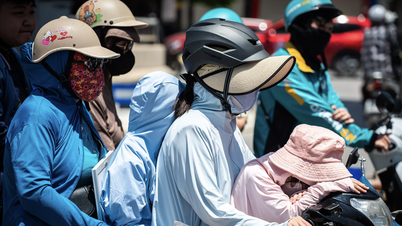
Scientists say current average scenarios suggest the Earth could warm by about 3 degrees Celsius by the end of this century. The world is already about 1.3 degrees Celsius warmer than pre-industrial levels. This could also have major impacts on ecosystems, freshwater resources, and lead to extreme weather events such as floods and heatwaves.
Some experts warn that the 1.5°C target is not just a symbolic number. Exceeding this threshold could have serious consequences, especially for small, developing island nations, where the risk of rising sea levels directly threatens people's lives.
Source: https://vtv.vn/nhiet-do-trai-dat-se-van-vuot-nguong-muc-tieu-15-do-c-100260519230536558.htm


























































































Comment (0)