

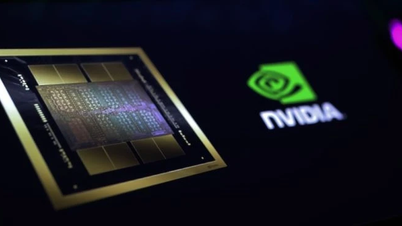
In the three months ending July 30, Nvidia generated $13.51 billion in revenue, setting a new record for the company. “A new era of computing has begun. Global businesses are shifting from general-purpose computing to accelerated computing (using hardware to speed up computation) and generative AI,” said Jasen Huang, founder and CEO of Nvidia, in the announcement.
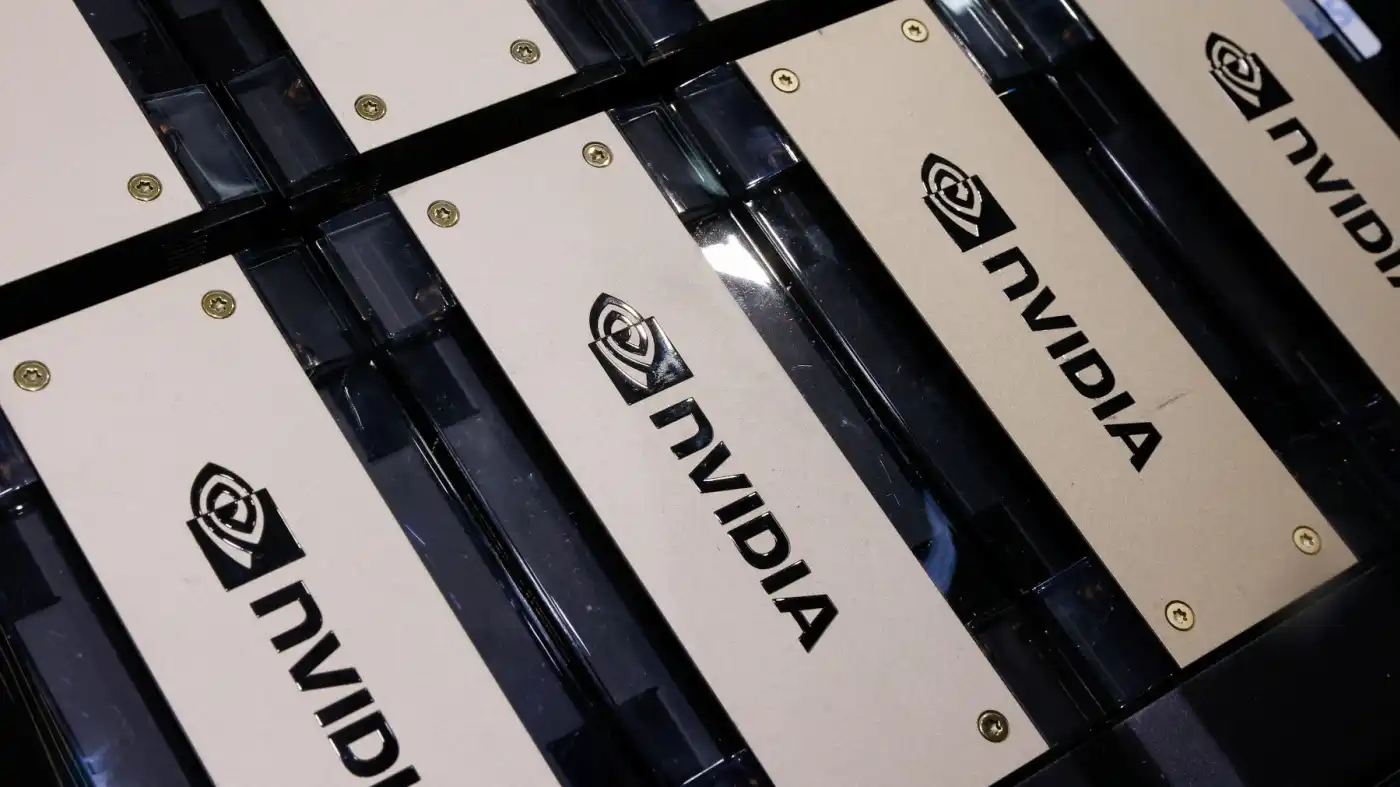
Mr. Huang revealed that demand for Nvidia's products is enormous and the company will expand its production capacity. Supply will increase sharply for the remainder of 2023 and next year.
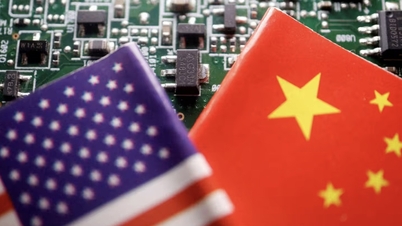
The majority of AI chip demand comes from China, even as the US has imposed export restrictions on the country. Nvidia shared that Chinese buyers account for 20% to 25% of its data center product revenue. In total, data center products contributed $10.32 billion, a 171% increase compared to Q2 2022.
Chinese internet giants are racing to secure high-performance Nvidia chips. According to the Financial Times , their orders have reached $5 billion amid concerns that the US will continue to tighten export restrictions.
In September 2022, Washington announced a new export ban targeting high-end graphics processing units (GPUs) and AI accelerators used in high-performance computing in China. The move was seen as an attempt to further restrict China's technological and military advancements.
After sales of its A100 and H100 AI chips were affected by the ban, Nvidia began selling lower-end A800 and H800 chips to China. However, the US is reportedly considering further tightening export restrictions to prevent Nvidia from selling AI chips to Chinese customers.
According to Nvidia's Chief Financial Officer, Colette Kress, if that were to happen, it would immediately impact the company's business results. In the long term, the restrictions would cause the American industry to permanently lose the opportunity to compete and lead in one of the world's largest markets.
Another major American chipmaker, Intel, recently announced it will quadruple its high-end chip packaging services by 2025, with a new factory in Malaysia aimed at regaining its global leadership position in semiconductor manufacturing.
The Penang plant will be Intel's first overseas facility to utilize Foveros 3D chip packaging technology. Additionally, the company is building a new chip assembly and testing line in Kulim.
Advanced chip packaging technology combines multiple types of chips into a single package to increase computing power and reduce energy consumption. According to Vice President Robin Martin, Malaysia will become Intel's largest 3D chip packaging facility.
Previously, chip packaging was considered less important and less in demand than chip manufacturing. However, it has emerged as a crucial area in the current chip manufacturing race, receiving even more attention due to the explosion of AI generation.
The advanced chip packaging market was worth $44.3 billion in 2022, according to research firm Yole Intelligence, and is projected to grow 10.6% annually to $78.6 billion by 2028. Semiconductor expert Mark Li notes that the latest catalyst is primarily large-scale language model processing chips for AI.
(According to Nikkei)
Source


![[Image] Central Party Office summarizes work in 2025](/_next/image?url=https%3A%2F%2Fvphoto.vietnam.vn%2Fthumb%2F1200x675%2Fvietnam%2Fresource%2FIMAGE%2F2025%2F12%2F18%2F1766065572073_vptw-hoi-nghi-tong-ket-89-1204-jpg.webp&w=3840&q=75)














































































Comment (0)