

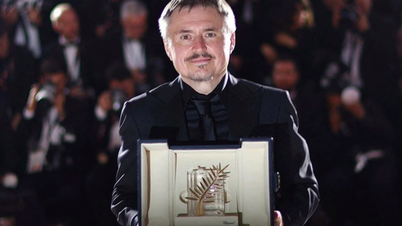
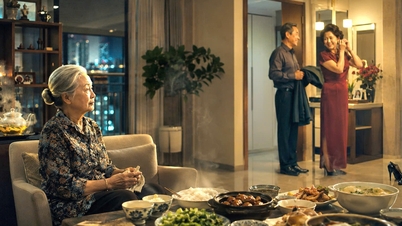
Looking back about two decades, Vietnamese cinema was dominated by commissioned productions, relying heavily on government funding, and therefore largely lacking the essential elements of a commercial industry. Consequently, films had short lifespans and were difficult to reach a wider audience. With the spread of commercialization, especially in Ho Chi Minh City – where private producers quickly entered the market – cinema created a vibrant market. As a result, a series of high-grossing films, ranging from a few billion to hundreds of billions of dong, have continuously emerged, particularly in the last five years. Cinema has become a prime example of successful commercialization.
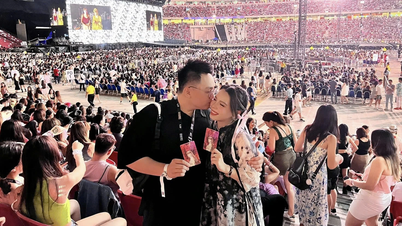
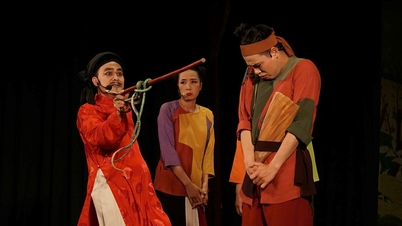
Cinema is a prime example of using its own values to generate resources and promote sustainable and independent development. In practice, many other areas of the cultural industry, such as cultural tourism, performing arts, and fashion , have also demonstrated the potential to generate significant profits. Art programs and concerts like "Brother Overcoming a Thousand Obstacles," "Brother Says Hi," popular cultural tourism destinations, and Vietnamese fashion shows at domestic and international events... partly demonstrate the success of the creative and well-directed commercialization of culture.
The success of the "using culture to fund culture" model lies primarily in gradually eliminating the prejudice that culture is merely a field for spending money. When culture can create its own value, sustain itself, and reinvest in itself, it also means gradually reducing its dependence on the state budget. The essence of the "commercialization of culture" is to integrate cultural fields into the mainstream of the economy . When viewed as a special type of commodity, culture must adhere to fundamental laws: supply and demand, competition, use value, and marketability. This requires that cultural products, in order to survive and thrive, must first be viable in the market. To achieve this, it is necessary to break down old conventions, especially in the mindset of "order-based" production, and move towards understanding the needs and tastes of the public. When culture meets market demands, it not only attracts social attention but also opens up opportunities to mobilize various resources, including investment from outside the industry – a crucial factor in building capital for cultural development. From here, a positive cycle is established: profitable investment – reinvestment – expanding market – enriched cultural life – contributing to increased GDP. This is the viable path to building a cultural industry that is both distinctive and economically vibrant, close to the community and integrated into the overall development trend.
However, the principle of "using culture to nurture culture" cannot be achieved overnight. It is a process requiring a clear roadmap, appropriate strategies, and a synchronized system of solutions. In this process, the state still plays a fundamental role: building the legal framework, formulating policies, regulating the market, and enacting mechanisms to encourage development. But the core issue is creating a sustainable cultural ecosystem – where resources are planned and invested systematically, long-term, focused, and with quality, and above all, ensuring national identity and alignment with the trend of integration. Only when culture becomes a profitable sector with export potential and a clear place in social life and the economy will "using culture to nurture culture" cease to be a slogan and become a vibrant and feasible reality.
Source: https://www.sggp.org.vn/phat-huy-suc-manh-van-hoa-post800447.html




















![[Video] Sunset at Lap An Lagoon – Where the sun sets over the fishing nets](https://vphoto.vietnam.vn/thumb/340x192/vietnam/resource/IMAGE/2026/05/31/1780192137701_beach-landscape-sea-water-nature-grass-745871-pxhere-com.jpeg)



![[Photo] The General Secretary, President and his wife lay flowers at the Ho Chi Minh Monument in Manila.](https://vphoto.vietnam.vn/thumb/1200x675/vietnam/resource/IMAGE/2026/05/31/1780219759477_anh-man-hinh-2026-05-31-luc-16-29-07.png)



















































Comment (0)