

Transforming tourism into a green tourism model is not just about greening tourist areas and protecting the ecological environment; it also requires a change in mindset among those working in tourism and a proper approach to nature.
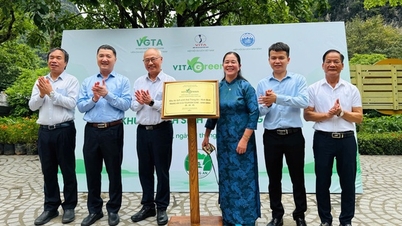
This was the main topic discussed by tourism managers and experts at the workshop "Green Transformation for Sustainable Tourism Development" held on April 12th, within the framework of the Vietnam International Tourism Fair - VITM Hanoi 2024.

Some localities have implemented it effectively.
In Decision No. 882/QD-TTg promulgating the National Action Plan on Green Growth for the period 2021-2030, the Prime Minister directed prioritizing the development of tourism types towards green growth and the development of green tourism products. In particular, in Resolution No. 82/NQ-CP on key tasks and solutions to accelerate the recovery and development of tourism effectively and sustainably, the Government directed the tourism sector to develop and implement a green tourism action program for the period 2023-2025. This shows that the transition to green tourism is an urgent requirement and task.
At the workshop, the criteria for green tourism were more clearly defined, enabling localities and organizations to take practical and effective actions. Chairman of the Vietnam Tourism Association, Vu The Binh, stated that since 2018, the Association has launched the "Vietnam Tourism - Joining Hands to Reduce Plastic Waste" movement, initially creating a shift in awareness among those working in the tourism industry. "Green tourism must focus on the following elements: developing tourism activities that do not use plastic waste; building tours using environmentally friendly means of transportation; developing community tourism, ecotourism, agricultural and rural tourism; and mobilizing efforts to clean up waste at tourist destinations," Mr. Vu The Binh stated.
Recognizing that green tourism is not just about greening tourist areas, Nguyen Anh Tuan, Director of the Vietnam Institute for Tourism Development Research, believes that green tourism should be understood as green economic growth through the distribution of environmentally friendly products and services, the use of renewable energy, clean fuels, and green buildings.
Currently, green tourism is being implemented in many localities with various effective models. For example, Co To island district (Quang Ninh province) advises residents and tourists not to bring plastic items to the island. Quang Nam province has issued many sustainable development policies such as "Building Hoi An city - an ecological city"; and implemented the project "Raising awareness about solid waste". Ninh Binh province has developed many green tourism products, focusing on nature experiences...
It requires cooperation from many sides.
Although progress has been made in the green tourism transformation, experts believe that the development of green tourism in Vietnam is still not synchronized. Many localities are implementing it haphazardly, with each doing their own thing. Therefore, green tourism in Vietnam has not yet formed a systematic framework.
Based on the practical experience of businesses implementing green tourism transformation, Ms. Ha Thi Dieu Vien, Deputy General Manager of Silk Sense Hoi An Resort, stated that the resort prioritizes the use of environmentally friendly materials and avoids plastic in its guest rooms. However, not all tourists are aware of the importance of using eco-friendly items. “To achieve green tourism transformation, a shift in mindset and awareness is needed from both service providers and tourists. If only one entity implements it, it will not be able to effectively promote green tourism transformation,” Ms. Ha Thi Dieu Vien expressed.
From the perspective of travel businesses, the Standing Vice President of the Vietnam Travel Association, Phung Quang Thang, believes that effective and sustainable green tourism transformation requires the joint efforts of local authorities, businesses, and the people. “Local authorities and organizations need to take more concrete actions, plan areas for tourism development, and invest in infrastructure and equipment to minimize environmentally polluting activities. Furthermore, public awareness campaigns need to shift from understanding to action, promoting proper conduct and respect for cultural resources and heritage,” Mr. Phung Quang Thang shared.
According to Nguyen Ha Hai, Vice Chairman of the Quang Ninh Provincial Tourism Association, drawing lessons from the green tourism model on Co To Island, tourism units can develop green tourism products such as litter-collecting tours and tours experiencing outdoor activities related to nature conservation. "When organizing tours, units themselves need to guide and remind tourists not to litter and to limit the use of single-use plastic water bottles," Mr. Nguyen Ha Hai stated.
In line with the global trend towards sustainable development, the tourism industry is striving to promote and encourage localities and businesses to implement green transformation. Deputy Director of the Vietnam National Tourism Administration, Ha Van Sieu, suggested that localities and businesses need to collaborate to jointly implement the criteria of green tourism; introducing solutions using environmentally friendly technologies and materials to build effective and attractive green tourism products.
Source
![[Image] Pleasant weather helps students enter the 10th grade entrance exam with confidence.](https://vphoto.vietnam.vn/thumb/1200x675/vietnam/resource/IMAGE/2026/05/29/1780034401612_ngay-1-thi-lop-10-minh-duy-8-5009-jpg.webp)
![[Photo] Ba Lang An Lighthouse - the "eye of the sea" amidst the "rock museum" of Quang Ngai province.](https://vphoto.vietnam.vn/thumb/1200x675/vietnam/resource/IMAGE/2026/05/29/1780038698840_anh-man-hinh-2026-05-29-luc-14-10-42.png)










































































Comment (0)