 |
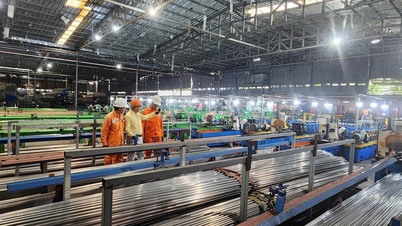
| Cashew processing at Long Son Food Co., Ltd. (Long Binh ward). Photo: Binh Nguyen |
In 2025, with total cashew exports reaching approximately US$8.05 billion and imports reaching approximately US$5.9 billion, Dong Nai City will continue to maintain its position as one of the country's major export centers. However, the cashew industry is facing many significant challenges, especially the dependence on imported raw materials for processing. The cashew industry needs to implement a comprehensive set of solutions for sustainable development.
Importing 85% of raw materials.
According to information from the Dong Nai Cashew Association, in the first four months of 2026, Vietnam's cashew kernel exports reached 217,000 tons, with export value of nearly 1.5 billion USD, an increase of nearly 9% in volume and approximately 10% in value compared to the same period in 2025. It is projected that in 2026, the cashew industry will achieve an export value of 5 billion USD.
According to a report by the Department of Industry and Trade of Dong Nai City, in the first three months of 2026, cashew nut exports reached approximately 430 million USD, continuing to be among the city's key agricultural export products. Cashew nut imports for processing reached approximately 731 million USD, indicating that Dong Nai's cashew industry plays a crucial role in the national cashew processing and export chain.
The cashew industry in Dong Nai still has much room and potential for development. For the industry to develop sustainably in the context of increasing competition and integration, it requires close cooperation between the State, businesses, cooperatives, and farmers; while simultaneously promoting the application of science and technology , digital transformation, improving product quality, and building a modern, green, and sustainable brand for the Dong Nai cashew industry.
Deputy Director of the Department of Agriculture and Environment, LE THI ANH TUYET
Mr. Vu Thai Son, Chairman of the Dong Nai Cashew Association, commented: Almost all export figures from businesses in Dong Nai city are declared at Ho Chi Minh City Customs because raw cashews are imported through the city's ports. In reality, it is estimated that Dong Nai accounts for up to 85% of the country's cashew production and 65-70% of the world's cashew exports.
Emphasizing the challenges facing the cashew industry, Mr. Vu Thai Son stated: Currently, the cashew industry is only self-sufficient in about 10-15% of its raw materials, with the remainder imported from African countries (approximately 2.15 million tons) and Cambodia (approximately 1 million tons). Meanwhile, African countries are promoting policies to encourage and incentivize domestic cashew production, thus reducing the supply of cashews to Vietnam. Cambodia is studying policies to restrict the export of raw cashews for processing into cashew kernels domestically. Cashew processing technology is easily copied, and African governments are using economic leverage such as tightening raw cashew exports and subsidizing kernel production to boost production and create jobs. They are also very close to the European market, making it convenient to sell their products to Europe and the United States.
Mr. Vu Thai Son added: In recent years, the cashew industry has faced many difficulties in ensuring production and business. Quite a number of businesses have left the industry, and very few new businesses have been established to produce and process cashews. If the Vietnamese cashew industry does not have domestically grown raw materials and is too dependent on imported raw materials, the cashew production industry will continue to face difficulties.
Solving the challenging raw material sourcing problem.
One of the most fundamental solutions for the cashew industry today is to plant more cashew trees, increase productivity, and improve the quality of cashew varieties to reduce dependence on importing raw cashew nuts from abroad.
According to Mr. Le Thuc Long, Deputy Head of the Rural Development Sub-Department (Department of Agriculture and Environment): Currently, the entire city has 176,000 hectares of cashew trees with a production of approximately 300,000 tons of raw cashews per year. Many localities have formed large specialized cultivation areas, with farmers applying high-yield varieties and mechanization in production and processing. However, the area of old, aging trees remains large, exceeding 50,000 hectares.
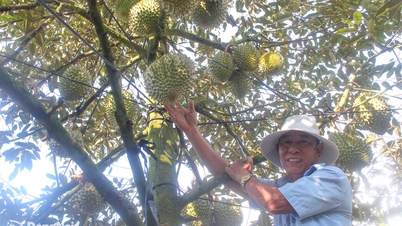
Mr. Nguyen Si Song, a cashew farmer in Phu Rieng commune, shared: “This year, I am 70 years old and have spent my whole life working with cashew trees. We farmers are always concerned about how to increase cashew productivity. One hectare of old cashew varieties only yields 700-800 kg of nuts, while the new varieties currently available can yield 4-5 tons. Improving cashew varieties is very important because there is still a large area of old, low-yielding cashew trees. What farmers most desire is to have reputable suppliers of high-yield cashew varieties so we can switch to them.”
With 1,416 establishments and businesses investing in cashew processing and export, many of which are involved in deep processing, Dong Nai City is not only the "cashew capital" of Vietnam but also one of the world's important cashew production and processing centers. However, the cashew industry still faces many challenges such as: low processing rates, trade promotion not commensurate with its potential, and volatile prices… requiring comprehensive solutions.
Mr. Nguyen Ngoc Thuc, Head of the Trade Management Department (Dong Nai City Department of Industry and Trade), affirmed: Dong Nai City continues to maintain its position as the national center for agricultural product processing, especially in the cashew industry. To support businesses in leveraging digital consumer trends and expanding export markets, the City Department of Industry and Trade continues to actively implement many trade promotion programs linked to digital transformation. These programs focus on supporting cashew businesses in participating in online trade fairs, connecting with international partners, and promoting products on cross-border e-commerce platforms such as Shopee, Alibaba, Amazon, and other digital social media platforms. Simultaneously, businesses are supported in building e-commerce websites, digitizing product data, applying QR codes for traceability, and promoting brands through digital media platforms. The Department of Industry and Trade also strengthens coordination in organizing training courses on cross-border e-commerce, livestreaming sales, building digital brands, and applying artificial intelligence (AI) in promoting export products.
Plains
Source: https://baodongnai.com.vn/tin-moi/202605/phat-trien-nganh-dieu-ben-vung-9700189/


![[Photo] General Secretary and President To Lam presides over the meeting to approve the draft report on the results of the second inspection by the Politburo of the Standing Committee of the Hanoi City Party Committee.](https://vphoto.vietnam.vn/thumb/1200x675/vietnam/resource/IMAGE/2026/05/26/1779789811432_a2-bnd-4430-9620-jpg.webp)

























































Comment (0)