

Hai Van Pass, also known as "The most magnificent pass in the world," is a complex of military structures and fortifications built on the summit of Hai Van Mountain, along the ancient north-south highway. The book Dai Nam Nhat Thong Chi (Comprehensive Gazetteer of Dai Nam) records: "Hai Van Mountain is the border between Quang Nam and Thua Thien provinces. Previously, the boundary in Thach Ban area and the north of the pass was marked with inscriptions on wooden markers. When the pass gate was built, it was stipulated that the area north of the gate belonged to the jurisdiction of Thua Thien province, while the area south of the gate belonged to the jurisdiction of Quang Nam province."
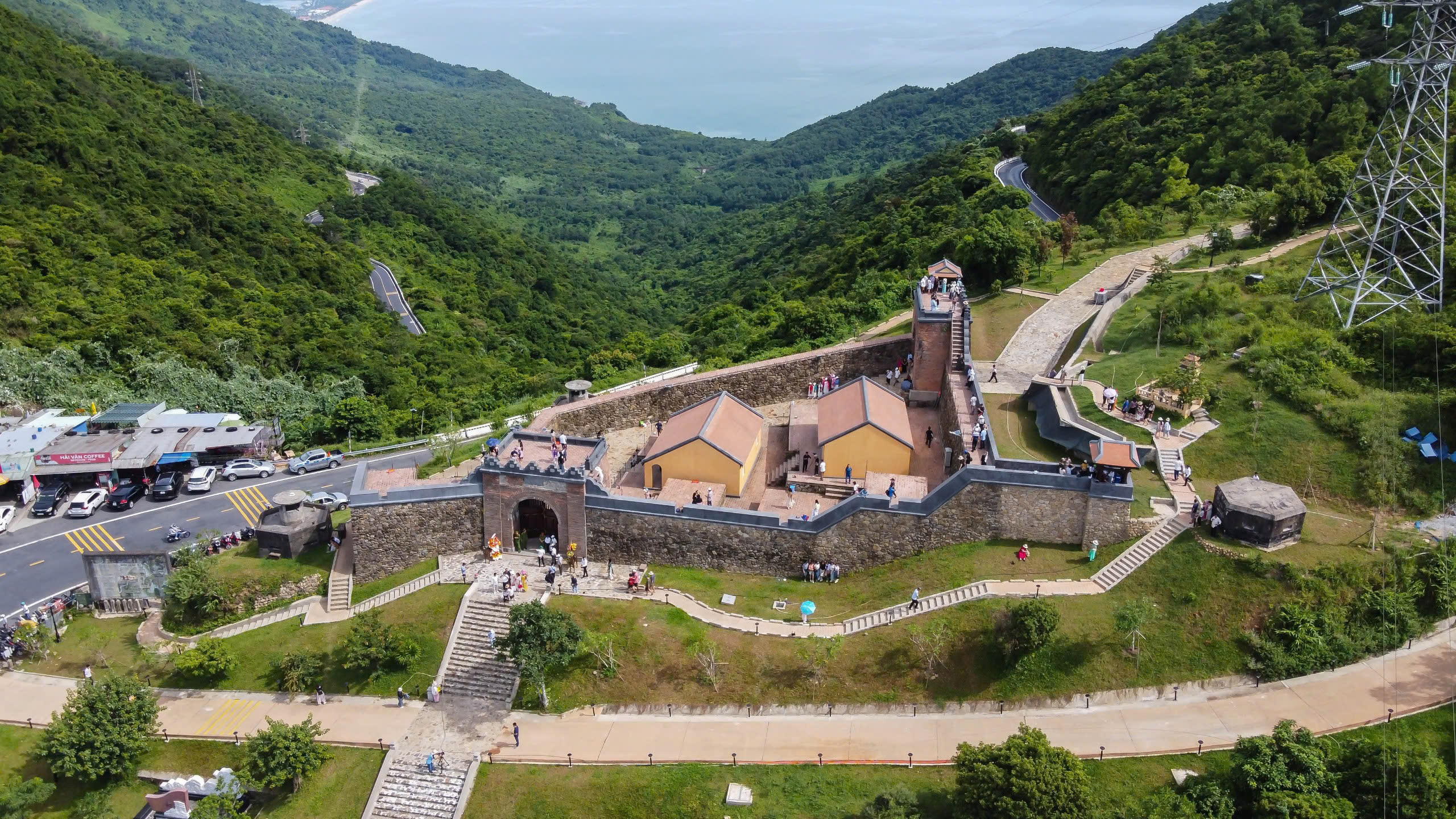
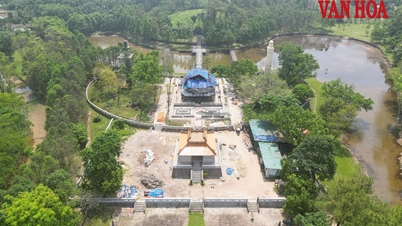
The Hai Van Pass architectural complex after restoration.
The Hai Van Pass historical site, built in 1826, was a military fortress guarding the summit of Hai Van Pass, now located on the border between Thua Thien-Hue province and Da Nang city.
The structure, built at an altitude of over 496 meters above sea level, comprises a complex of fortifications, including a main gate facing Da Nang city. Above the main gate are three Chinese characters: "Hai Van Pass," while behind it are six large Chinese characters: "The most magnificent pass under the sky."
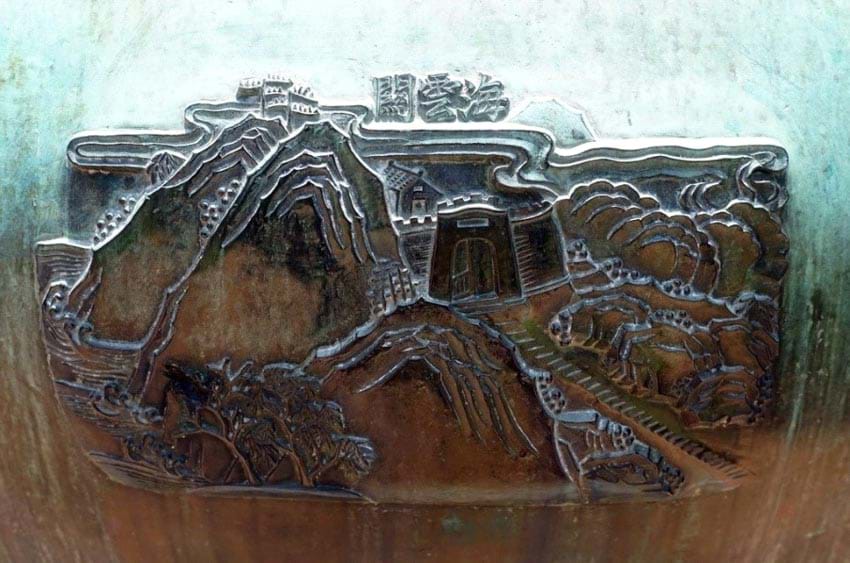
The Hai Van Pass is depicted on the Du Dinh peak.
According to historical records, the gate was built in the 7th year of Minh Mạng's reign (1826). Initially, it was guarded by one garrison commander and soldiers, with a monthly rotation. In the 17th year of Minh Mạng's reign (1836), the garrison was increased to two commanders, rotating monthly, while the soldiers were rotated every 15 days. The gate was also provided with "Drawings of the flags of foreign countries" for easy monitoring; and was given binoculars to observe the distant sea. Any foreign ships entering the Da Nang harbor had to be reported to the gatekeeper.
The Hai Van Pass is also depicted on the Du Dinh, one of the nine bronze cauldrons symbolizing the unification of the country under the Nguyen Dynasty, currently located in front of the The Mieu Temple in the ancient capital of Hue. The Hai Van Pass was classified as a national historical site by the Ministry of Culture, Sports and Tourism in 2017. The structures at Hai Van Pass have recently been restored and renovated by the People's Committee of Thua Thien-Hue province and Da Nang city, becoming an important historical site and an attractive tourist destination.
"THE REALM OF CLOUDS"
For young people and backpackers, conquering Hai Van Pass during the changing seasons is an indescribable experience, as they can almost reach out and touch the ethereal clouds.
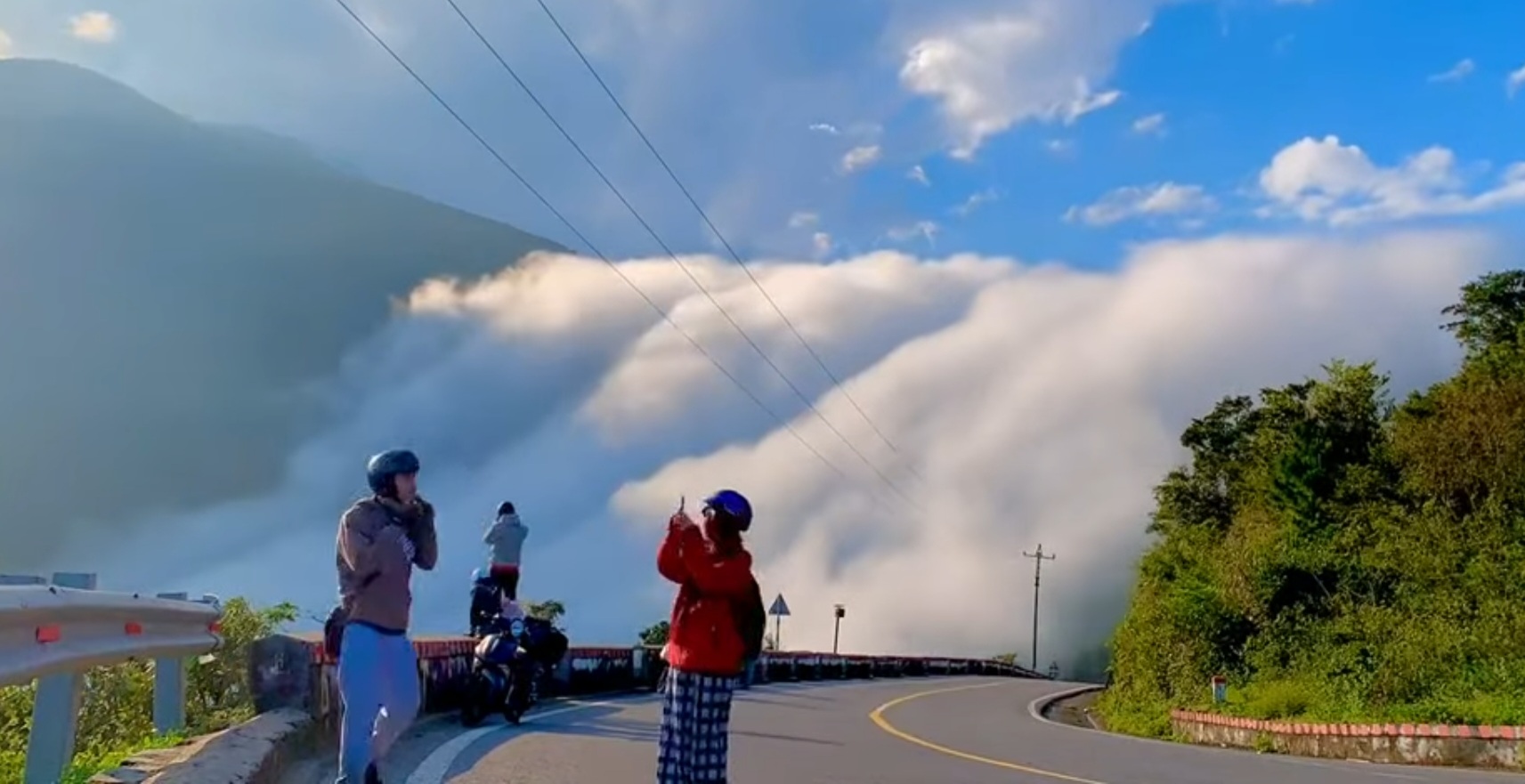
Young people chase clouds on Hai Van Pass.
During the transitional seasons, Hai Van Pass is covered in white clouds. This dreamlike, yet real, scene, resembling a paradise on earth, has become a destination for young people from Hue and Da Nang, seeking to experience the mesmerizing illusions of nature.
The trend of cloud hunting on Hai Van Pass has emerged in recent years and has quickly become popular among young people. The best time to hunt for clouds is during the transition from late autumn to early winter. At this time, Hai Van Pass becomes a place shrouded in a white, ethereal mist at dawn and dusk. The hazy white clouds, carrying a chill in the air, are carried by the wind across the pass, creating an surreal atmosphere. Sometimes, two people are only a few steps apart, but when the clouds sweep past, they are no longer visible to each other.
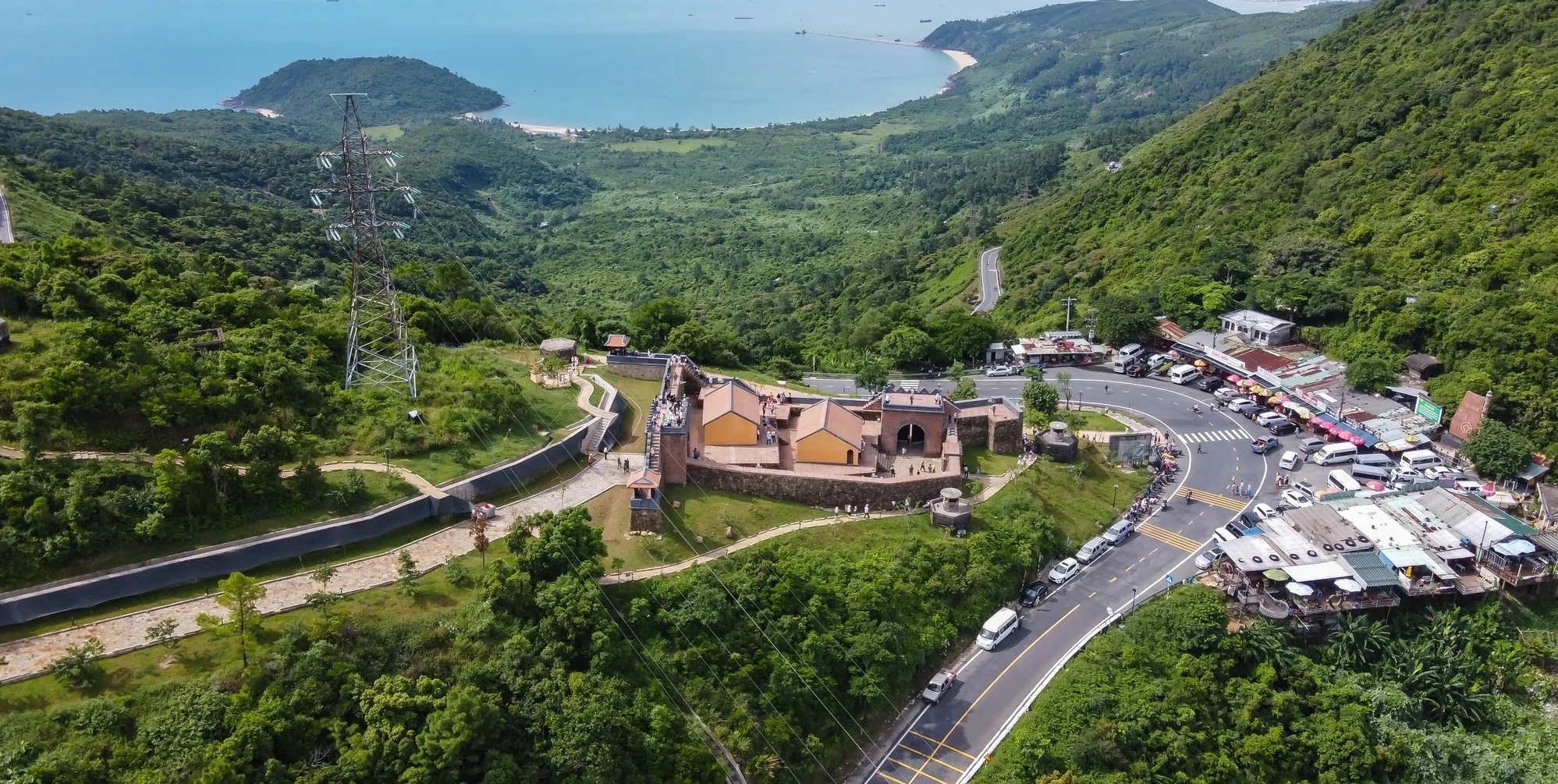
Panoramic view of Hai Van Pass, looking towards Da Nang City.
At the top of the pass, when the clouds blanket the area, young people can capture impressive photos. Not only the scenery, but the shops and cafes at the top of the pass have also cleverly created picturesque check-in spots. Just stop by a cafe, enjoy a warm cup of coffee for 20,000 VND, and you can freely take photos of the scenic view from a stunning angle.
Right at the summit of the pass during transitional weather, if we're lucky, we can even see the natural boundary drawn right in the middle of the road, dividing the two distinct northern and southern climate zones. This is especially true on days with low pressure systems, when cold air from the north sweeps in. At the summit of the pass, right in the middle of the road, nature has cleverly drawn a straight line, dividing the two sides. On the Thua Thien-Hue side, it's cold and damp, while the southern side of Da Nang City is surprisingly dry and clear. As for the sky, the northern side of Hai Van Pass is shrouded in mist, while the southern side, looking towards Da Nang City, is clear with white clouds.
Those fortunate enough to witness this moment during cloud hunting will have a fascinating experience of nature's wonder. Hai Van Pass is a natural wonder that the ancients cleverly named "The most magnificent pass in the world." Hopefully, with the restoration of Hai Van Pass, it will become an attractive destination on the Central Vietnam heritage route. (to be continued)
Source: https://thanhnien.vn/nhung-ngon-nui-thieng-san-may-tren-dinh-hai-van-185240911225244073.htm

![[Photo] Prime Minister Pham Minh Chinh receives the Chinese Ambassador to Vietnam](https://vphoto.vietnam.vn/thumb/1200x675/vietnam/resource/IMAGE/2026/04/05/1775397481797_ndo_br_dsc-5512-jpg.webp)

























































































Comment (0)