

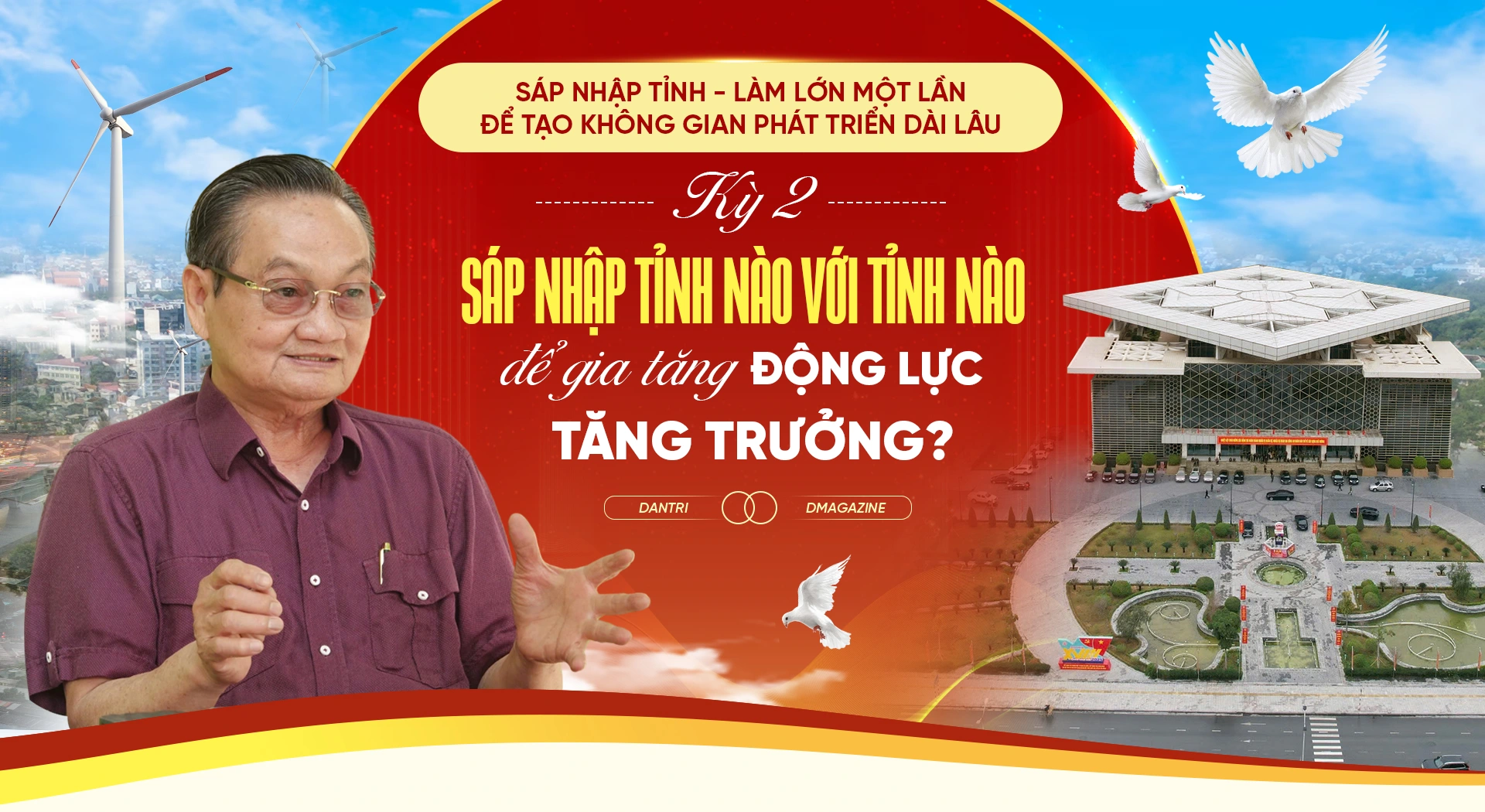
Dr. Tran Du Lich believes that with this administrative reorganization, the important thing is not only to reduce the number of provinces and cities but also to create an administrative space and a development space that are "one and the same." According to him, a spatial development perspective is needed so that when decentralizing power to provincial or city governments, they have room to develop " economic sub-regions," leading to greater efficiency.
According to him, it is necessary to unify the viewpoint that due to different natural characteristics, geographical locations, and landscapes, the scale of provinces and cities should not be the same in terms of area and population, because development around the world also varies greatly in scale, with some megacities but also very small, self-governing cities.
Furthermore, it's impossible for the Mekong Delta, Central Vietnam, and the Central Highlands to have the same scale, area, and population. Determining the appropriate scale requires careful consideration by relevant authorities based on various factors and established principles and criteria…

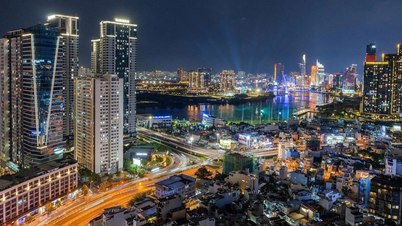
Regarding the Southeast region, Dr. Tran Du Lich believes that we are struggling with the economic development of the Ho Chi Minh City region because, in reality, it is impossible to create a regional level; management is only at the provincial level. Although the decision to form the Ho Chi Minh City region was made in 2013, in practice, everyone is acting independently, and despite numerous discussions on mechanisms, no solution has been found.
According to experts, with the upcoming provincial mergers, expanding Ho Chi Minh City into a metropolitan area could create a single-level government, which would be very advantageous for development, instead of being linked together as a single economic region. In the absence of a regional government, a metropolitan area becoming a single-level government would be even more advantageous, especially in exploiting infrastructure development advantages. Expanding Ho Chi Minh City's space would accelerate the completion of existing inter-provincial infrastructure projects.
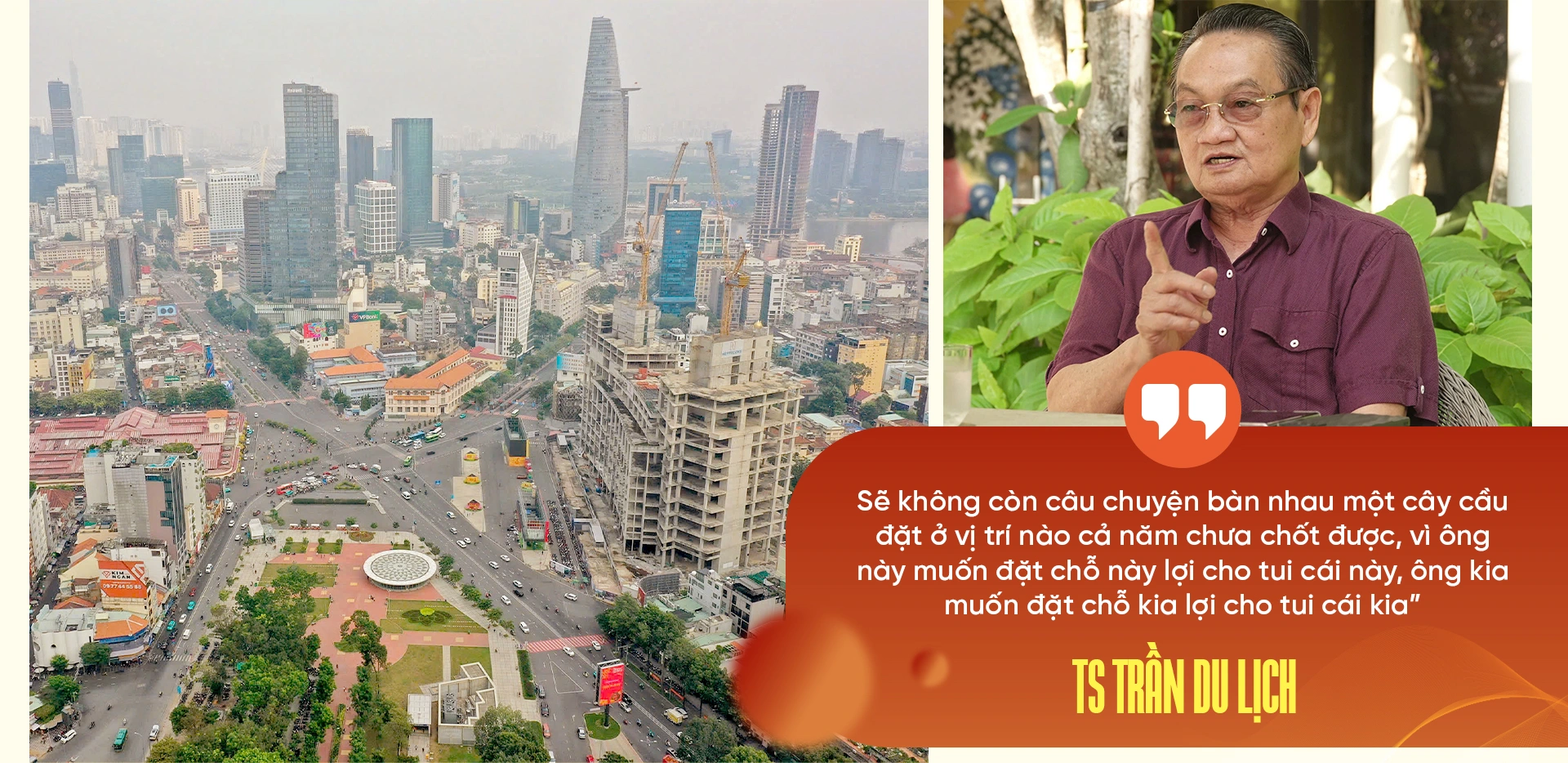
"There will no longer be endless debates about the best location for a bridge, with people spending years trying to finalize the plan because one person wants to place it here for their own benefit, and another wants to place it there for their own benefit," emphasized Dr. Tran Du Lich.
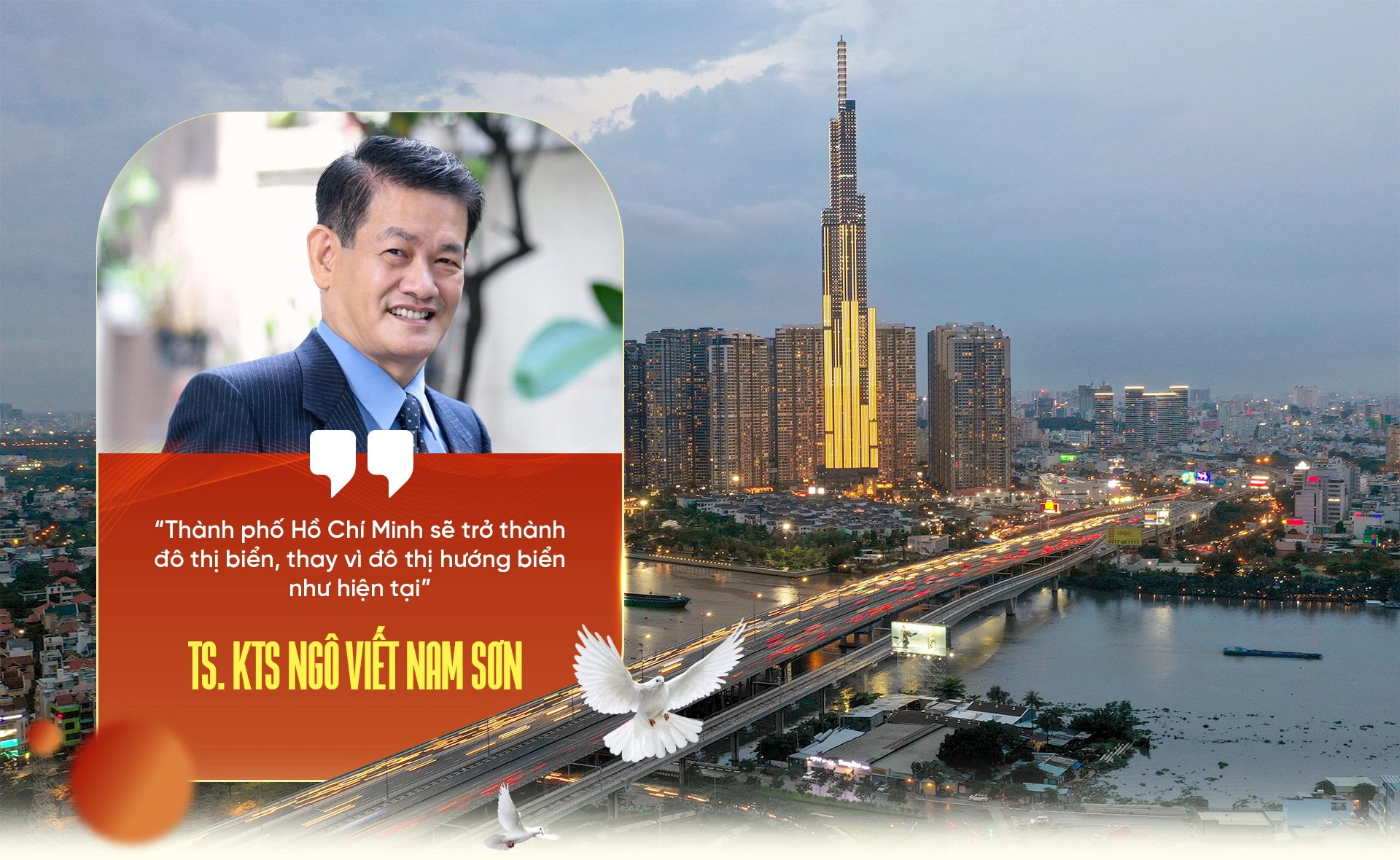
Architect Ngo Viet Nam Son observes that Ho Chi Minh City's previous urban planning was a multi-centered urban plan, with the inner city and surrounding satellite cities. Going forward, if Ho Chi Minh City merges with a neighboring province to the north and a province to the southeast, the city will become a three-polar urban center, possessing unique advantages that it previously lacked.
At that time, the northern area, being a high-lying region, would become a magnet for population and industrial development in the context of climate change and rising sea levels. Conversely, with the advantage of the sea in the southeast, the city would form a long chain of coastal urban areas. Ho Chi Minh City would become a coastal city, instead of a city oriented towards the sea as it is currently (i.e., an inland city with a branch extending to the sea in Can Gio).
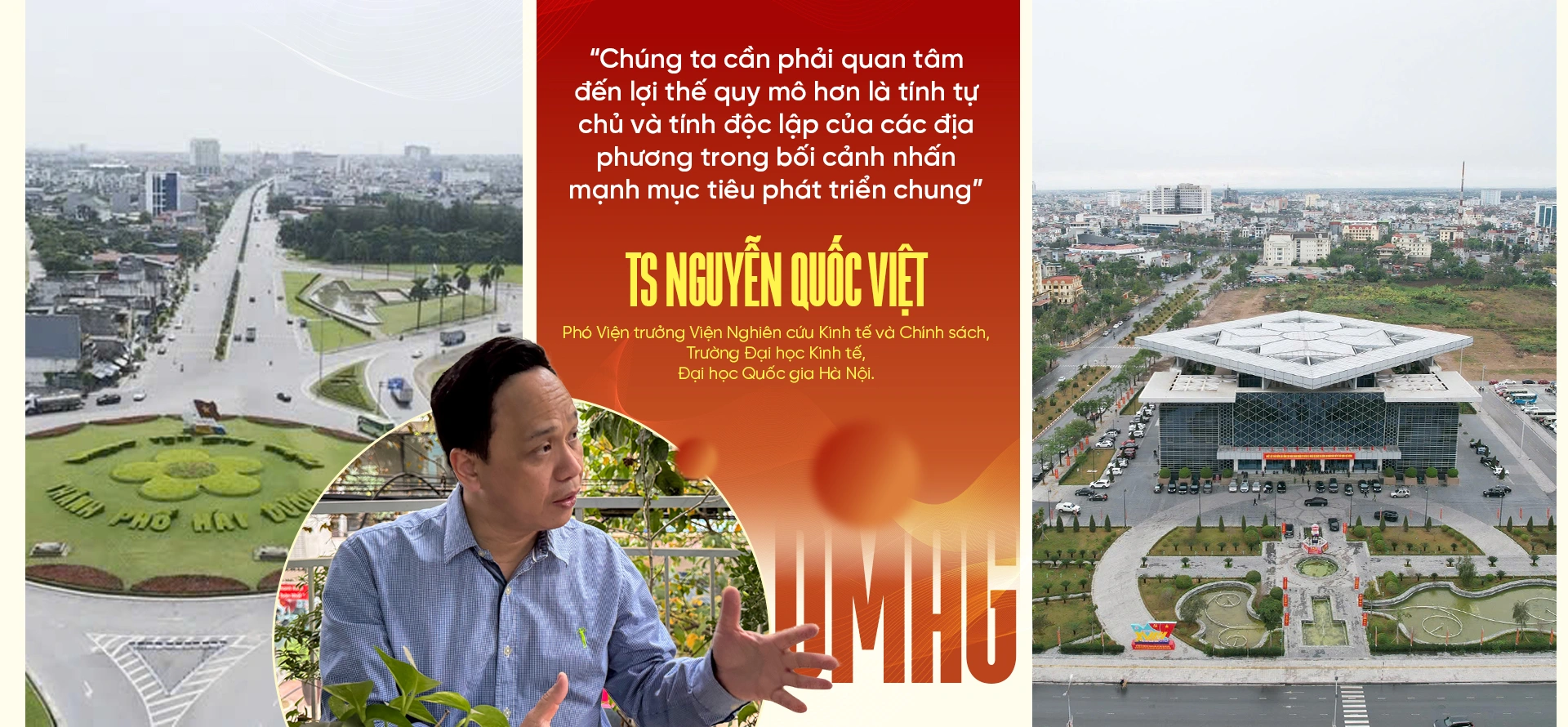
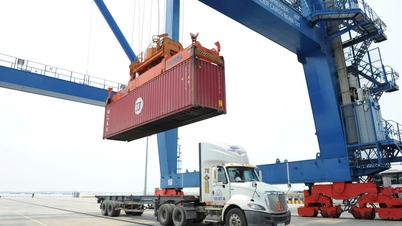
Dr. Nguyen Quoc Viet, Deputy Director of the Institute for Economic and Policy Research, School of Economics, Vietnam National University, Hanoi, also acknowledged that the merger helps extend the development space and growth poles to the sea based on better transportation infrastructure connections, given that we complete a series of expressways extending all the way to Ba Ria - Vung Tau, as well as on the basis of connecting expanded seaport infrastructure.

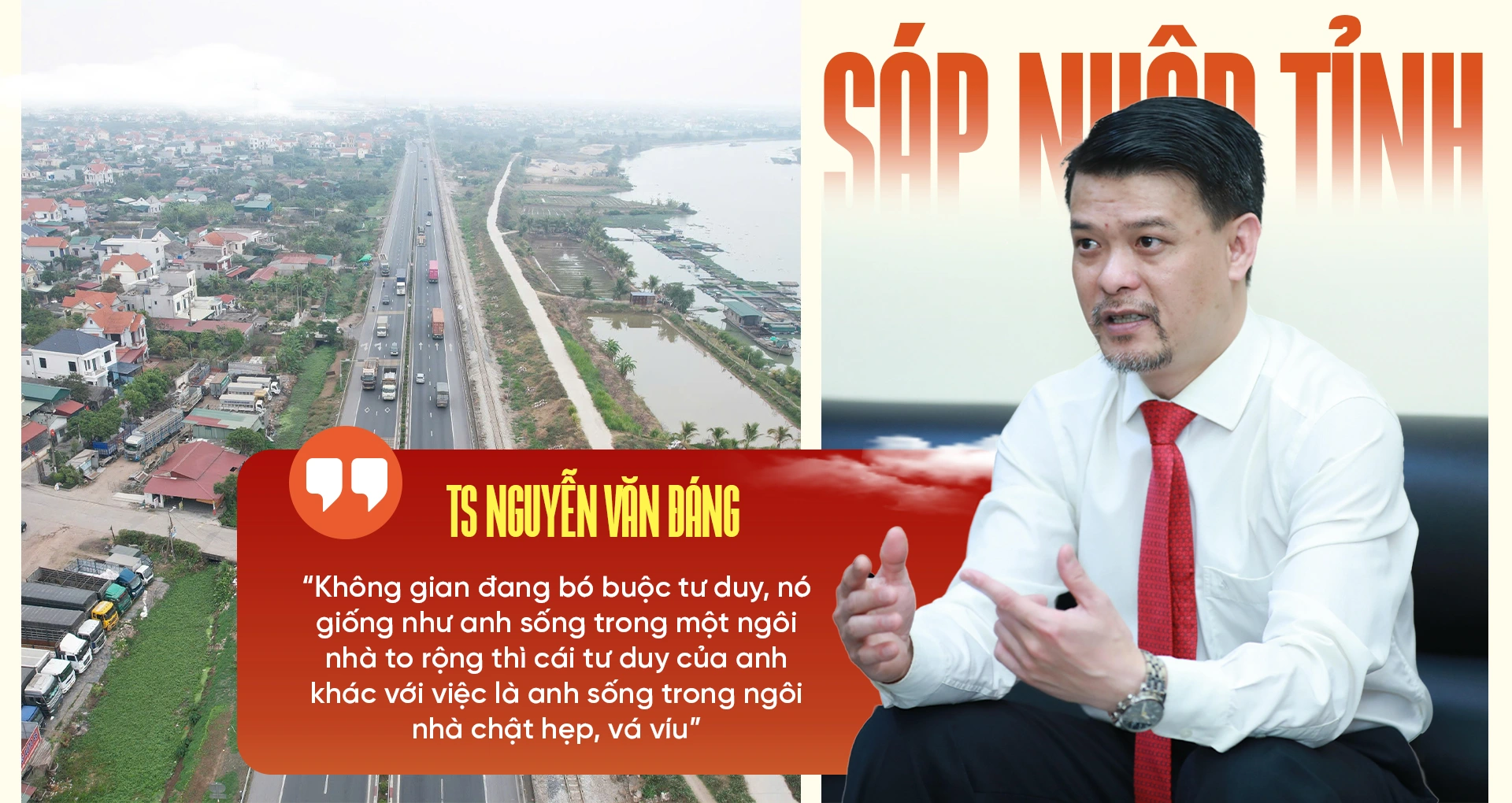
Dr. Nguyen Van Dang from the Ho Chi Minh National Academy of Politics observes that the most challenging area for development today is the Red River Delta. This region has experienced extremely vibrant economic activity in recent years, but according to Dr. Dang, this rapid development has led to the depletion of resources in the smaller provinces within the region, including Bac Ninh, Hai Duong, Hung Yen, Vinh Phuc, and Ha Nam…
"Space is restricting thinking; it's like living in a large, spacious house—your thinking is different from living in a cramped, makeshift house," Dr. Nguyen Van Dang said, using an analogy.
Furthermore, there is currently competition among provinces to attract investment, and according to Dr. Dang, this is normal and necessary for provincial leaders. However, the fact that every province is rolling out the red carpet leads to waste and overall losses.
"We need to focus on economies of scale rather than the autonomy and independence of localities in the context of emphasizing common development goals," Dr. Nguyen Quoc Viet, Deputy Director of the Institute for Economic and Policy Research, School of Economics, Vietnam National University, Hanoi, shared his views with Dr. Dang.
Dr. Viet argues that focusing solely on individual localities will not maximize public investment resources and will not create sufficient appeal to attract other investment sources.
Regarding the specific merger plan in this area, a former leader of the Ministry of Construction stated that Hai Duong and Hung Yen provinces were previously separated from Hai Hung province. These two provinces compete with each other, both focusing on industry, logistics, and urban development. Merging them would create a larger area, but the resulting province would lack a coastline, so the authorities may consider other options.
With the three provinces that were formerly separated from Ha Nam Ninh province, reuniting them as suggested by the expert would still be logical. These three provinces complement each other in development… Similarly, the two provinces that were separated from Ha Bac province have a very strong Kinh Bac cultural space.

Referring to the Mekong Delta region, Dr. Pham Viet Anh, a specialist in sustainable management and environment and ESG-S sustainability advisor, noted that large-scale planning helps avoid fragmented development, which can easily disrupt ecological balance.
Water resources pose a high risk to the ecological environment and livelihoods in the Mekong Delta; therefore, forest resources, groundwater, dike systems, irrigation canals, and land must be managed more effectively to ensure sustainable development for the entire region.
One of the issues that needs attention and monitoring is that the merged provinces must establish and plan green "buffer zones" to limit environmental pollution caused by large-scale agricultural industrialization if it gets out of control in the future.
Dr. Tran Du Lich analyzed that the Mekong Delta region needs to rely on the unique ecological characteristics of each area to redistribute development space appropriately, in order to develop the strengths of each region. Specifically, it can be divided into 4 areas as follows: Ca Mau Peninsula, Long Xuyen Quadrangle, Tay Do Center (Can Tho), and Dong Thap Muoi.
The central area of Tay Do already has a seaport and an airport, making it favorable for the development of economic zones and industrial parks. Therefore, expanding the development space for this central area will ensure its future integration with all the industrial hubs of the Mekong Delta region.
The Ca Mau Peninsula region (Bac Lieu, Ca Mau) will focus on strong development in fisheries, seafood, wind energy, and renewable energy.
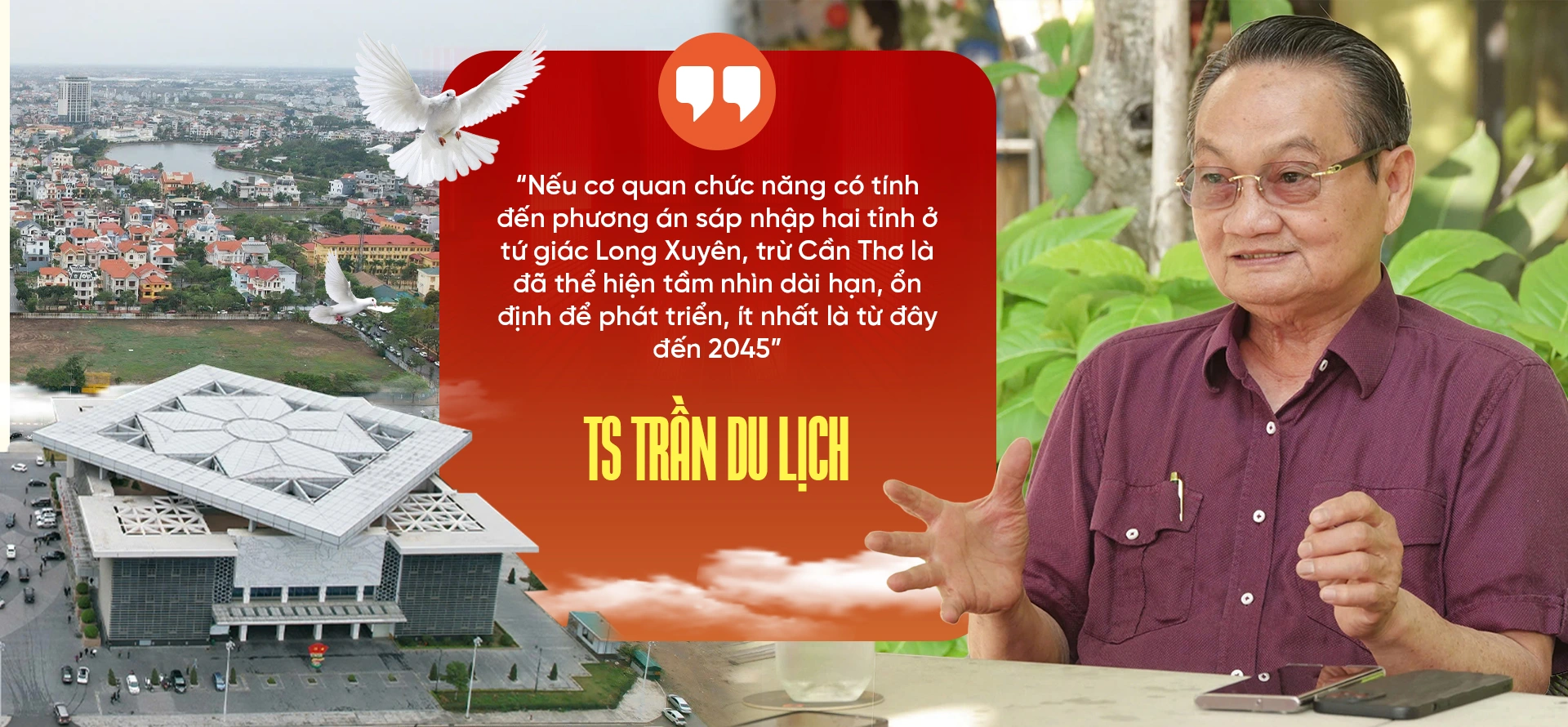
The Long Xuyen Quadrangle has potential for agricultural and fisheries development due to its long coastline and border with Cambodia. If the authorities consider merging two provinces in this quadrilateral (excluding Can Tho), it would demonstrate a long-term, stable vision for development, at least until 2045.
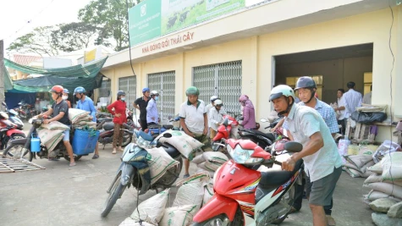
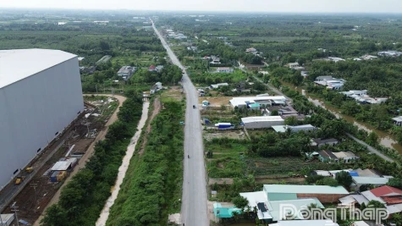
The Dong Thap Muoi area is a low-lying region that has been reclaimed to become a major rice-growing area. Therefore, this area will continue to be a large rice granary for the region and the whole country.
Content: Bich Diep, Xuan Hinh, Can Cuong, Tung Nguyen
Dantri.com.vn
Source: https://dantri.com.vn/noi-vu/sap-nhap-tinh-nao-voi-tinh-nao-de-gia-tang-dong-luc-tang-truong-20250327082922397.htm


![[Image] Central Party Office summarizes work in 2025](/_next/image?url=https%3A%2F%2Fvphoto.vietnam.vn%2Fthumb%2F1200x675%2Fvietnam%2Fresource%2FIMAGE%2F2025%2F12%2F18%2F1766065572073_vptw-hoi-nghi-tong-ket-89-1204-jpg.webp&w=3840&q=75)






































































Comment (0)