

 |
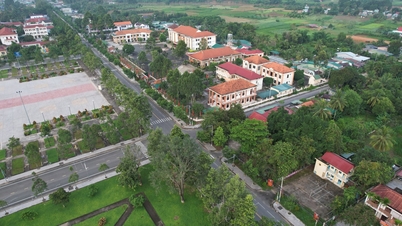
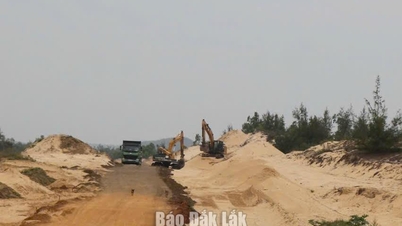
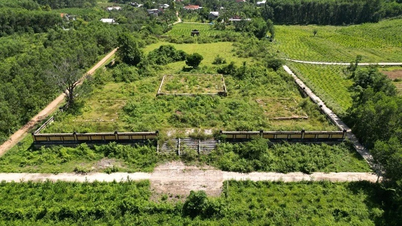
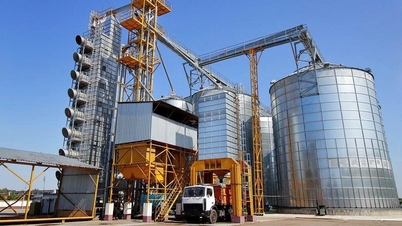
| Infrastructure and industrial projects implemented in Thanh Thinh commune have reduced agricultural land area, creating a need for livelihood transformation for local people. |
Prospects for the local area
In Na Giao village, the rice paddies that were once closely associated with farmers have been converted into factory grounds, internal roads, and technical infrastructure. This change opens up new prospects for the locality, but also creates a sense of unease among some residents as their traditional source of livelihood gradually shrinks.
Mr. Be Lang Ha's family is one of the households whose land was confiscated for the project. Previously, the family's income mainly depended on a few acres of rice fields, orchards, and fish ponds. When the land was handed over, Mr. Ha and many other households were not only concerned about compensation but also about long-term employment. He shared: "When there is no longer land to cultivate, people are forced to find new jobs to have a stable income and proactively adapt to changing production conditions."
Anxiety is also present among many local workers who are accustomed to agricultural production. The transition to an industrial work environment with its demands for discipline, time management, and closed-loop production processes is a significant change.
Mr. Nguyen Van Quang, from Na Giao village, said: "My biggest concern is how to have a sustainable source of income to take care of my family and raise my children in the context of having no more land for production."
However, new job opportunities are gradually emerging on the converted land area. Thanh Binh Industrial Park currently has 15 registered investment projects, of which 9 are already operational, and 4 are under construction and undergoing trial operation. Average revenue reaches approximately 2,000 billion VND per year, with estimated export value of around 40 million USD.
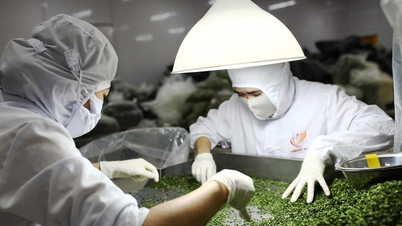
Notably, the industrial park has created jobs for over 1,000 workers, approximately 80% of whom are local residents. Many former farmers have now become stable workers in factories in the area.
At Lechenwood Vietnam Co., Ltd., a company specializing in the production of plywood for export, production has remained stable for over 5 years. The factory is located near a plantation forest, and its products are primarily exported to European and American markets. Due to the need for production expansion, the company regularly recruits unskilled laborers with no prior experience required, providing post-employment training, with salaries ranging from 7-10 million VND per month.
Ms. Luong Thi Thuan, a worker at the company, said: "Working near home helps me reduce living expenses and allows me to take better care of my family. Previously, my income depended on the seasons, so it was unstable. Now, with a fixed monthly salary, my family's life is gradually improving, and raising my children is easier."
Developing an industrial work ethic
 |
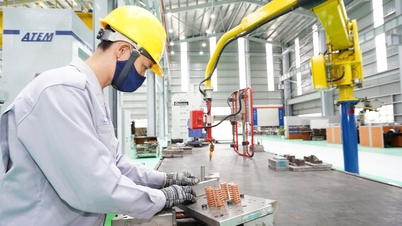
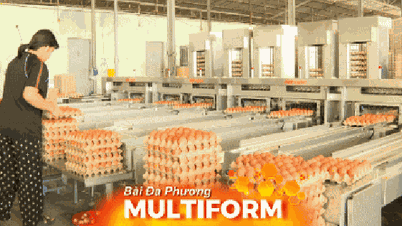
| The Thanh Binh Industrial Park currently provides employment for over 1,000 workers, mostly local residents. |
Income levels in the industrial zone are not yet high compared to some of the province's major industrial centers, but the advantage of working near their residences, not having to rent accommodation, and the convenience of caring for their families are important factors in retaining workers. Over time, many have adapted to the new work environment, developed an industrial work ethic, and proactively arranged their lives according to clearer plans.
Mr. Vu Nhu Hoi, Vice Chairman of the People's Committee of Thanh Thinh commune, emphasized: Along with the process of land use conversion, the locality pays special attention to social welfare. The commune has reviewed households whose land has been reclaimed, assessed their employment needs, and coordinated with businesses to organize direct consultations and recruitment in villages and hamlets.
At the same time, vocational training courses are implemented tailored to each group of workers, especially middle-aged workers, to help them adapt to the industrial production environment. The local government's goal is to ensure that people whose land has been reclaimed have jobs and stable incomes.
In the coming period, as new projects are completed and put into operation, the demand for recruitment at Thanh Binh Industrial Park is expected to continue to increase. This creates favorable conditions for local workers, especially those from households previously engaged in agricultural production, to have more opportunities for career change. In fact, with the support of the government and businesses, the livelihood transition process in Thanh Thinh is progressing positively.
The changes in Thanh Thinh reflect the inevitable trend in the industrialization process in many localities. With proper preparation in terms of support policies, vocational training, and job placement, people can fully adapt to the new production environment and gradually stabilize their lives right in their hometown.
On what was once agricultural land, today's factories are driving economic development, opening up long-term prospects for employment and ensuring social security for the local community.
Source: https://baothainguyen.vn/kinh-te/202603/thanh-thinh-chuyen-minh-8db342e/














































































Comment (0)