

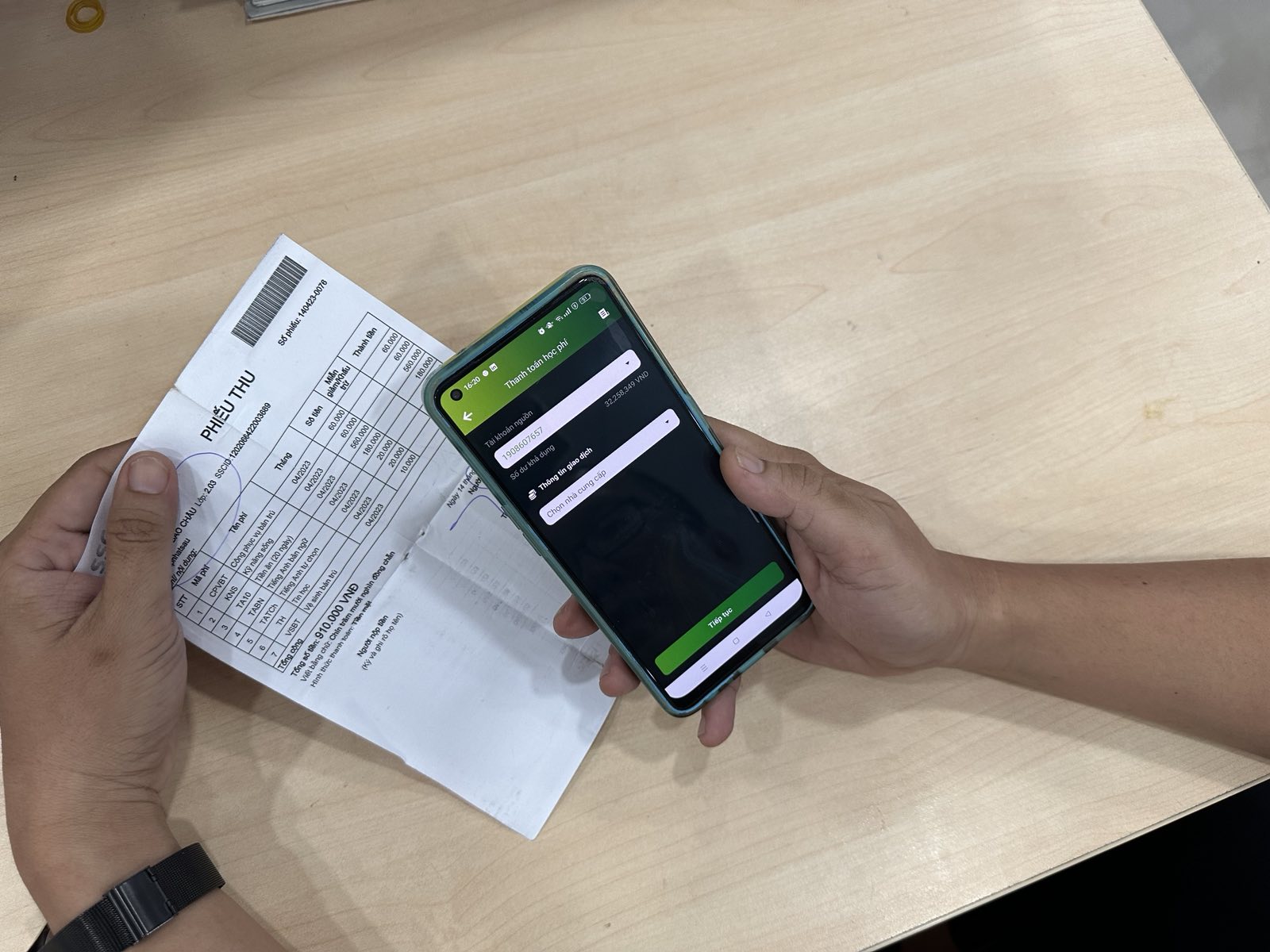
The Ho Chi Minh City Department of Education and Training requires schools to diversify tuition payment channels to make it convenient for parents to use.
On December 25th, the Ho Chi Minh City People's Committee launched a plan to implement the project on developing cashless payments in the city from 2021 to 2025, which includes the payment of tuition fees.
Accordingly, departments and agencies shall fully and effectively implement the contents within the scope, authority, and responsibility of the city as outlined in the plan for developing cashless payments in Vietnam.
In the education sector, the objective is to promote and expand the implementation of cashless payments for tuition fees and other educational service fees in educational institutions. Implementation must comply with legal regulations, ensure the security, safety, and efficiency of payment systems, and protect consumers using cashless payment services.
Following a request from the Ho Chi Minh City People's Committee, Mr. Le Hoai Nam, Deputy Director of the Department of Education and Training, noted that to ensure legal compliance with issued guidelines and to address the shift in payment methods from cards to information technology applications through convenient banking payment services, educational institutions are requested to use the correct name of the project on developing cashless payments in Vietnam for the period 2021-2025 in their implementation documents. The phrase "SSC tuition payment card project" should be adjusted and discontinued.

The Ho Chi Minh City Department of Education and Training requires schools to diversify tuition payment channels, ensuring that no single bank or payment intermediary benefits from the payment process.
The Department of Education and Training leadership requires educational institutions to connect with payment systems licensed according to the regulations of the State Bank of Vietnam . The payment systems of educational institutions must ensure compliance with current state regulations and guidelines on data exchange and the application of information technology in state agencies. Attention should be paid to requirements regarding network information security, cybersecurity, and the protection of personal data.
Schools must diversify payment channels, avoiding favoritism towards any single bank or payment intermediary. Schools must create all the necessary conditions to provide parents with multiple choices and convenience in paying tuition fees and other educational service charges.
Specifically, the Department of Education and Training advises schools to select payment service providers with the lowest or no fees to recommend to parents; to publicly disclose service fees through various means, and to provide instructions on how to use the service on school bulletin boards, monthly fee notices, etc. This will allow parents to choose according to their needs. In addition, schools should provide complete information on banks and payment intermediaries that are successfully implementing cashless payment services to reassure parents.
Source link































































































Comment (0)