

Challenges in the implementation of the Nhon Trach 3&4 Thermal Power Plant project.
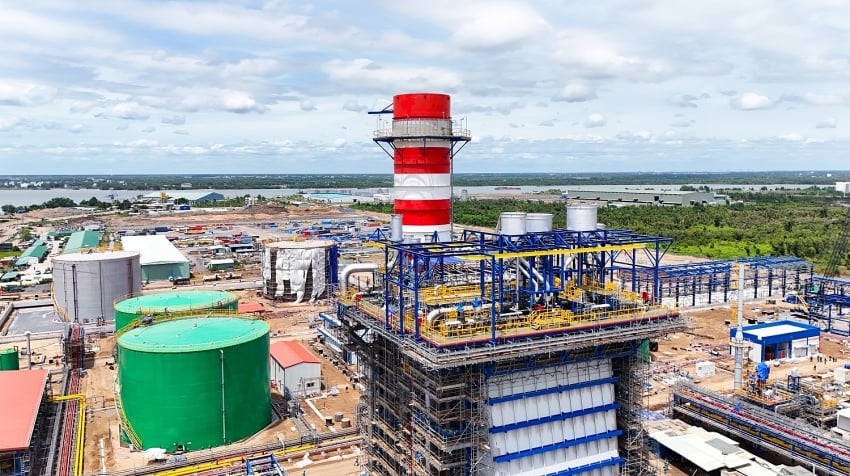
The Nhon Trach 3 power plant is preparing for its first firing in the fourth quarter of 2024, and the entire project is expected to enter commercial operation in 2025.
The Nhon Trach 3&4 power plant, located in Nhon Trach district, Dong Nai province, is a key national project invested by PV Power, with a total investment of US$1.4 billion and a capacity of 1,624 MW. This is the first LNG-fueled power plant in Vietnam, featuring modern gas turbine technology supplied by GE (USA), boasting the highest capacity and efficiency currently available. It is expected that upon commercial operation, the project will add over 9 billion kWh of electricity per year to the national grid, ensuring national energy security and contributing to the country's socio -economic development.
Launched in 2017, this project not only marks the first time Vietnam has used imported LNG in electricity production but also reflects the challenges related to mechanisms, finance, and legal procedures.
Currently, the plant is preparing for its first firing in Q4 2024, and the entire Nhon Trach 3&4 power plant project is expected to begin commercial operation in 2025. This is the first project in Vietnam to build two power plants simultaneously. However, despite its technical and construction successes, Nhon Trach 3&4 faces many obstacles related to legal procedures and regulations.
One of the biggest challenges is the lengthy legal process. From preparing feasibility studies, negotiating power purchase agreements (PPAs), gas sales agreements (GSAs), and EPC bidding to securing financing and construction, this process takes up to eight years. Of that, the legal procedures alone consume two-thirds of the total project implementation time. This shows the need for policy mechanisms and a sound legal framework to shorten timelines and increase efficiency for other LNG power projects.
Instead of using a project finance model, PV Power is applying a different business model for Nhon Trach 3&4, primarily relying on loans from domestic and international financial institutions without government guarantees. This model differs from previous projects, where companies like Petrovietnam or EVN often relied on government guarantees to attract loans.
PV Power has successfully secured financing for NT3&4 with a 25% equity and 75% debt ratio. Specifically, PV Power signed a $200 million loan with SMBC/SACE, a VND 4 trillion loan with Vietcombank , and most recently, a $521.5 million credit agreement with the Citi & ING banking consortium, insured by KSURE & SERV.
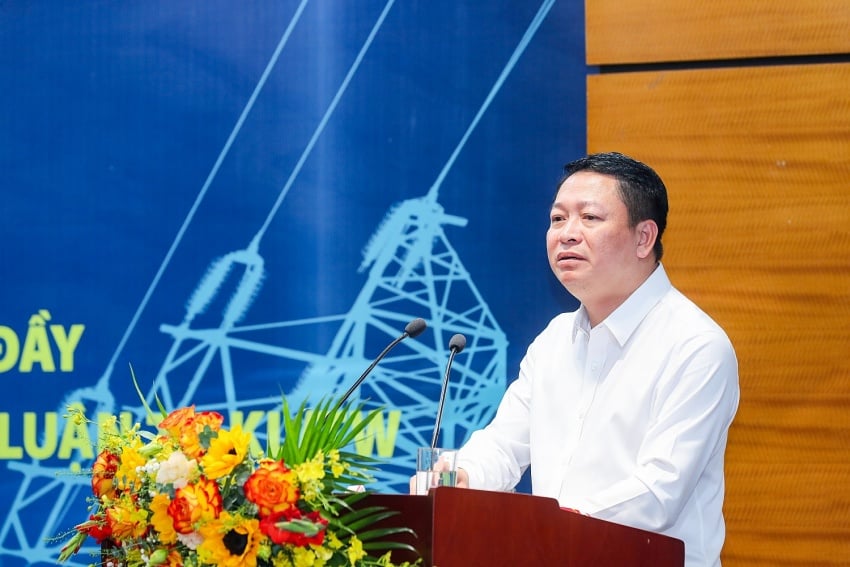
Mr. Nguyen Duy Giang, Deputy General Director of PV Power, shared the challenges encountered during the implementation of the Nhon Trach 3&4 power plant project.
Mr. Nguyen Duy Giang, Deputy General Director of PV Power, said, “The loan agreements for the Nhon Trach 3&4 Project are the first export credit loans taken out by Vietnamese enterprises without government guarantees. Previously, all power projects had government guarantees. PV Power has used its existing resources to push the project forward and ensure its ability to repay the debt.”
According to Mr. Giang, Power Purchase Agreements (PPAs) are not standard contracts recognized by international lenders. He stated that these agreements must satisfy requirements for equal electricity pricing and commitments on annual gas output. However, all of this is still at the research and revision stage, lacking a formal policy mechanism.
Furthermore, negotiations on the PPA and GSA faced numerous difficulties due to the volatility of LNG prices in the international market. Simultaneously, although the Nhon Trach 3&4 project's financial regulations were approved by the Government, the lack of foreign loan guarantees made it difficult for PV Power to secure financing from credit institutions. In addition, commitments regarding land handover and environmental protection were particularly crucial factors in securing foreign loans. For LNG projects, Vietnam's environmental standards only reached about 7% of international standards. Therefore, to meet the requirements of international donors, PV Power had to implement very rigorous environmental assessment procedures. Completing an environmental assessment for an LNG project typically takes about two years.
“We had to hire top consulting firms from the US to ensure that all environmental impact assessment processes were conducted comprehensively and accurately. From measuring biodiversity to monitoring the ecosystems surrounding the industrial park from upstream to downstream… this process requires a lot of effort and time. And credit approval depends entirely on the environmental impact of the LNG power plant project,” Mr. Giang added.
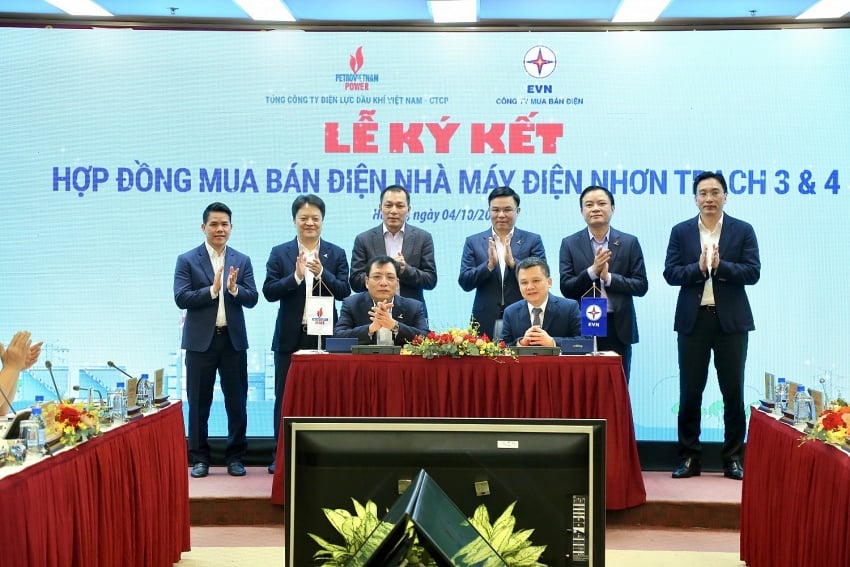
Mr. Le Nhu Linh, General Director of PV Power, and Mr. Le Khac Hung, Director of EVNEPTC, signed the PPA contract for the Nhon Trach 3&4 power plant.
Recently, PV Power officially signed the PPA contract for the Nhon Trach 3&4 power plant. This opens a "new door" for LNG power projects, potentially facilitating the early signing of GSA contracts linked to annual LNG purchase volumes, confirmation deadlines, and stable gas delivery plans at the most reasonable gas prices. Furthermore, the project's PPA contract is a prerequisite for international credit institutions to consider granting loans to PV Power, and other power businesses in the future, to implement similar projects.
From practical lessons to amending the Electricity Law.
Based on the difficulties faced by the Nhon Trach 3&4 power plant, PV Power has put forward practical recommendations to overcome these obstacles and contribute to the revised Electricity Law to make it more suitable and create more favorable conditions for future gas-fired power projects.
Statistics on actual investment in power plants show that the investment time for a power plant, from the preparation of the feasibility study (FS) to completion, lasts from 6 to 8 years. Now, with the government not guaranteeing loans, the total time could be up to 10 years. Therefore, planning and development need to be done approximately 10 years in advance to ensure feasibility and timely implementation.
Based on the experience from the Nhon Trach 3&4 power plant project, businesses believe that the 6-month timeframe stipulated in the draft revised Electricity Law for preparing and approving feasibility studies is impractical and should be extended to 14 months, including the time required for the investor to approve and submit the report to specialized agencies for appraisal.
One of the major difficulties faced by businesses operating in the electricity sector is securing funding due to the lack of government guarantees. Therefore, credit mechanisms or government guarantees are needed to facilitate the participation of international financial institutions in providing capital for gas-fired power projects, thereby minimizing risks for investors.
Finally, having long-term Qc in LNG purchase contracts is crucial. Without Qc, electricity production costs could increase, posing significant risks to future LNG projects. A production commitment provides power generation units with a basis for arranging and purchasing LNG on a long-term basis, ensuring a stable supply and reasonable production costs.
The challenges and difficulties faced by the Nhon Trach 3&4 power plant will provide necessary guidance to overcome obstacles in Vietnam's LNG power industry. These experiences will pave the way for future projects, contributing positively to the revised Electricity Law, creating favorable conditions for future gas-fired power projects, ensuring national energy security, and promoting sustainable development for the power sector and the overall national energy landscape.
Hang Nga
Source: https://www.pvn.vn/chuyen-muc/tap-doan/tin/5c18b1b4-ee65-4e58-9851-b94cf240df85


































































Comment (0)