

 |
| Construction of the Friendship - Chi Lang Expressway PPP project is being carried out under the authority of the Lang Son Provincial People's Committee. Photo: PV |
Promote decentralization and delegation of power.
On the very first day of the new year 2026, the Ministry of Construction 's investment preparation work for the goal of completing 5,000 km of expressways by 2030 received a major boost from the Government leadership.
In Official Letter No. 15/VPCP-CN from the Government Office , Deputy Prime Minister Tran Hong Ha agreed in principle to assigning localities as the managing agency for expressway investment projects based on proposals from localities, as recommended by the Ministry of Construction.
The Deputy Prime Minister instructed the Ministry of Construction to urgently study and amend relevant legal documents to ensure consistent implementation, clear authority and responsibility, and promote decentralization to local governments; to be completed by January 2026.
“The Ministry of Finance should consider the Ministry of Construction’s proposal regarding the allocation of central government budget funds for projects proposed by localities; issues related to exceeding the budget limit for assessing funding sources and the ability to balance funds fall under the authority of the Prime Minister as stipulated in Article 36a of the Law on Public Investment; and promptly report to the competent authority for resolution as prescribed,” Deputy Prime Minister Tran Hong Ha directed.
Previously, in a document sent to the Prime Minister in mid-December 2025, Minister of Construction Tran Hong Minh stated that the Ministry had closely coordinated with the Ministry of Finance to develop a plan and investment list for expressways to achieve the goal of "striving to have approximately 5,000 km of expressways nationwide by 2030," as defined in the documents of the 13th National Congress of the Communist Party of Vietnam.
In line with the policy of promoting decentralization and delegation of power to localities with the motto "local authorities decide, local authorities act, local authorities take responsibility," when developing the investment needs for the development of transport infrastructure in the period 2026-2030, the Ministry of Construction has projected a list of expressway projects that need continued investment with a total length of approximately 2,003 km, and a preliminary total investment of approximately 766,445 billion VND.
Of these, investment policies have been approved and procedures are being finalized for the commencement of 4 projects with a total length of 505 km. Currently, the Ministry of Construction is closely coordinating with localities to organize the implementation of investment preparation for 14 projects with a total length of 1,498 km.
Based on proposals from localities, the Ministry of Construction requests the Prime Minister to consider and decide on assigning localities as the managing agency for each specific project, including the construction projects of the Bac Kan - Cao Bang, Son La - Dien Bien, Cam Lo - Lao Bao, and Quang Ngai - Kon Tum expressways…
The leaders of the Ministry of Construction also proposed that the Ministry of Finance take the lead in reviewing and advising the Prime Minister on matters related to balancing the central government budget allocated to projects as proposed by localities (Cao Bang, Dien Bien, Son La, Phu Tho, Quang Tri, etc.) and addressing issues related to exceeding budget limits, in order to assess funding sources and the ability to balance capital, which falls under the authority of the Prime Minister.
It should be added that, in Resolution No. 366/NQ-CP dated November 12, 2025, of the Government on the regular Government meeting in October 2025, the Government assigned the Ministry of Construction to urgently synthesize opinions from localities on the implementation of investment and construction of expressway projects; promptly conduct research to supplement and resolve obstacles in assigning management agencies and governing bodies for expressway routes and sections, ensuring unified implementation, clear authority, clear responsibility, and promoting decentralization to local governments.
According to Associate Professor Dr. Tran Chung, Chairman of the Vietnam Association of Road Construction Investors (VARSI), the Ministry of Construction's move to decentralize the role of managing investment for expressway projects within the 5,000 km expressway list to local authorities is entirely appropriate.
"In addition to leveraging the capabilities and experience of localities – which have been proven through a number of expressway projects completed ahead of schedule and with guaranteed quality – the Ministry of Construction will also have more opportunities to focus resources on implementing railway infrastructure projects, a field with very large capital scale and complex technology and management," Mr. Tran Chung assessed.
 |
The new "iron fists"
The assessment of the VARSI Chairman is entirely accurate, because during the 2026-2030 term, the Ministry of Construction's task of "leading the way" remains extremely challenging.
Specifically, regarding strategic breakthroughs in the next five years (2026-2030), the draft Political Report of the 13th Central Committee of the Communist Party of Vietnam, presented to the 14th National Congress of the Party, clearly states: “Continue to comprehensively improve and make strong breakthroughs in building socio-economic infrastructure; especially multimodal transport infrastructure, technology infrastructure serving management, governance and development, infrastructure serving digital transformation, green transformation, energy transformation, and adaptation to climate change.”
The breakthrough in transportation infrastructure is more clearly defined in the Draft Action Program of the Central Committee of the Communist Party of Vietnam to implement the Resolution of the 14th National Congress of the Party.
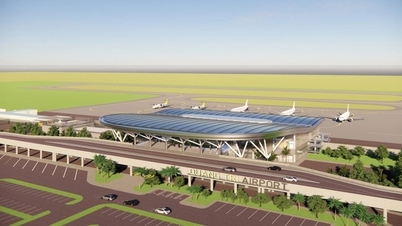
Accordingly, over the next five years, investment will focus on constructing key express highways; gateway seaports combined with international transshipment hubs; major airports; high-speed railway lines along the North-South axis; urban railway systems in Hanoi and Ho Chi Minh City; connecting railway lines and international transshipment seaports; and striving to complete the Lao Cai - Hanoi - Hai Phong railway line before 2030.
"Clearly quantifying the content not only helps to identify specific goals, but also facilitates the mobilization, allocation, and concentration of valuable resources, including human resources, for 'powerful initiatives' with high ripple effects and immediate impact on the economy," the VARSI leader stated.
To successfully implement major national railway projects, the Ministry of Construction has planned to reorganize project management boards under its direct supervision, and simultaneously established two steering committees for the implementation of the North-South high-speed railway line and the Lao Cai - Hanoi - Hai Phong railway line, chaired by Minister of Construction Tran Hong Minh.
The Ministry of Construction, in coordination with the Ministry of Education and Training and the Vietnam Railways Corporation, will effectively implement the Project on Training and Developing Human Resources for Vietnam's Railways until 2035, with a vision to 2045; develop a specific roadmap and plan to promptly train human resources to serve the construction, management, operation, and exploitation of railway lines, especially the Lao Cai - Hanoi - Hai Phong line; and report to the Prime Minister before January 15, 2026.
In addition, to unleash social resources for large-scale projects, the Ministry of Construction is urgently researching and proposing mechanisms and policies to attract social investment, remove bottlenecks to improve the efficiency of public resource utilization and mobilize private capital in accordance with Resolution No. 68-NQ/TW of the Politburo.
The focus is on mechanisms and policies that flexibly combine public investment, loans, and resources from land exploitation; encouraging private investment, especially in the form of PPPs, in key areas such as seaports, airports, and urban transport infrastructure; continuing decentralization in infrastructure investment and management; and accelerating the progress of regional infrastructure projects to form new economic corridors.
Simultaneously, develop and propose policies to encourage the application of new technologies; strongly reform investment, planning, and land procedures; ensure a reasonable risk-sharing mechanism in PPP projects; support businesses in accessing land, infrastructure, credit, and planning information, creating a favorable environment to attract private investment.
According to Mr. Pham Van Khoi, Chairman of Phuong Thanh Construction Investment Joint Stock Company, these policies are crucial in concretizing the spirit of opening up the private economy as outlined in Resolution 68.
"This will help private businesses grow stronger, playing the role of national enterprises, ready to undertake large-scale, technologically complex infrastructure projects – 'big, difficult tasks' that contribute to 'turning the tide and changing the landscape' of the country in the new era," Mr. Khoi said.
Source: https://baodautu.vn/them-gia-toc-cho-mui-dot-phat-trien-ha-tang-d485791.html


























































































Comment (0)