


 |
| Thua Thien Hue prioritizes attracting technology businesses. |
General trend
The trend towards green production and green exports has reshaped the rules of the game in import, export, and investment activities. Many countries around the world are now imposing stricter regulations on imported goods. Examples include the European Green Growth Policy, the European Green Deal, and programs such as CBAM (Carbon Border Adjustment Mechanism), Farm to Fork, and circular economy action plans.
To avoid being left behind, countries, localities, and businesses must develop their own export strategies, paying more attention to green criteria in the supply chain and meeting the new demands of the market.
Take the textile and garment industry as an example. Currently, green criteria are no longer an option but are gradually being legalized in key export markets. If businesses lag behind, it means shrinking their market.
 |
| Thua Thien Hue encourages technology companies to invest in Hue. |
At a recent meeting with FDI businesses organized by the Department of Planning and Investment, a representative from a textile and garment company shared that, in addition to meeting market demands, textile and garment businesses now also have to meet the world's stringent export criteria. To achieve this, businesses must invest in modern technology, gradually replacing outdated equipment that consumes a lot of electricity and labor and negatively impacts the surrounding environment. Businesses also strictly adhere to environmental regulations, limiting emissions, and ensuring occupational safety and hygiene.
Furthermore, businesses must diversify their trade partners; assess risks and plan for scenarios, develop carbon reduction strategies; invest in technological innovation and participate in industrial cooperation initiatives. And as businesses and investors place greater emphasis on green practices in production, it will also lead to certain demands on the local investment environment.
Greening investment attraction activities
To help the government better understand the business perspective in the investment environment, as well as to support the development of a green investment environment, since 2022, the Vietnam Chamber of Commerce and Industry (VCCI) and the United States Agency for International Development in Vietnam (USAID) have been publishing the Provincial Green Index (PGI). This index is published as part of the Provincial Competitiveness Index (PCI), which is published annually. Accordingly, the level of application of environmentally friendly technologies by local businesses, the level of governance and environmental behavior of businesses, the level of concern and willingness to invest in environmental issues by local authorities, and many other important environmental issues will be assessed.
 |
| Textile and garment businesses must meet the stringent criteria of export markets. |
Evaluating this index helps businesses better access and meet green standards and criteria in export activities. This index also contributes significantly to Thua Thien Hue's improvement in the provincial green index, helping to build Thua Thien Hue into a destination for green projects, as directed by Resolution 54 of the Politburo.
In fact, Thua Thien Hue is now showing clearer directions in attracting "green" investment. The message of not sacrificing the environment for growth is also being mentioned more frequently, as Thua Thien Hue has rejected many large projects that would create breakthroughs in budget revenue but would negatively impact the environment. This is proof of Thua Thien Hue's determination to ensure green and sustainable growth.
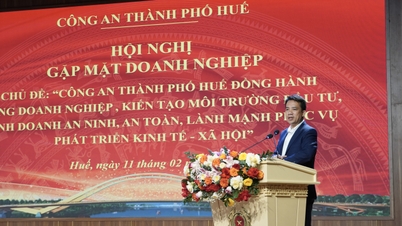
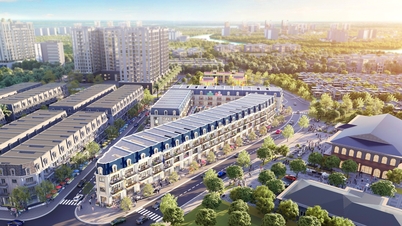
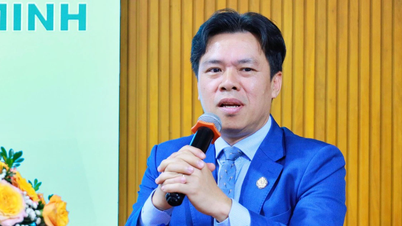
At a recent business dialogue, Mr. Le Van Cuong, Deputy Director of the Department of Planning and Investment, affirmed that Thua Thien Hue's investment promotion program is closely linked to the socio-economic recovery program and the orientation of building the province into a centrally-governed city. Green growth remains a core objective. Thua Thien Hue is determined to attract selective investment, prioritizing industries with high technology content, advanced technology, and high added value, ensuring the participation of businesses in the value chain and harmonious development between regions. The province also prioritizes attracting investors to develop infrastructure for industrial parks and clusters within the province as a basis for attracting secondary investors and attracting labor from other localities and abroad to live and work in Thua Thien Hue.
The province is actively promoting investment in logistics and seaport projects; prioritizing investment in clean, renewable energy sources such as wind power, solar power, and gas power. The province has also been orienting towards developing green tourism in recent years. Priority is given to attracting investment in resort services, healthcare, tourism combined with medical treatment, culinary experiences, and creating eco-tourism products/check-in points associated with rivers, lakes, streams, waterfalls, and lagoons. The goal is to develop new entertainment venues, nighttime service points, and tourism tours with green and sustainable criteria, preserving cultural heritage, using renewable energy, and being socially responsible.
“Based on its green brand, ASEAN cultural city, ASEAN environmentally sustainable city, and ASEAN clean tourism city, Thua Thien Hue will continue to develop on a green, ecological, and environmentally friendly foundation, becoming a destination for green businesses,” Mr. Le Van Cuong affirmed.
Source



































Comment (0)