

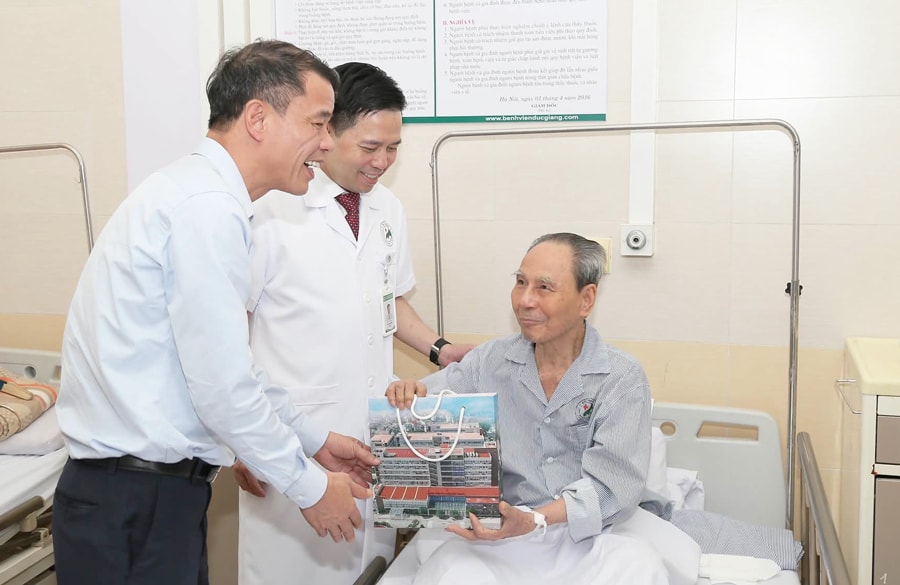
The pressure of an aging population is increasing.
According to statistics, Hanoi currently has 1,443,423 elderly people, accounting for 16.3% of the total population. By 2025, the average life expectancy of Hanoi residents is expected to reach 76.7 years. The rate of population aging in the city is very rapid; coupled with low and declining birth rates, this is causing the aging index to increase even faster.
Experts assess that population aging is having a comprehensive impact on many areas, from social security and the labor market to healthcare and social services. This reality demands accurate identification, assessment, and appropriate solutions to ensure sustainable socio -economic development, maintain social security, and improve the quality of life for the people.
Associate Professor Bui Thi An, President of the Hanoi Women Intellectuals Association and Director of the Institute of Resources, Environment and Community Development, stated that Vietnam is entering a profound demographic transition at one of the fastest rates in Asia. Since 2011, the country has officially entered the stage of population aging and is projected to become an "aged population" nation by 2036.
Notably, Vietnam is experiencing a situation of "getting old before getting rich," with a rapid aging rate but insufficient social security, economic accumulation, and support systems to meet new needs. In Hanoi alone, the rate of population aging is faster than the national average.
However, instead of viewing the elderly as a burden, many countries around the world are exploiting the opportunities of the "silver economy," a promising new economic market based on the needs and potential of the elderly population. Vietnam in general, and Hanoi in particular, have the opportunity to transform the challenge of an aging population into a key driver of economic growth if appropriate strategies are developed and potential is properly exploited.
Associate Professor Bui Thi An argues that the "silver economy" is an economic ecosystem aimed at serving and exploiting the potential of the elderly, helping them not only to be consumers but also to become a productive force. The main pillars of the "silver economy" include: healthcare, long-term care and nursing services; technology supporting the elderly such as health and wellness technology, smart homes; finance and retirement insurance; tourism, culture, and entertainment for the elderly; and employment and knowledge-based economic development for the elderly.
"In this context, creating job opportunities and a knowledge-based economy is crucial. Older adults can still participate in knowledge-based economic activities such as consulting, teaching, or part-time work, thereby contributing not only to economic development but also maintaining their autonomy and self-worth," emphasized Associate Professor Bui Thi An.
Unlocking private resources in the development of the "silver economy"
The innovative aspect of the "silver economy" model is the shift from a "passive welfare" mindset to a "resource exploitation" mindset, viewing the elderly not only as individuals needing care but also as a crucial resource contributing to socio-economic development.
According to Associate Professor Bui Thi An, in order to gradually become the center for the development of the "silver economy" of the whole country, Hanoi needs to implement many solutions simultaneously, such as developing a network of elderly care, building an elderly-friendly urban environment, and integrating elements of the "silver economy" into urban planning and development.
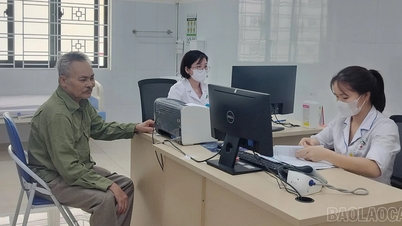
Sharing the same view, Deputy Director of the Hanoi Department of Health, Dinh Hong Phong, emphasized that in the context of an aging population, developing the "silver economy" is becoming an inevitable trend to meet the needs of the elderly and contribute to the economic growth of the capital city. In particular, following the Central Government's directive in Resolution No. 72-NQ/TW "on some breakthrough solutions to strengthen the protection, care, and improvement of people's health," Hanoi is focusing on piloting a model of daytime healthcare for the elderly at the commune and ward levels, expected to be operational in 2026.
Accordingly, the model provides comprehensive daytime healthcare services for the elderly, including: health monitoring and management; primary healthcare; rehabilitation and physical therapy; nutritional care; psychosocial counseling and support; organizing cultural and recreational activities to improve mental well-being; and applying information technology to build electronic health records and support remote monitoring.
Hanoi is committed to developing a diversified network of elderly care services, based on community-based and home-based care, combined with a system of professional care facilities. At the same time, the city is promoting socialization, creating mechanisms to encourage the private sector to participate in developing the "silver economy," especially in the fields of healthcare, rehabilitation, and support services for the elderly.
Population aging presents challenges but also opens up new development opportunities. When the elderly are well cared for and continue to contribute to society, they become a crucial resource for promoting sustainable growth and development. Therefore, developing the "silver economy" is identified as one of the long-term directions of the capital city to proactively adapt to the aging population.
Source: https://hanoimoi.vn/thuc-day-kinh-te-bac-nang-cao-chat-luong-song-cua-nguoi-cao-tuoi-749272.html

![[Photo] National Assembly Chairman Tran Thanh Man attends the groundbreaking ceremony for the National Highway 1A spatial axis project.](https://vphoto.vietnam.vn/thumb/1200x675/vietnam/resource/IMAGE/2026/05/19/1779161360398_ndo_br_bnd-1412-jpg.webp)
![[Photo] Capturing the moment the tide recedes at Yen Binh Son rapids - a million-year-old scenic spot in Quang Ngai.](https://vphoto.vietnam.vn/thumb/1200x675/vietnam/resource/IMAGE/2026/05/19/1779175463885_yen9-1199-jpg.webp)


















































![[Photo] General Secretary and President To Lam receives Indian Defense Minister Rajnath Singh](https://vphoto.vietnam.vn/thumb/402x226/vietnam/resource/IMAGE/2026/05/19/1779184046302_anh-man-hinh-2026-05-19-luc-16-46-58.png)



















Comment (0)