


Currently, it is the peak season for tax settlement. The deadline for settling personal income tax for organizations and individuals paying income is April 1st. For individuals settling their personal income tax directly, the deadline is May 2nd at the latest.
Recently, the tax authorities have repeatedly issued warnings about the impersonation of tax officials and tax agencies to defraud taxpayers, but some people still fall victim to these scams, especially during the peak tax filing season.
According to the General Department of Taxation, the main tactic used by these individuals is to impersonate tax officials to make phone calls, send text messages, add people on Zalo, provide links and instructions for taxpayers to file tax returns, and guide them to install fake software mimicking tax authority applications, with the aim of stealing personal information and bank account information for the purpose of misappropriating assets.
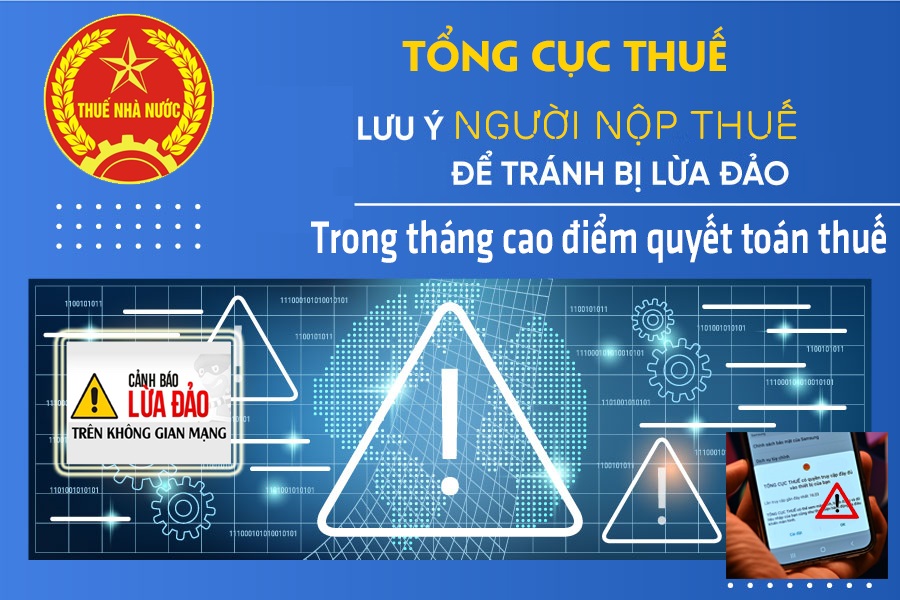
Furthermore, some individuals even impersonate government agencies, sending fake VNeID public service links to people, advertising "integration of citizen ID and tax code"; or instructing them on how to adjust information on the VNeID application, then sending fake VNeID modification public service links, thereby gaining control of the phone and stealing all the money from bank accounts.
In response to this situation, the General Department of Taxation reaffirms that it does not authorize any organization or individual outside the tax sector to collect taxes on behalf of taxpayers. At the same time, it warns taxpayers that when receiving such calls, they should contact the tax authorities directly through official channels for assistance to avoid being exploited by fraudsters.
The General Department of Taxation advises taxpayers to carefully check the content of any text messages they receive and not rush to reply or act on the instructions in the message.
The tax authorities have been actively coordinating with other functional forces to resolutely combat, detect, and handle offenders. However, the most important thing is that each citizen needs to raise their vigilance and be cautious in all situations.
When receiving suspicious phone calls, people should remain calm and composed, even if the information is threatening or intimidating.
Taxpayers should avoid hastily providing personal information over the phone or email, refrain from following instructions to install fake applications or links, and immediately report any incidents to the local police for assistance and advice.
The General Department of Taxation also requested that in cases where taxpayers receive messages, calls on social media platforms, or calls with signs of fraud, they should save evidence such as messages or call recordings and report it to the telecommunications company managing their subscription to request action.
Provide the available evidence to the relevant authorities of the Ministry of Public Security and the nearest tax office, requesting them to handle the violations committed by the individuals in accordance with the law.
5 common tactics used by scammers.
1. Individuals using phone numbers and posing as officials from the tax department or tax branch request information and images of citizen identification cards to assist with tax reduction, tax refund, tax settlement procedures, and tax audits, as well as making calls to instruct users on installing applications (apps) to receive information from the tax authorities.
2. Scammers create websites with interfaces that closely resemble the official websites of agencies and businesses, from images to content, to mislead users into believing they are the legitimate website of the provider.
3. The tactic of impersonating the General Department of Taxation's brand name via SMS to spread fake messages.
4. Impersonating tax authorities to make threatening phone calls and using fraudulent schemes to extort money from taxpayers.
5. Impersonating government officials offering public services and requesting information and photos of citizen identification cards. The perpetrators then send fake links and instructions to gain control of the phone and steal all the money from the bank account.
Source link











































































































Comment (0)