

Throughout the 1980s and 1990s, and even now, every time spring arrives, many of Tran Hoan's spring songs resonate on radio and television. "My dear, spring has arrived on the branches..." From "Spring Love Song"; "A Little Spring"; to "Singing About Spring"; "What Do You Think When Spring Comes?"... He has dozens of songs about spring or with spring-themed themes. His spring songs are beloved and have enduring appeal. The people of Quang Tri are always proud to have a son who served as a minister, an exemplary revolutionary cadre, and a musician who composed songs about his homeland, country, and spring that stir the hearts of people.
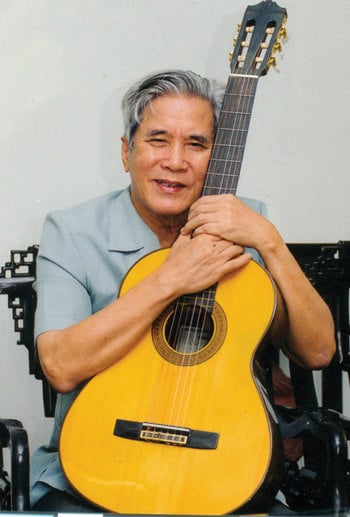
Composer Tran Hoan - Photo: Archival
Composer Tran Hoan, whose real name was Nguyen Tang Hich, was born in 1928 in Hai Tan commune, Hai Lang district. He taught himself music and began composing at the age of 16 or 17. At the age of 20, he wrote the famous song "Mountain Girl's Song". With this song, some people consider him to have joined the ranks of renowned pre-war composers such as Van Cao, Doan Chuan, Le Thuong, and Dang The Phong...
Despite his early fame, he was not a professional musician but a revolutionary cadre who participated in the fight against French colonialism from his school days. Forged in hardship and difficulty, he matured and gained the trust of his comrades and superiors, who entrusted him with many important responsibilities, such as: Director of the Hai Phong Department of Culture, Head of the Binh Tri Thien Information Department, Deputy Secretary of the Hanoi City Party Committee, Member of the Central Committee of the Party (6th and 7th terms), Member of the National Assembly (8th term), Minister of Culture and Information, Deputy Head of the Central Ideology and Culture Committee, Chairman of the National Committee of the Vietnam Union of Literary and Artistic Associations...
As a leader and manager, with countless daily tasks to handle, he had almost all his time. Only in his free time, when inspiration struck, would he begin composing music, creating only a few works each year. While the number wasn't large, many of his songs were excellent, becoming widely popular and beloved by listeners. Some songs have stood the test of time, especially those about spring, full of vibrancy, excitement, and youthfulness, just like the arrival of spring itself. Tran Hoan is one of the best composers of spring music; many call him "the composer of spring."
Writing music about spring is not only inspired by the changing times and the freshness of nature and the universe, but also reflects an optimistic and joyful spirit, helping listeners temporarily forget the difficulties and hardships of present life. Mrs. Thanh Hong (Mr. Tran Hoan's wife) once said about her husband's spring songs: "Mr. Hoan loves writing music, he's passionate about spring. Spring always gives him new, uplifting, and creative emotions..."
The song "Spring Love Song" shows that the arrival of spring is a transformation of nature, with all things filled with fresh spring colors. The song begins with the young man's announcement of spring's arrival: "My dear, spring has arrived on the branches / The birds' sweet songs fill the deep blue sky." The song was created in 1978 (set to a poem by Nguyen Loan) during a time of great hardship for the country, just three years after the complete liberation of South Vietnam, with wounds still unhealed and fields and farmlands still bearing the marks of bombs and bullets.
Everyday meals consisted mostly of sweet potatoes and cassava instead of rice, and the sound of gunfire echoed on both sides of the border... yet the lyrics and melody held no trace of sadness, but were instead clear, vibrant, and remarkably optimistic. The song reflected the reality of life at that time: "In your smiling eyes there is the green color of sweet potatoes and cassava / In your pretty hands there is the image of a green canal."
These are lyrics by Tran Hoan (the original poem by Nguyen Loan is "In your smiling eyes there is the green of the water/In the arms of dreams I embrace the image of the green canal" ). The word "potatoes" was added by the author to reflect life at that time. The reality of life was not as desired, but the music remains cheerful, bright, and optimistic: "Spring has come , my dear, the first rain is so refreshing/Spring has come, my dear , the new sunshine has arrived."
This song also carries the author's personal feelings, the joy of reuniting after many years of separation due to war between composer Tran Hoan and his wife. The longing for his wife on the home front during the war and the joy of being reunited with his family helped the author write this vibrant, lyrical, and heartfelt love song.
The song had a tremendous impact, especially on soldiers on the front lines and their wives on the home front: "On the front lines , your hands are strong in defeating the enemy / In the distant home front, your hands are steady and unwavering."
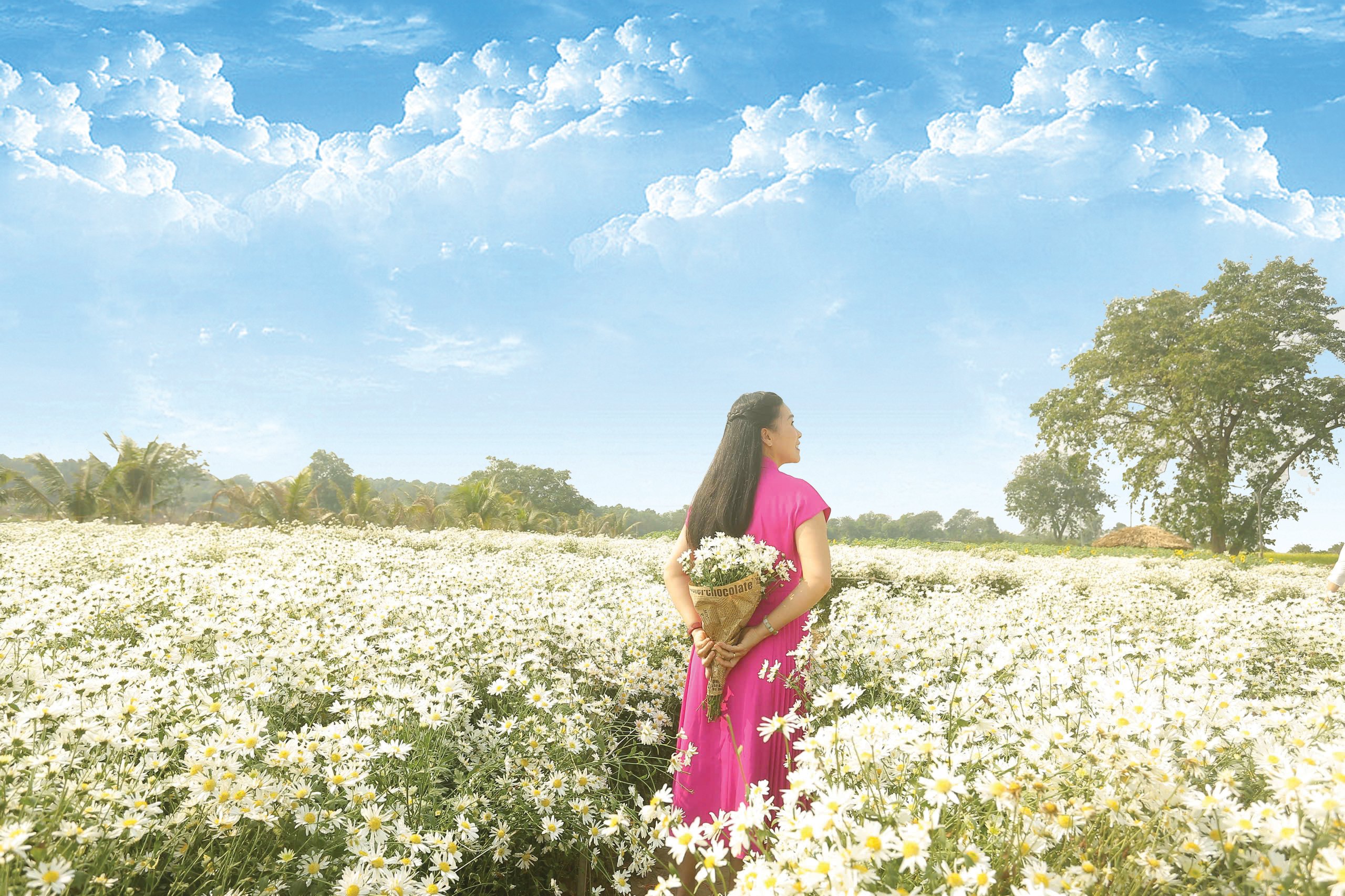
Vibrant colors of spring - Photo: TN
Just three years later, composer Tran Hoan had another song about spring that reached its peak. The song "A Little Spring," recorded and broadcast on the radio in the spring of 1981, was set to a poem by Thanh Hai, a long-time comrade-in-arms of Tran Hoan.
Both revolutionaries made contributions to the resistance movement, yet they remained very humble in their present lives: “I am a singing bird / I am a flower / A poignant, low note / Dissolving in the harmony.” When they spoke of spring, it was only… in a small way.
The song beautifully depicts a vibrant spring scene: “ Growing in the middle of the green river / A purple flower blooms / Oh, little skylark / Why do you sing so loudly ? / Each sparkling drop falls / I reach out my hand to catch them” ... The sound of joy, stirring the heart: “Oh, little skylark / Why do you sing so loudly?”
Composer Tran Hoan once confided: "In the arts, we shouldn't boast about doing something grand. We can contribute a bamboo branch, a flower, a musical note, as long as it's part of the overall harmony of the artistic chorus serving the revolution."
In this song, the spring chorus is repeated many times , "Spring, spring...spring," expressing joy and excitement at the arrival of spring. The song also has the folk music style of Hue : "Nam ai, Nam bang melodies / A thousand miles of mountains and rivers / A thousand miles of love / The land of Hue with its rhythmic clappers" ...
In this song, he retained almost all the words from Thanh Hai's poem, only changing a few things. This shows the harmony and understanding between the two friends... It can be said that a very beautiful poem and a song with a beautiful melody and lyrics make spring even more vibrant and joyful. Through this, listeners can also understand the feelings of the poet and musician towards their beloved homeland.
Some time later, in 1987, audiences once again heard Tran Hoan's song "Singing About Spring," performed by singer Thanh Hoa. The song begins with a joyful, lively melody: "La la la la, la la la la... The joyful spring has arrived again , shimmering with sunlight and a thousand sparkling colors/Spring is coming , giving life a rhythm with the scent of new life ..."
In this song by Tran Hoan, we hear the echoes of labor, production, and nation-building. Spring is also associated with the love story of a young couple: "Meeting at the construction site , what dreams made your eyes sparkle? Meeting in the field, what words made your rice grow greener." Spring is filled with warm sunshine, colorful flowers, and human affection.
The song tells a story that blends personal love with love for the country, set to a gentle, cheerful, and pure melody. In addition, Tran Hoan composed several songs about spring or with a spring theme, such as: "What Do You Think When Spring Comes?", "Visiting Nha Rong Wharf", "Spring Birdsong"...
Most of Tran Hoan's songs about spring were written during a time of national hardship (the late 1970s and 1980s), yet they are full of vitality, optimism, and a forward-looking perspective. They give us faith, igniting a spark to help everyone move forward. Today, every time spring arrives, listening to Tran Hoan's spring songs still evokes a feeling of exhilaration, excitement, and nostalgia, just like the springs of yesteryear.
Hoang Nam Bang
Source: https://baoquangtri.vn/tran-hoan-nhac-si-cua-mua-xuan-190890.htm

![[Photo] General Secretary and President To Lam presides over a meeting with the Central Organizing Committee.](https://vphoto.vietnam.vn/thumb/1200x675/vietnam/resource/IMAGE/2026/06/03/1780482764658_a1-bnd-4741-3342-jpg.webp)
![[Photo] Secretary of the National Assembly Party Committee, Chairman of the National Assembly presides over the meeting of the Standing Committee and Executive Committee of the National Assembly Party Committee.](https://vphoto.vietnam.vn/thumb/1200x675/vietnam/resource/IMAGE/2026/06/03/1780480353201_ndo_br_bnd-2585-jpg.webp)















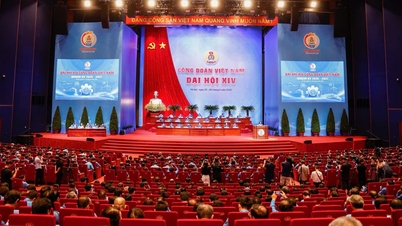
![[Photo] First session of the 14th Congress of the Vietnam Trade Union](https://vphoto.vietnam.vn/thumb/1200x675/vietnam/resource/IMAGE/2026/06/03/1780465947883_ndo_br_img-3852-jpg.webp)




















![[Video] Sunset at Lap An Lagoon – Where the sun sets over the fishing nets](https://vphoto.vietnam.vn/thumb/1200x675/vietnam/resource/IMAGE/2026/05/31/1780192137701_beach-landscape-sea-water-nature-grass-745871-pxhere-com.jpeg)























Comment (0)