

The most upsetting detail lies in the dialogue of a character who introduces himself as having a father who fought in Vietnam. Following this statement, the other characters express admiration and regard it as an achievement.
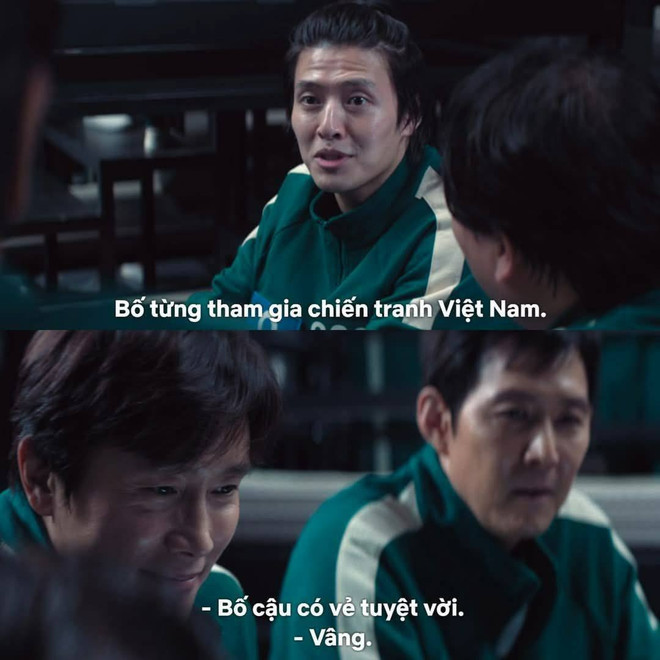
It just aired on the afternoon of December 26th. "Squid Game" (The Squid Game) season 2 immediately sparked controversy due to the characters' dialogue related to the Vietnam War.
Specifically in episode 5, when the character Kang Dae-ho (played by Kang Ha Neul) recounts his family story, he says, "My father fought in the Vietnam War." The main character, Gi-hun (Lee Jung-jae), listens and comments, "Your father was a wonderful person," while other characters also express their admiration.
Furthermore, the veteran's name also implies "Big Tiger," according to the character's explanation in the film.
These details immediately sparked outrage among Vietnamese film viewers. Between 1964 and 1973, hundreds of thousands of South Korean soldiers, as allies of the United States, were sent to Vietnam to fight.
Some posts even point out a link between the name "Great Tiger," player number 388 (the character who says the above line), and the Go Dai massacre in Tay Son district, Binh Dinh province in 1966.
The Film Department stated that they have received the information and are currently verifying the situation. "We will provide an official response and conclusion after careful consideration and evaluation. If the film..." "Squid Game 2" "If there are violations of the Film Law, we will handle them strictly according to the law," said Mr. Do Quoc Viet, Deputy Director of the Film Department.
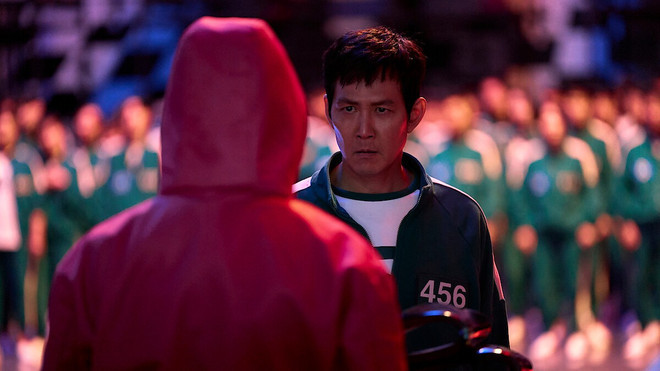
War crimes have prompted South Koreans to offer apologies on numerous occasions, such as the "Apology to Vietnam" movement initiated by Dr. Ku Su Jeong, a specialist in Vietnamese history, in the late 1990s; President Kim Dae-jung's apology during his state visit to Vietnam in 2001; the erection of an apology statue on Jeju Island in 2017; and many other activities.
Earlier in 2022, Netflix also had to remove the film. "Little Women" The film was removed from Vietnamese film archives for containing information that glorified South Korean soldiers as heroes during the Vietnam War. Furthermore, the film included many baseless and distorted details, most notably the line, "The Operations Department only selected the bravest and most agile soldiers. The kill-to-death ratio was 20:1. That means one South Korean soldier killed 20 Viet Cong soldiers..."
At that time, the regulatory agency determined that the violation fell under Clause 4, Article 9 of the Press Law concerning the distortion of history, denial of revolutionary achievements, and insult to the nation; simultaneously, it also violated prohibited acts in film activities as stipulated in Clause 4, Article 11 of the Film Law, with content similar to the aforementioned clause in the Press Law.
Source


![[Photo] Prime Minister Pham Minh Chinh attends the Conference on the Implementation of Tasks for 2026 of the Industry and Trade Sector](/_next/image?url=https%3A%2F%2Fvphoto.vietnam.vn%2Fthumb%2F1200x675%2Fvietnam%2Fresource%2FIMAGE%2F2025%2F12%2F19%2F1766159500458_ndo_br_shared31-jpg.webp&w=3840&q=75)






































































Comment (0)