


There was a time when she dreaded rainy days, feeling trapped indoors by the water, finding the days unbearably long. No matter how much she cleaned the cupboards, shelves, and under the bed, it was all in vain. But looking through the storm, there was a glimmer of hope. One day, when the rain stops, the garden will be full of leaves. Then she'll have a good time sweeping. And the fire at the end of the day will surely be burning brightly.
At first, she swept the garden early in the morning or late in the afternoon, when there was little wind. But the day was too long, so she swept even in the late afternoon, right after waking up from a nap, still groggy and unsure where to sit or stand. She extended the broom handle to prevent bending over, making it easier to sweep for a long time without getting tired. Only when the back and front edges were spotlessly clean, and she piled up the leaves, including the weeds whose roots she had conveniently gathered to dry in the sun, did she go into the kitchen to cook dinner. Alone, she ate plain rice and soup. As she scooped the rice into her bowl, she thought about the fire she would soon light in the backyard. And how the smoke would linger for a long time.
 |
Since her husband left and her grandchildren settled elsewhere with their mother, she has become a carbon copy of her aunt. The woman her mother said spent her whole life fighting against every speck of dust, every blade of straw, every blade of grass. Her mother's tone was laced with sarcasm and bitterness when describing her sister-in-law, "Even returning to her roots is impossible for her; she should have buried her broom and cleaning rags with her." Ever since she became a daughter-in-law, her mother feared her sister-in-law's misfortune, always keeping those two tools handy, sweeping and scrubbing the house spotlessly clean, ensuring the earthen floor was perfectly smooth and without a single ripple.
Back then, the whole family thought Aunt Hai suffered from an obsessive-compulsive disorder, what the kids nowadays call obsessive-compulsive disorder. Deep down, I didn't feel much closeness or affection for this solitary woman, because of the tremendous pressure in each sweep of the broom at dawn, in the sound of the scrubbing brush scraping against the bottom of the metal pot, in the gleaming, spotless mirror. Although she cleaned silently without shouting orders, it wasn't right for someone else to toil while we just sat around idly. And above all, there was something intensely present in her, something like hopelessness, of someone whose joy in life had grown cold.
Now, whenever she sweeps the leaves past where her aunt lay, she thinks that perhaps her aunt wasn't haunted by anything, that for a woman with no husband or children, time stretched on endlessly. And the emptiness blossomed boundlessly when one was idle, in that rural corner at a time when there was nothing to distract oneself.
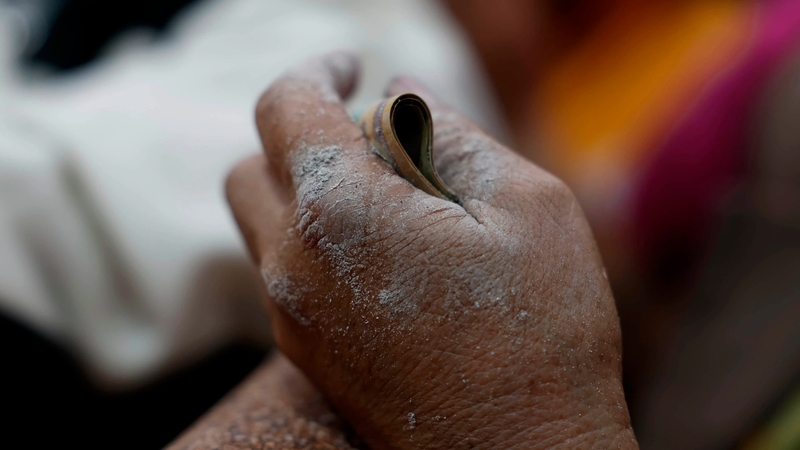
So some people, fighting against loneliness, keep themselves excessively busy, vying for every single leaf and dry branch of the land. The garden erodes through countless rains and suns, leaving behind barren, hardened soil, unmoistened and without any decomposition on the surface. The soil is starved of organic matter, humus, and micronutrients. Each time they gather the piles of burnt leaf ashes and return them to the increasingly thin tree stumps, they think, "What difference does this make?" They feel guilty, as if they have burned away the very skin of the earth.
But thinking of tomorrow's twilight, in the fading light at the end of the garden, the incense burning brightly on the altar in the middle of the house, the startled calls of cuckoos and the swooping of bats through the trees, the shouts of the village calling for dinner, a mother yelling to her children to hurry and take a bath, remembering her own children and grandchildren now fast asleep in a land thirteen hours away by plane, their calls becoming shorter and more hurried, what could she do to fight the chill that seeped into her bones, if not to light a fire gathered from the leaves in the garden?
Nguyen Ngoc Tu
Source: https://baovinhlong.com.vn/van-hoa-giai-tri/202602/tro-la-8110171/
![[Photo] General Secretary To Lam attends the opening session of the Peace Council on Gaza.](https://vphoto.vietnam.vn/thumb/1200x675/vietnam/resource/IMAGE/2026/02/19/1771516865192_tbttolam5-jpg.webp)


















































































Comment (0)