

The People's Bank of China's interest rate cut to achieve its 5% growth target is seen as a positive sign. However, Beijing still needs to consider further fiscal measures.
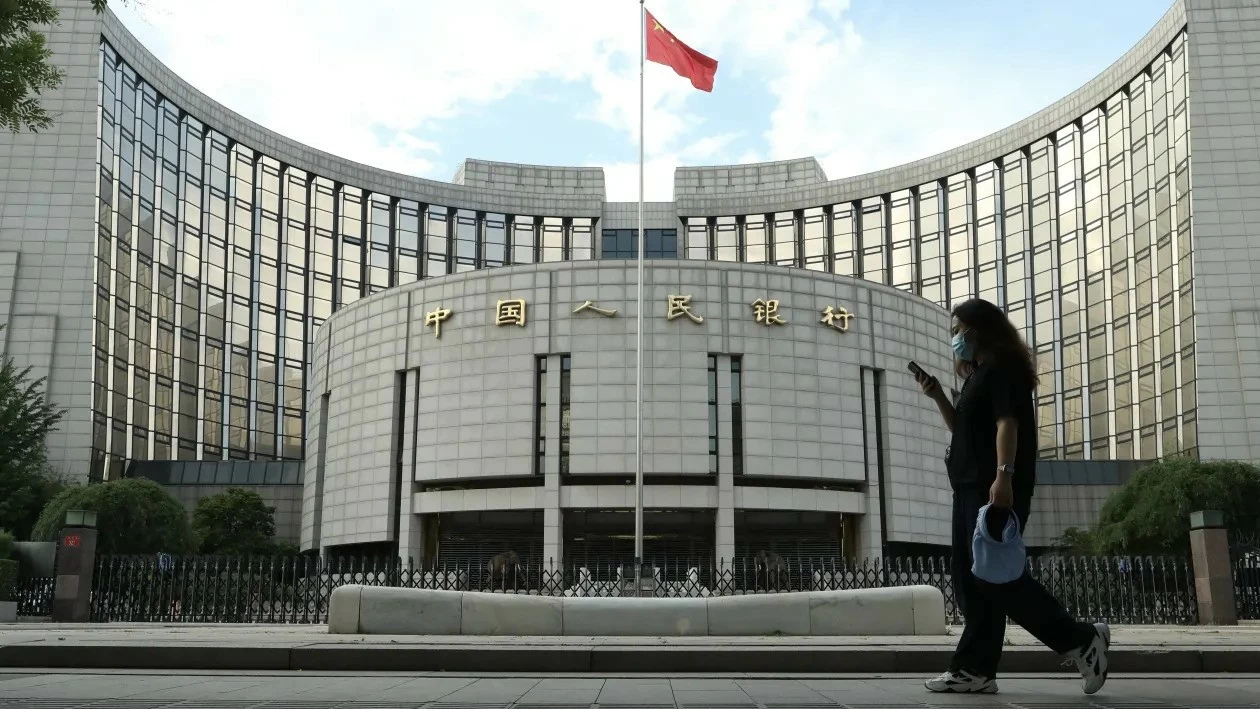 |
For the first time in months, China's central bank has provided 14 days' worth of cash to its banking system at a lower interest rate, signaling an intention to further ease monetary conditions. (Source: Getty) |
On October 21, the People's Bank of China (PBOC) lowered lending rates by 25 basis points in its monthly adjustment. Accordingly, the benchmark lending rate for one-year loans fell to 3.1%, and for five-year loans to 3.6%.
The cuts were announced just days after the country reported quarterly growth of 4.6%, the lowest in a year and a half, threatening its annual growth target of 5%.
Earlier, on October 18, at a forum held in Beijing, PBOC Governor Pan Gongsheng mentioned a plan to cut interest rates by 0.25%, while emphasizing that the 7-day reverse repo rate would be cut by 20 basis points, and the medium-term lending rate would be reduced by 30 basis points.
According to the official, authorities are considering cutting the mandatory trade reserve ratio this year.
Shane Oliver, head of investment campaigns at Pinpoint Asset Management, commented that the monetary stimulus campaign is at least “on a significant scale in China,” however, cuts alone are not enough to boost the economy. He stated: “The cost of money and the money supply aren’t the real issues in China; the real issue is a lack of demand, therefore, fiscal stimulus measures are more important.”
According to Zhang Zhiwei, chairman and chief economist of Pinpoint Asset Management, the cut is "a positive sign," but despite the reduction, real interest rates in China remain "too high." He expects more cuts in the coming year, similar to the interest rate reductions by the US Federal Reserve.
Thus, although the interest rate cut sends a positive signal to stimulate the economy to achieve its growth target in the last two months of the year, China still needs to consider further fiscal measures.
The People's Bank of China (PBOC) announced a 50-basis-point cut in the reserve requirement ratio for banks and a 20-basis-point reduction in the 7-day reverse refinancing rate on September 24, while launching its most aggressive stimulus program since the Covid-19 pandemic emerged, including measures to support the struggling real estate sector and boost domestic consumption.
Earlier, China also surprised many by lowering short-term and long-term lending rates in July.
Source: https://baoquocte.vn/trung-quoc-cat-giam-lai-suat-chuyen-gia-kinh-te-noi-gi-291066.html





























![[Video] The craft of making Dong Ho folk paintings has been inscribed by UNESCO on the List of Crafts in Need of Urgent Safeguarding.](https://vphoto.vietnam.vn/thumb/402x226/vietnam/resource/IMAGE/2025/12/10/1765350246533_tranh-dong-ho-734-jpg.webp)


































































Comment (0)