

"It's just a common cold, I'll buy some medicine and take it myself, no need to see a doctor..." - I suspect that many people think and act that way.
Without needing a doctor's visit, diagnosis, or even knowing exactly what illness they have, many people readily self-diagnose and then buy medicine at the pharmacy as if they were real doctors. In many cases, upon arriving at the pharmacy and receiving advice from the staff, many people end up buying not just a few simple cold pills, but also antibiotics and supplements. And they completely trust the pharmacist. This is because many cold medicines are available without a prescription, and even those that require a prescription are easily purchased without one.
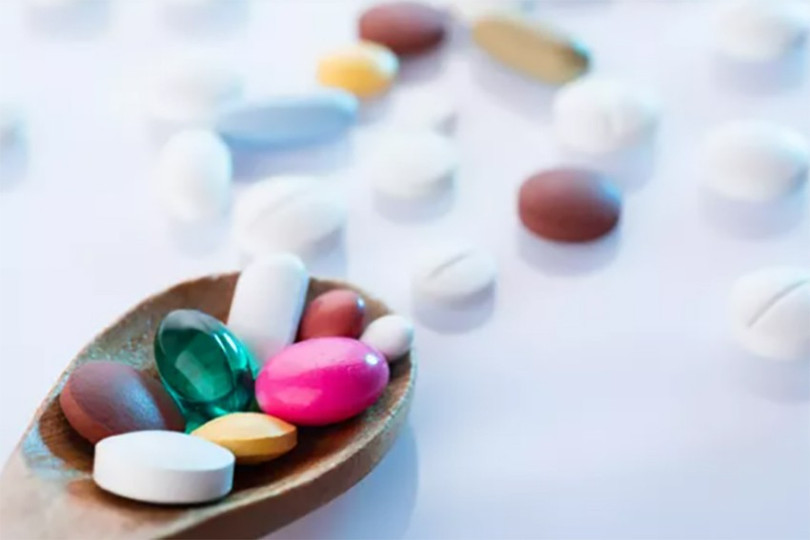
In many cases, when people go to the pharmacy and seek advice from the pharmacist, they end up buying not just a few simple cold pills, but also antibiotics and vitamins. (Image: Internet)
I've been in that situation many times too. When I or my family members experienced symptoms like a cold, cough, or fever, we assumed it was a simple illness that could be cured with just a few antibiotics and fever reducers, and that going to the doctor was both troublesome and expensive. However, it wasn't until a family member developed severe shingles due to "self-medication" at the onset of the illness that I realized my mistake.
On another occasion, a friend suggested I take a specific antibiotic for boils, and I believed it and went to the pharmacy to ask. Luckily, the pharmacist stopped me and explained that it was a new generation antibiotic; while effective, it would destroy the body's natural immune system. The pharmacist also told me that antibiotic resistance was increasing in most medical facilities in Vietnam; while developed countries still use first-generation antibiotics, Vietnam had to resort to third and fourth-generation antibiotics.

In many cases, pharmacists also offer helpful advice to people on how to use medication. (Image: internet)
Not only me, but many people also have the habit of using antibiotics indiscriminately. Whenever they have a fever, they assume they have a bacterial infection and self-medicate. This action not only unknowingly weakens the body's immune system, but in many cases, it can cause allergic reactions leading to unpredictable complications, even death.
The reality is that self-medication is extremely dangerous. The recent tragic death in Ky Thinh ward (Ky Anh town) serves as a warning to both the public and pharmacies, as well as relevant authorities. Despite knowing they were allergic and being refused medication by many pharmacies, the patient still lied to other pharmacy staff to buy the drug. Ultimately, this led to death shortly after taking it. Furthermore, many people mistakenly believe they understand their own bodies and, through prolonged self-medication, develop an immune response to the drugs.
While pharmacies are the nearest option for people in areas with limited access to healthcare when they are sick, the ease with which people buy over-the-counter medications, coupled with a complacent attitude, has led to a vicious cycle of "self-treatment - wrong medication - complications - regret." What needs to change is not just the policy governing drug sales, but first and foremost, a change in mindset. We cannot take our health lightly, and we certainly cannot gamble with our lives by buying pills as easily as candy.
When you're sick, see a doctor. When you need medicine, get a prescription. Don't let the habit of "self-medicating" turn you into a seriously ill patient, or even one beyond saving.
Source: https://baohatinh.vn/tu-lam-bac-sy-post286622.html


![[Image] Ho Chi Minh City simultaneously commences construction and breaks ground on 4 key projects.](/_next/image?url=https%3A%2F%2Fvphoto.vietnam.vn%2Fthumb%2F1200x675%2Fvietnam%2Fresource%2FIMAGE%2F2026%2F01%2F15%2F1768472922847_image.jpeg&w=3840&q=75)





Comment (0)