

The example of South Korean sports.
At the 2024 Sports Economic Forum held on October 17th, one of the main topics discussed was the relationship between economics and sports and their impact on localities that host and organize major sporting events.
Drawing on his experience organizing the 1988 Olympics and the 2002 World Cup, Oh Yeong-woo, former Vice Minister of Culture and Sports of South Korea, stated that major sporting events like the Olympics, World Cup, and Asian Games are crucial to the development of the country.
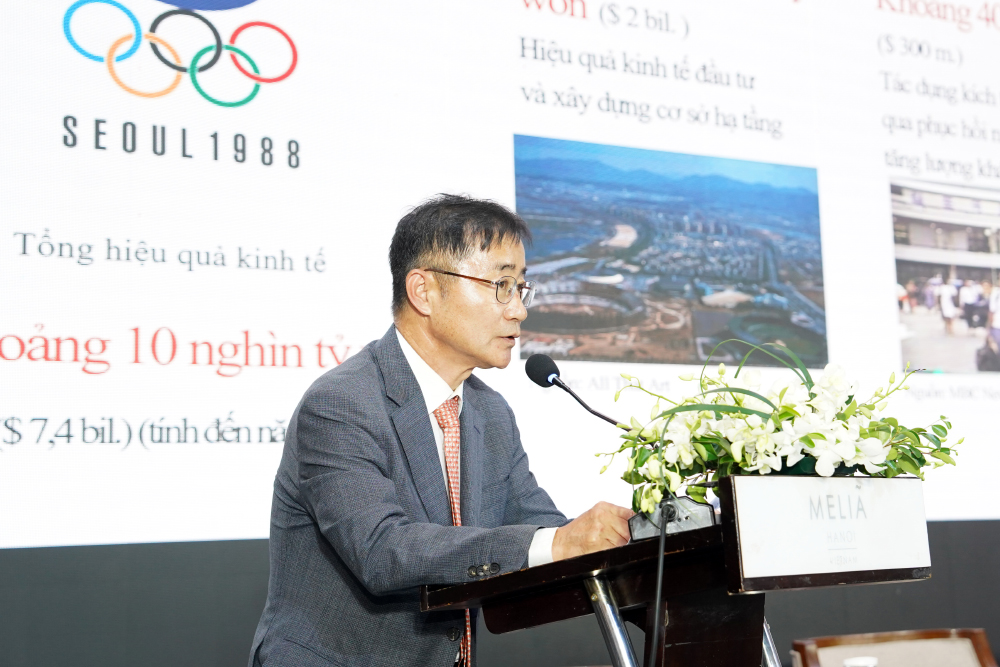
Oh Yeong-woo shared his views on the value of major sporting events to the South Korean economy.
"Beyond economic benefits, sporting events play a crucial tangible and intangible role in national development, such as enhancing the national brand, positively impacting the economy, increasing national brand value, and creating diverse effects."
More importantly, these sporting events are effective in enhancing national competitiveness, promoting integration, and boosting national pride," Oh Yeong-woo shared at the forum.
Recognizing the importance of these events, South Korea seized the opportunity to host them, and subsequently successfully organized major sporting events such as the 1988 Seoul Olympics, the 2002 World Cup (co-hosted with Japan), the 2014 Asian Games, and more recently, the 2018 Winter Olympics and the 2019 World Swimming Championships.
The 1988 Olympics brought significant economic and cultural benefits to the development of Seoul. Before the 1988 Olympics, the city's population was only around 8.6 million, but immediately after the event, this number increased to 10.5 million, transforming Seoul into a megacity.
Following the resounding success of the 1988 Olympics, South Korea understood the immense impact of world-class sporting events, which is why they were determined to successfully host the 2002 World Cup, the premier football event in the world.
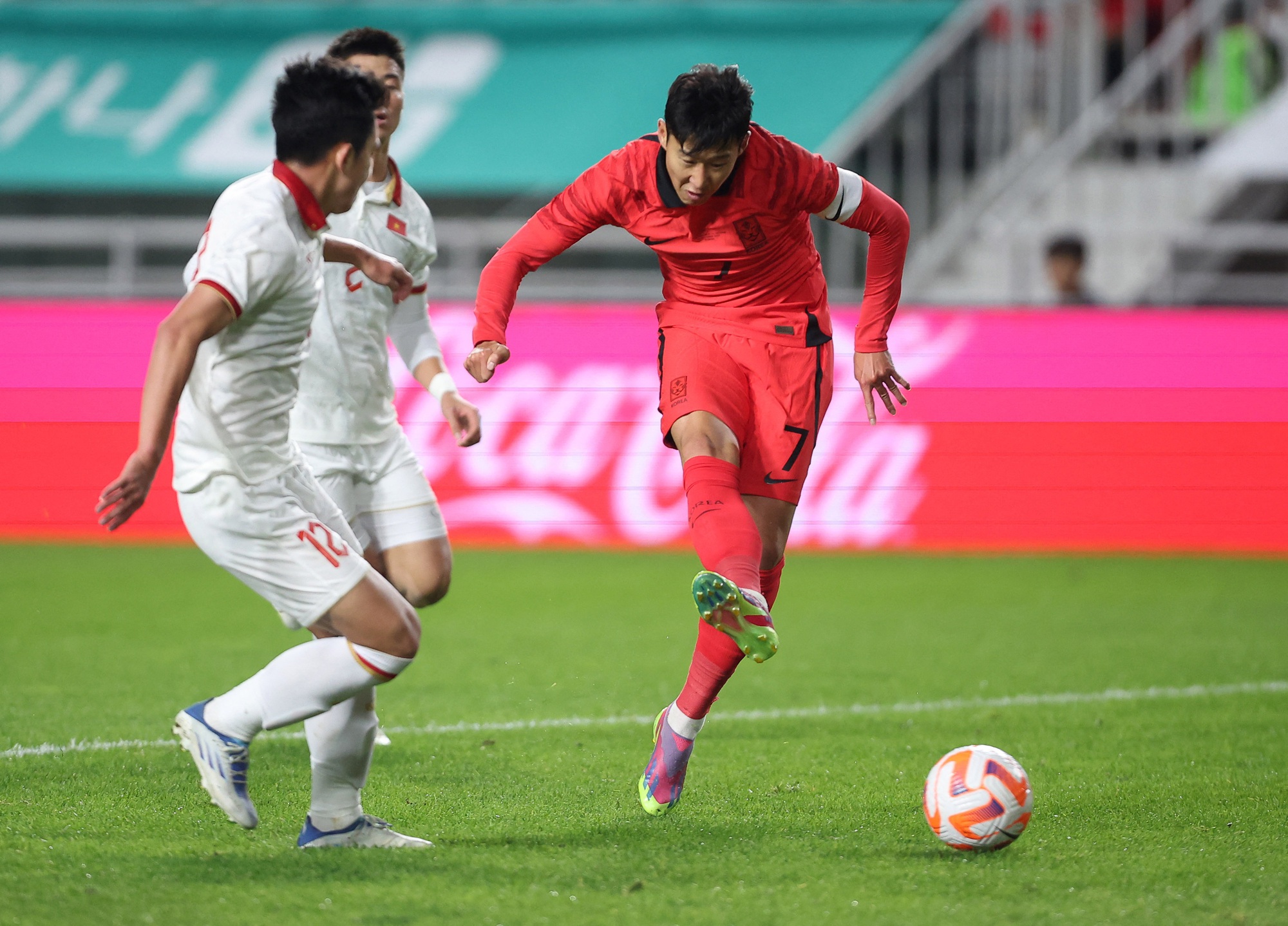
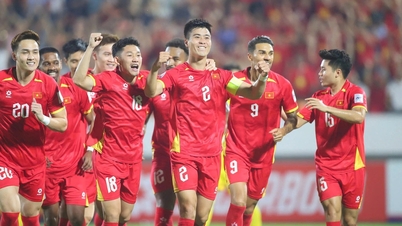
South Korea (in red) took off after the 2002 World Cup.
That year's football festival brought South Korea $6.6 billion, with tourism and consumer spending benefiting the most, each contributing over $3 billion, including $1.5 billion from infrastructure development and $1.5 billion from brand value and improved national image.
It's important to remember that this figure of $6.6 billion is from over 20 years ago; if calculated in today's terms, it would be worth approximately $35 billion.
The economic benefits, political prestige, and investment attraction offered by hosting sporting events have spurred countries to compete for the right to host major sporting events. Most recently, Qatar made a splash by successfully hosting the 2022 World Cup. Also in West Asia, Saudi Arabia is vying to host the 2028 World Cup, hoping to enhance its national image.
What lessons can Vietnamese sports learn from this?
In relation to Vietnam, our country has hosted two major regional events: the 22nd SEA Games (2003) and, more recently, the 31st SEA Games (2022).
Mr. Do Dinh Hong, Director of the Hanoi Department of Culture and Sports, shared: "Its impact extends not only to the sports industry but also to the Vietnamese people, who are very proud that we were able to organize this event. Every field and industry has received a positive impact from this event."
In fact, after two SEA Games, we can see the level of organization of sporting events and the promotion of Vietnam's image and people internationally."

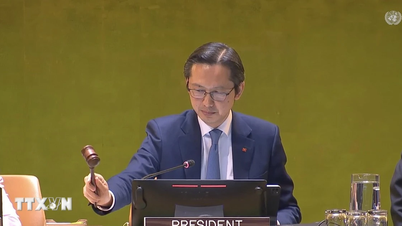
Director of Hanoi Department of Culture and Sports, Do Dinh Hong
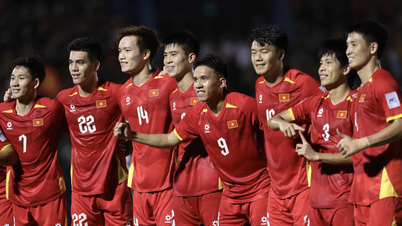
Vietnam is currently a destination for many major sporting events. The Vietnam Football Federation (VFF) has coordinated with local authorities to host the U.17, U.20, and U.23 Asian Championship qualifiers within just one year. Similarly, in billiards, the Hanoi Open tournament attracts many skilled players and has gained widespread popularity among billiards fans worldwide.
However, organizing sporting events still requires specific mechanisms and favorable conditions to encourage businesses to participate and invest.
"To attract investors, sports-related projects will be exempt from land and water taxes for 10 years, followed by a 50% reduction in subsequent years."
Secondly, the corporate income tax rate is only 5%, but that entire 5% will be exempted for the first four years, and then 50% will be applied for the following nine years. Based on these points, I hope that it can be applied nationwide," Mr. Do Dinh Hong affirmed.
Source: https://thanhnien.vn/quang-ba-hinh-anh-dat-nuoc-nho-the-thao-viet-nam-hoc-duoc-gi-tu-han-quoc-185241017185110638.htm























































































Comment (0)