

Many challenges lie ahead.
Ho Chi Minh City's startup ecosystem is currently valued at $7.4 billion, attracting a total of $260 million in venture capital, housing nearly 50% of the country's startups, and is home to three tech unicorns: VNG , MoMo, and Sky Mavis. The city is also among the top 30 globally and top 2 in Southeast Asia for blockchain startups, and ranks 54th globally in fintech, 62nd in educational technology (Edtech), 71st in e-commerce and retail, and 87th in transportation.
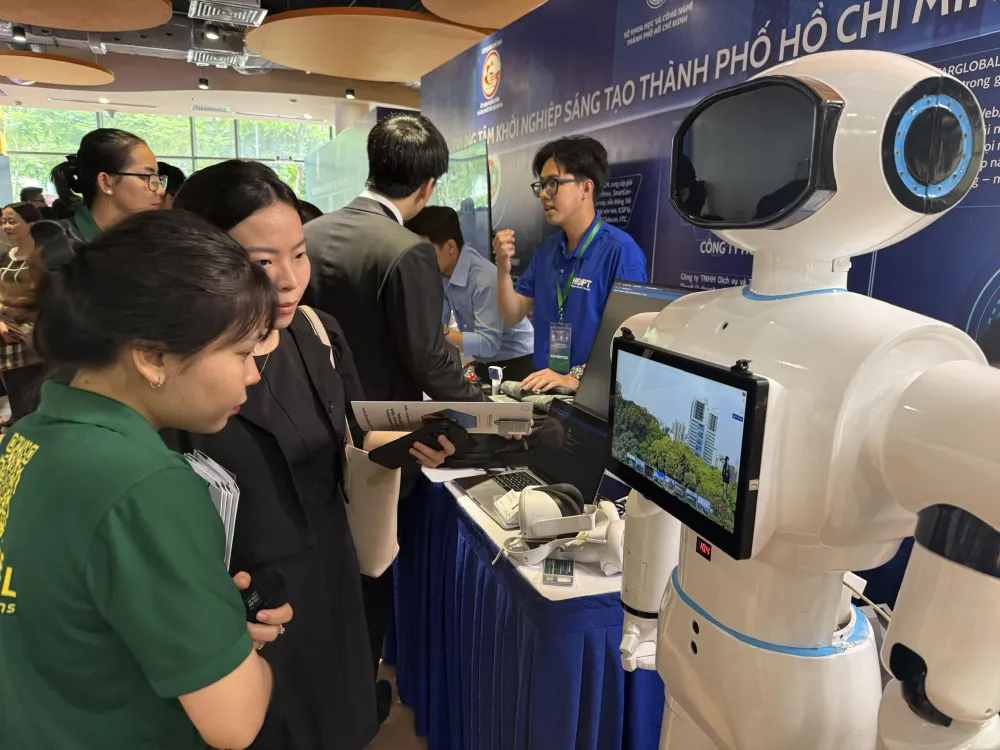
According to an assessment of the startup ecosystem in Ho Chi Minh City by the Department of Science and Technology, the difficulties that startups will face in the next 1-3 years include a lack of investment capital, legal barriers, a shortage of high-quality human resources, and especially market volatility, which is also a major challenge. Ho Chi Minh City accounts for more than half of the country's startups, yet it has not been able to access support resources despite the city's recent policies to support startup activities.
Ms. Dang Thi Luan, Acting Director of the Ho Chi Minh City Innovation and Entrepreneurship Center (SIHUB), stated that Ho Chi Minh City has many support policies, including non-refundable grants of up to 400 million VND per project, tax exemptions, and pilot support, which are concretized through resolutions. However, 69% of businesses reported not having received support from any policies, even though 79% said they were aware of at least 1-3 of the city's policies.
According to a survey by the Ho Chi Minh City Department of Science and Technology, the reasons why businesses find it difficult to access support are a lack of information on procedures (over 51%), difficulty meeting support conditions (over 31%), limited access to credit (30%), and also lengthy application approval times and complex procedures. Therefore, businesses in the Ho Chi Minh City startup ecosystem suggest simplifying procedures and diversifying support methods.
Given the above situation, SIHUB has put forward proposals to support the city's startup community, such as improving and developing both physical and technological infrastructure; implementing policies to attract diverse resources from society, including venture capital funds, large corporations and technology companies, and universities. Simultaneously, it is necessary to strongly implement international cooperation programs to train, incubate, connect, and expand markets for startup businesses… and develop innovation potential by building a startup university model.
International experience for Ho Chi Minh City
Australia is home to over 4,300 technology companies, creating 100,000 jobs and contributing approximately AUD 42 billion to the economy . It is also home to many world-renowned tech unicorns such as Atlassian, Canva, and Block, along with 150 research institutes and centers of excellence in AI, biotechnology, energy, and digital technology.
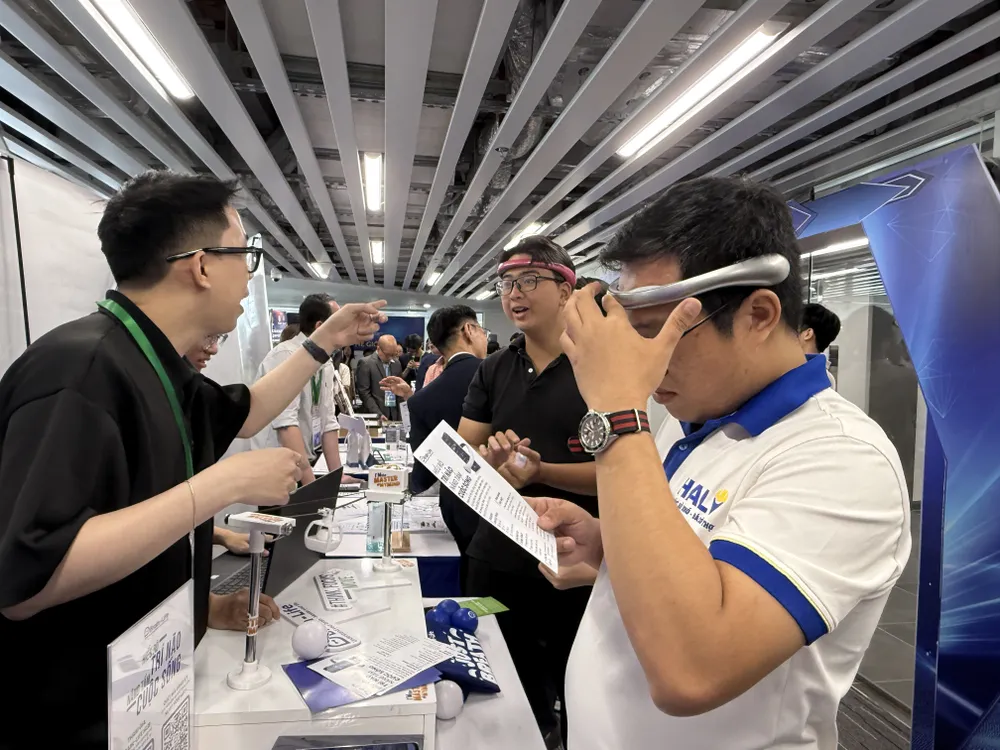
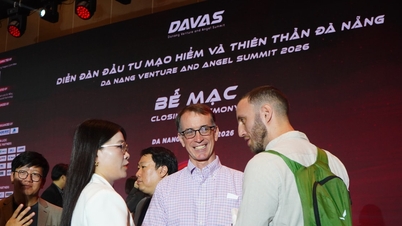
“Ho Chi Minh City could learn from the experience of developing concentrated innovation clusters, organizing large-scale events to attract global resources, and implementing support policies similar to the Landing Pad program (Australia) to facilitate international and domestic startups in expanding cooperation,” shared David Smith, Director of the Innovation Program Investment NSW (Australia's largest innovation center).
Ms. Yufuko Takashima, General Director of Global Strategy at Mitsubishi Research Institute (MRI - Japan), stated: MRI has implemented numerous collaborative activities in Vietnam, including investment workshops and startup acceleration programs. MRI identifies Vietnam as one of the emerging markets with rapid economic growth and high development potential. To promote sustainable growth, Ho Chi Minh City and Vietnam need to build a regional cooperation network and invest in cutting-edge technologies such as AI, smart cities, and green technologies.
According to Mr. Tran Trong Tuyen, Deputy Director of the Ho Chi Minh City Department of Science and Technology, as the leading economic, educational , and innovation center in the country, Ho Chi Minh City is witnessing the vibrant development of startup and innovation activities with clear objectives. Linking and cooperating with reputable international organizations and learning from successful models in other countries are among the options to realize the goals of developing a sustainable startup and innovation ecosystem in Ho Chi Minh City.
According to Mr. Aw Beng Teck, Senior Director of Nanyang Technological University (NTU - Singapore), Singapore currently has over 4,500 startups, contributing US$144 billion to the economy and creating more than 208,000 jobs in the technology sector. Universities play a central role in nurturing ideas, developing high-quality human resources, and commercializing research. NTU has developed an innovation roadmap consisting of three pillars: fostering entrepreneurial mindset in students; providing resources, funding, creative spaces, and acceleration programs for startups; and connecting with global networks in centers such as San Francisco, Tokyo, and Paris.
NTU has also become a model for the university-business-government linkage model to develop the startup ecosystem. “Ho Chi Minh City needs to promote the role of universities as a pillar in the startup ecosystem, as a place to train human resources, incubate technology, lead innovation; encourage research projects to be commercialized and support early-stage investment capital for technology startups,” suggested Mr. Aw Beng Teck.
Source: https://www.sggp.org.vn/xay-dung-he-sinh-thai-khoi-nghiep-ben-vung-post811503.html

![[Image] Nearly 125,000 Hanoi students completed the Literature exam for the 10th grade entrance exam.](https://vphoto.vietnam.vn/thumb/1200x675/vietnam/resource/IMAGE/2026/05/30/1780117233041_ndo_br_thiet-ke-chua-co-ten-2-png.webp)















































































Comment (0)