


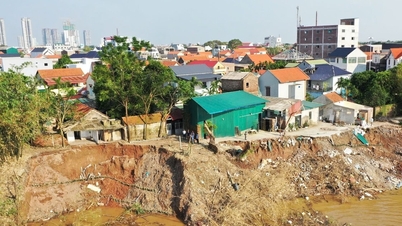
The implementation of a two-tiered local government system has terminated the operation of the district-level disaster prevention, search and rescue, and civil defense command – a unit that had been very familiar with this field for many years. Therefore, many concerns have been raised. The biggest concern is the potential for complacency and negligence among some commune-level officials, especially those directly involved in disaster prevention and control who may not be fully aware of the situation. This gap could easily lead to undesirable consequences in flood and storm prevention and control efforts.
Worry is natural, but it seems that this worry is somewhat "overly concerned." Natural disasters are unpredictable, but human actions are not. Once they become protectors of the people's rights and representatives of their will and aspirations, public servants, regardless of their rank or circumstances, must wholeheartedly and diligently serve the nation and the people, fulfilling their duties to the best of their ability. The more difficult the situation, the more officials must demonstrate their competence, character, responsibility, and exemplary conduct, flexibly implementing solutions to respond promptly to situations, especially storms and floods. Because if mistakes occur, especially due to subjective errors, it will be very difficult to correct them.
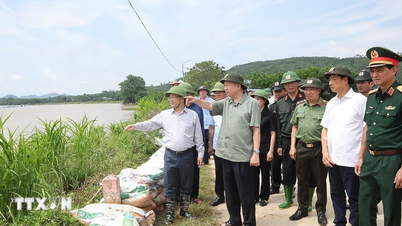
Following the directive No. 07/CĐ-UBND from the Chairman of the Provincial People's Committee, on the night of July 20th, the remaining localities in the province quickly reorganized the Disaster Prevention, Search and Rescue, and Civil Defense Command Boards at the new commune level; assigning specific tasks to members. Simultaneously, they finalized and approved disaster prevention plans, scenarios, and strategies in accordance with regulations and the actual situation of each locality. A sense of urgency and responsibility prevailed, racing against the storm to minimize damage caused by the storm and floods, ensuring peace and safety for the people. In many areas prone to landslides, flash floods, and mudslides, local authorities promptly disseminated information, mobilized support, and assisted people in relocating. At fishing boats, rafts, and aquaculture cages, authorities in coastal communes and wards assisted fishermen in securing their vessels, reinforcing cages, and moving people to safe shelters. A wall connecting local authorities with the people was erected before the storm made landfall.
It's difficult to stop the destructive power of nature. But what the local authorities have achieved is minimizing the damage caused by storms and floods, building trust among the people. One of the expected goals when operating a two-tiered local government system is that officials will be closer to the people. This is becoming a reality when looking at the spirit of response to Typhoon No. 3 by the Party committees and authorities of the communes and wards in the province.
It's difficult to avoid certain things, just like a new body needs time to adapt. But the unexpected test from nature – Typhoon No. 3 – shows that the new commune/ward disaster prevention, search and rescue, and civil defense command is fully taking over the responsibilities of the former district-level disaster prevention agencies, and will gradually improve in the future.
Thai Minh
Source: https://baothanhhoa.vn/bai-test-tu-thien-nhien-255784.htm

![[Photo] National Assembly Chairman Tran Thanh Man working with the Standing Committee of the National Assembly's Ethnic Council](https://vphoto.vietnam.vn/thumb/1200x675/vietnam/resource/IMAGE/2026/05/21/1779337435930_ndo_br_1-jpg.webp)
![[Image] "Journey of Hope" promotes the organ and tissue donation movement in Vietnam.](https://vphoto.vietnam.vn/thumb/1200x675/vietnam/resource/IMAGE/2026/05/20/1779294400833_1-8910-jpg.webp)




















































































Comment (0)