

Low interest rates are difficult to access.
At the conference "Connecting Banks and Businesses in Hanoi ," the Governor of the State Bank of Vietnam, Nguyen Thi Hong, held a direct dialogue with small and medium-sized enterprises (SMEs) to address difficulties and increase their ability to absorb capital.
Speaking at the conference, Mr. Le Vinh Son, Chairman of the Hanoi Association of Key Industrial Products Manufacturers (HAMI), expressed concerns about the cumbersome and inaccessible loan procedures for small and medium-sized enterprises (SMEs), the lengthy loan review process, and even up to six months waiting times for some loans.
In addition, businesses are finding it difficult to meet bank lending criteria in the current challenging economic climate, leading to declining business performance.
"Furthermore, if there is medium/long-term project funding, businesses that repay loans early will be subject to a penalty interest rate of 1%-5%, depending on the remaining loan term. If the business uses revenue from the project to repay the loan early, it will still be subject to a penalty interest rate," Mr. Son added.
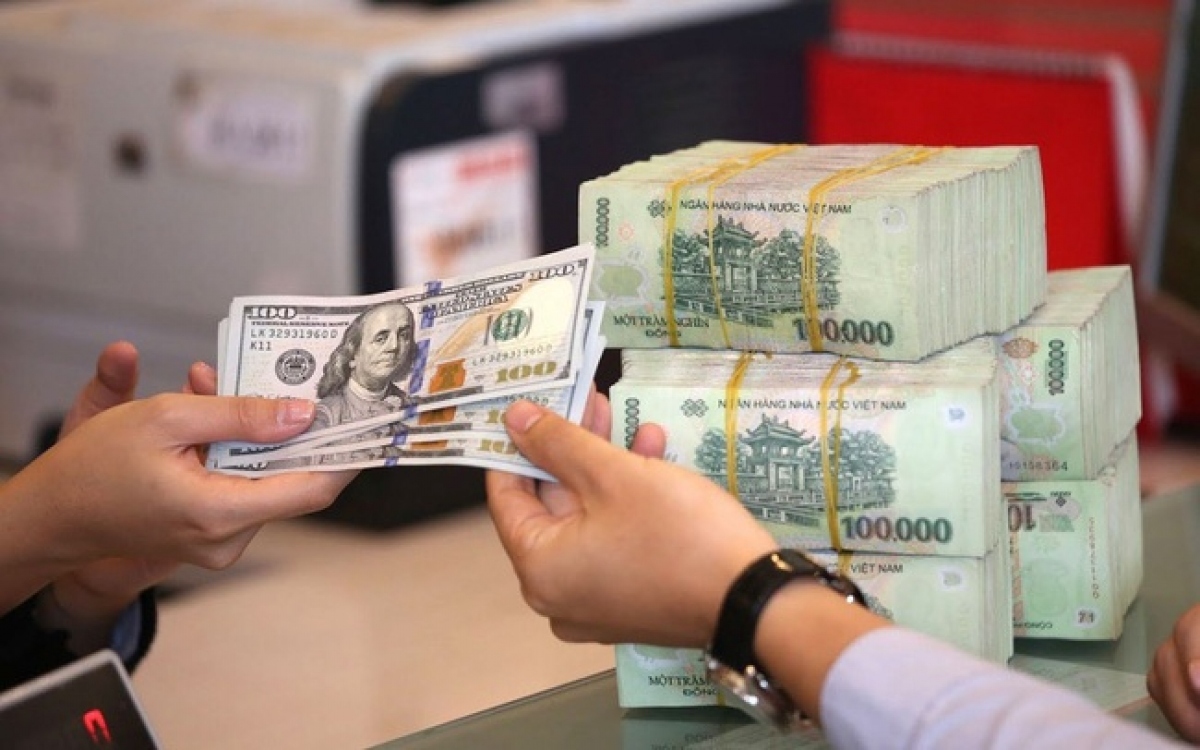
If the State Bank of Vietnam does not lower interest rates, the financial costs of businesses (including interest expenses) will remain high, affecting their revenue and profits.
Regarding interest rates, Mr. Nguyen Trong Hoa, Director of Steel Materials and Structures Co., Ltd., also stated that it is very difficult to access low interest rates.
Besides concerns about interest rates, Ms. Nguyen Thi Huyen Thuong, General Director of Nagakawa Group JSC, a machinery and equipment trading company, is facing issues with exchange rates. This is because when the State Bank of Vietnam lowers interest rates, it impacts the exchange rate, especially for businesses involved in import activities.
However, the paradox is that if the State Bank of Vietnam does not lower interest rates, the financial costs of businesses (including interest expenses) will remain high, affecting their revenue and profits.
Mr. Nguyen Viet Hung, Head of Finance and Accounting at Dong Anh Mechanical Joint Stock Company, stated that the current loan interest rate for his company is approximately 5.2 - 5.6% per year.
"I sincerely hope that the State Bank of Vietnam will be able to maintain this low interest rate level for a long time," Mr. Hung emphasized.
The business representative also stated that he noticed that whenever interest rates decrease, the exchange rate increases, directly affecting businesses, especially import businesses. He requested that the authorities take appropriate measures to stabilize the exchange rate.
Managing interest rates and exchange rates in a balanced manner.
Addressing the concerns of businesses, Governor of the State Bank of Vietnam, Nguyen Thi Hong, stated that managing exchange rates and interest rates is a comprehensive problem, which is very difficult and requires accepting trade-offs. In fact, significantly reducing the policy interest rate often leads to an increase in the exchange rate.
For the State Bank of Vietnam, when managing exchange rate policy, considering the overall national situation, with both exporting and importing businesses involved, exporting businesses benefit while importing businesses face difficulties.
"The State Bank must consider the overall economic situation," the Governor said.
Regarding the proposal to reduce interest rates, Governor Nguyen Thi Hong shared that the total amount of interest rate and fee reductions from credit institutions' resources from 2020 to the present is 60,000 billion VND. This is a significant support from banks to their customers.
Assessing the health of businesses, which remains challenging, the Governor requested credit institutions to continue reducing costs, based on their financial assessments, in order to lower interest rates on new loans and existing loans. At the same time, they must also ensure the financial stability of the banks themselves, and above all, be prepared to guarantee repayment to depositors.

Governor of the State Bank of Vietnam, Nguyen Thi Hong.
Regarding exchange rates, Ms. Hong stated that exchange rates are also a part of a company's financial costs, and that from an economic perspective, exchange rates tend to rise when interest rates decrease.
"Therefore, managing exchange rates and interest rates in a harmonious and stable manner is the responsibility of the State Bank of Vietnam," Ms. Hong said.
Furthermore, the Governor of the State Bank of Vietnam emphasized that exchange rate management must be considered from the perspective of the overall economy. While a rising exchange rate benefits export businesses, domestic manufacturing sectors are heavily dependent on imports, with the import-to-GDP ratio being nearly 100%. Therefore, a rising exchange rate will create difficulties for import businesses.
In conclusion, Governor Nguyen Thi Hong affirmed that the State Bank of Vietnam is closely monitoring the exchange rate, daily and hourly, in order to manage it appropriately .
Source
![[Photo] The heat at the fireworks display site on the opening night of the Da Nang International Fireworks Festival 2026](https://vphoto.vietnam.vn/thumb/1200x675/vietnam/resource/IMAGE/2026/05/27/1779889741485_ndo_br_z7872039145157-fecaba5112f39e8352544099d7ef4738-5140-jpg.webp)



![[Photo] The courage of new recruits of Brigade 144 on the training ground.](https://vphoto.vietnam.vn/thumb/1200x675/vietnam/resource/IMAGE/2026/05/27/1779881651341_anh-man-hinh-2026-05-27-luc-18-32-52.png)





























































![[Photo] The courage of new recruits of Brigade 144 on the training ground.](https://vphoto.vietnam.vn/thumb/402x226/vietnam/resource/IMAGE/2026/05/27/1779881651341_anh-man-hinh-2026-05-27-luc-18-32-52.png)































Comment (0)