

 |
Trash is scattered all over Kuta beach in Bali, Indonesia, on January 23. Photo: SCMP . |
Speaking to local leaders, President Prabowo Subianto said he had received numerous complaints from foreign heads of state and officials about the level of pollution in Bali. He cited the blunt feedback from international partners that "Bali is now very dirty, no longer as beautiful as before," according to SCMP.
The president said he took the comments as constructive criticism and released images of trash-strewn Bali beaches in December.
According to him, Indonesia has great tourism potential, but tourists witness squalor, especially on Bali's famous beaches, which could diminish the destination's appeal.
Mr. Prabowo assessed Bali Governor Wayan Koster's response to the waste problem as "slow," despite having the full authority to mobilize the island's 4.5 million inhabitants to participate in the cleanup.
The president even warned he would deploy the military to participate in regular cleanup campaigns if local authorities did not meet the demands, and declared "war" on waste.
Following the President's warning, the Bali authorities pledged to establish a task force and regularly mobilize the community to participate in cleanup efforts. In recent days, Bali's police, military, and environmental agencies have coordinated to clean up numerous beaches such as Kuta and Kedonganan.
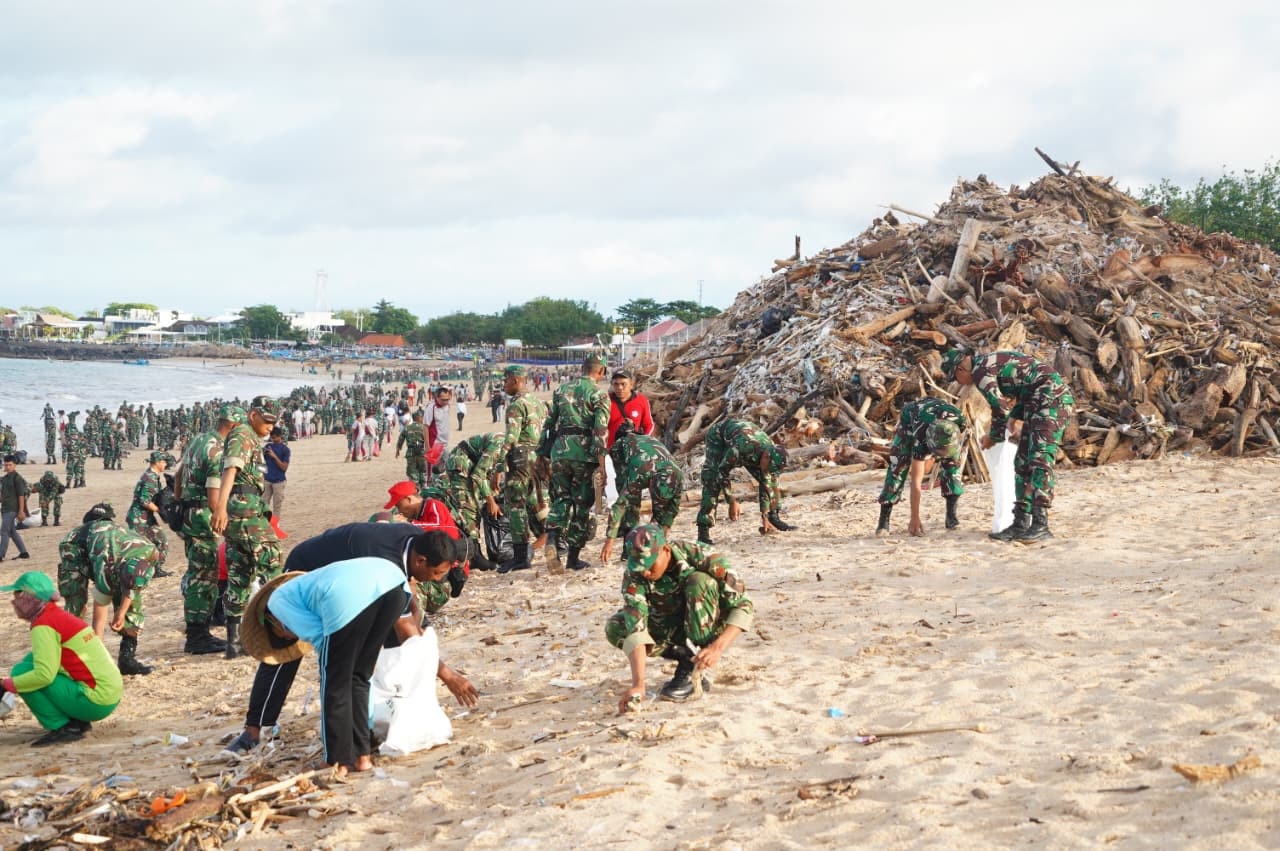 |
Dozens of Indonesian soldiers and military volunteers clean up Kedonganan beach in Badung district on January 3. Photo: Udayana Military District Command. |
According to environmental experts, the "waste crisis" in Bali stems from multiple causes. The Bali government was a pioneer nationwide when it banned single-use plastics in 2018.
Last year, the island continued its ban on the production, distribution, and sale of plastic water bottles under one liter, as part of its goal to become a "zero-waste island" by 2027. Residents, government agencies, businesses, and religious institutions are also required to sort waste at source.
However, according to Professor Ni Luh Kartini of Udayana University, these regulations have not been effectively enforced. Some businesses producing small-volume beverages have been granted extensions to sell off their inventory, preventing the ban from being implemented immediately.
Local government data shows that Bali generates approximately 3,436 tons of waste per day, with organic waste accounting for about 65%. According to Ms. Ni Luh, if organic waste were processed at the source and converted into fertilizer, the amount of remaining waste requiring landfill or other disposal would be significantly reduced.
However, the Suwung landfill, which receives waste from densely populated areas such as Denpasar, Badung, Gianyar, and Tabanan, is now severely overloaded with mountains of garbage reaching up to 42 meters high.
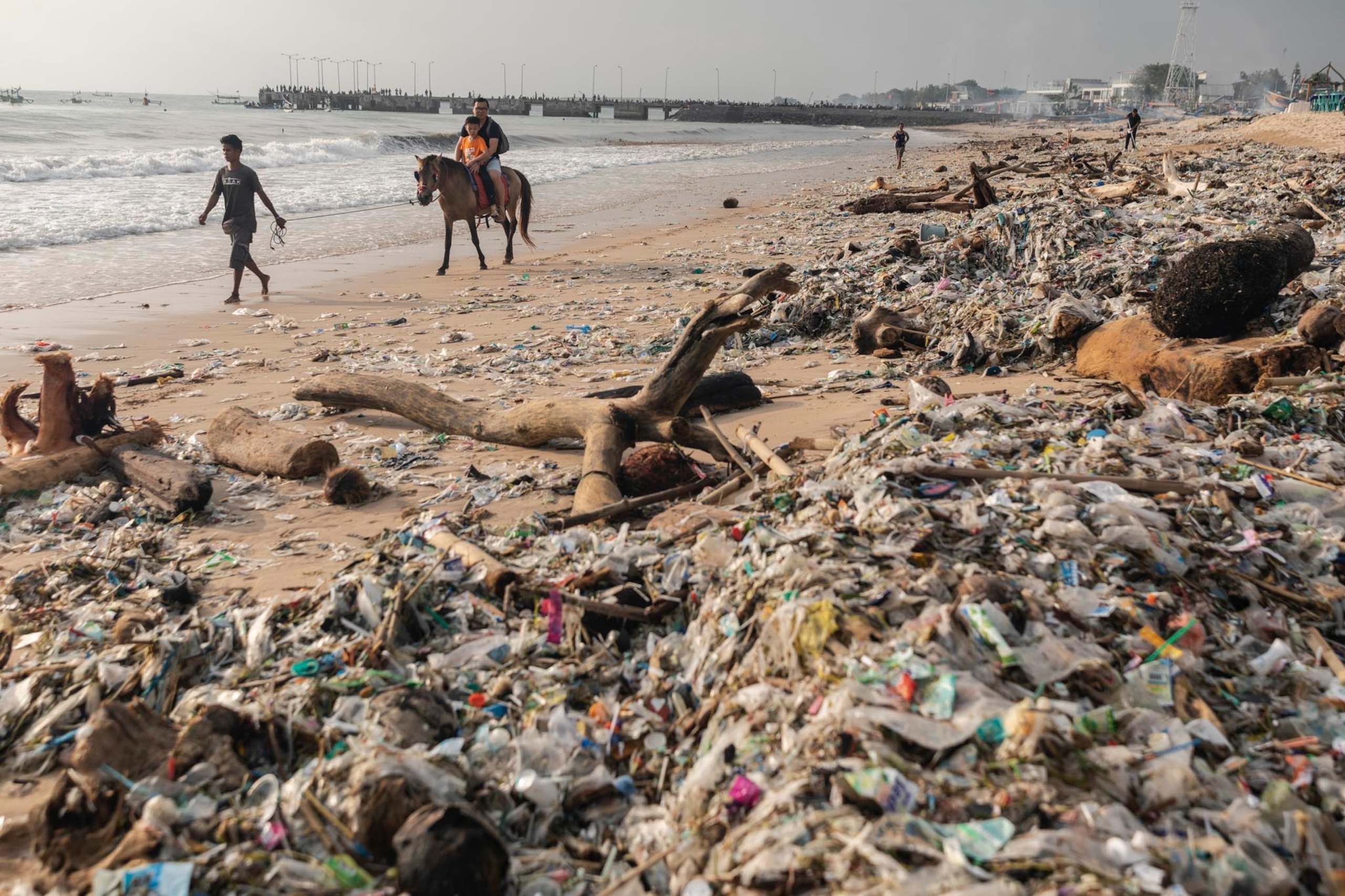 |
Tourists ride horses past a beach littered with trash in Bali in January 2019. Photo: Nyimas Laula/National Geographic . |
Agus Norman Saksono, founder of the non-profit organization Bersih-Bersih Bali, said that many households had sorted their waste but it was then mixed back together during the collection process.
According to him, this is a systemic mistake, stemming from the misconception that landfills are merely "final disposal" sites instead of "integrated disposal" facilities. He proposed separate daily waste collection for organic and inorganic waste to foster long-term habits within the community.
Mr. Agus also argued that the increase in the number of tourists is contributing to the worsening waste crisis, as "the more tourist destinations, the greater the amount of waste generated."
Last year, Bali welcomed 6.9 million international tourists, a 9% increase compared to 2024. Also in 2025, the Bali authorities implemented stricter measures to address inappropriate behavior by international tourists and the increasing number of visa violations.
Source: https://znews.vn/bali-qua-ban-post1626311.html

![[Image] Creating urban areas along the Dong Nai River](https://vphoto.vietnam.vn/thumb/1200x675/vietnam/resource/IMAGE/2026/03/31/1774936857389_ndo_br_z7673258220978-0364bf985edfd080118668ad3c015934-resize-5023-jpg.webp)



































































Comment (0)