

In the ongoing process of innovation in higher education , Quy Nhon University (QNU) has demonstrated its role as a multidisciplinary training institution, where knowledge is built sustainably, closely linked to social responsibility and a desire to serve the community.
Expanding opportunities for access to knowledge.
With nearly 20,000 students, QNU has become a hub of knowledge, creativity, and ambition for advancement among generations of students, trainees, and faculty.
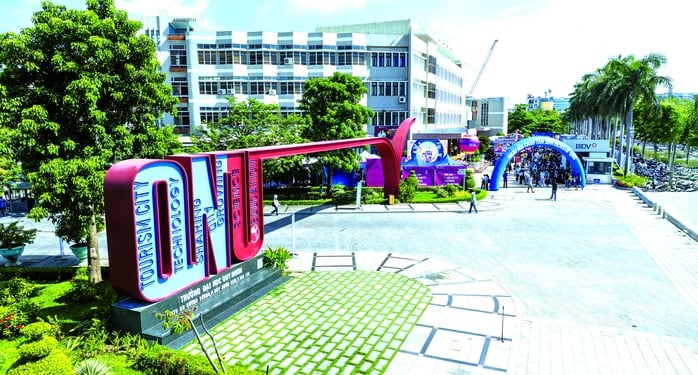
With nearly 20,000 students, Quy Nhon University has become a hub of knowledge, creativity, and ambition for advancement among generations of students, trainees, and faculty members.
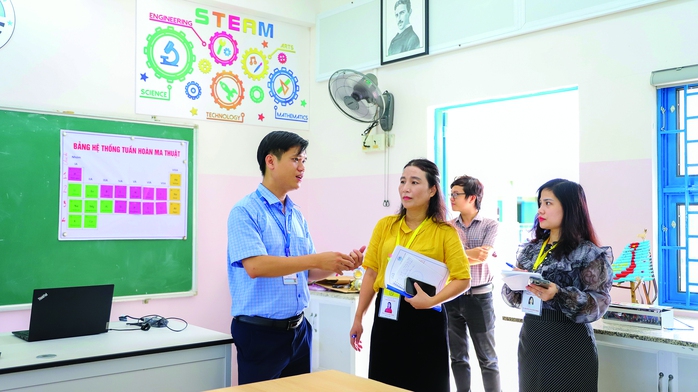
The university currently offers 52 undergraduate programs, 24 master's programs, 5 doctoral programs, and 5 distance learning programs. This diverse range of programs not only meets the varied learning needs of society but also contributes to providing high-quality human resources for the South Central and Central Highlands regions and the entire country. By the end of 2025, 36 of the university's training programs will have been accredited according to the standards of the Ministry of Education and Training and AUN-QA, affirming its strong commitment to ensuring and improving the quality of education to regional and international standards.
The year 2025 also marks a significant turning point as the university implements preferential policies for students studying majors and specializations in the fields of semiconductor industry, artificial intelligence, and cybersecurity. Specifically, majors such as: electronics and telecommunications engineering (integrated circuit design), engineering physics (integrated circuit processing, packaging, and testing), artificial intelligence, and information technology (cybersecurity) will benefit from various policies supporting tuition fees, scholarships, internships, and career connections. This is a concrete step demonstrating QNU's commitment to the High-Tech Human Resource Development Project for the period 2025-2030 of the former Binh Dinh province (now Gia Lai province).
Strengthening quality assurance of training programs.
One of the key pillars contributing to QNU's brand is its highly qualified faculty, with over 51% holding doctoral degrees or higher. Many of the university's scientists have established themselves on the national and international scientific map, notably Associate Professor Dr. Nguyen Thi Mong Diep, a senior lecturer in the Faculty of Natural Sciences, who was honored among the top 2% of the world's most influential scientists according to Stanford University's ranking; and Associate Professor Dr. Tran Ngoc Nguyen, from the Faculty of Mathematics and Statistics, who will become the youngest associate professor of mathematics in the country in 2025. This demonstrates QNU's serious, dynamic, and inspiring academic environment.
A holistic development environment
In 2025, QNU successfully enrolled over 5,100 new students in its 48th cohort and produced over 3,100 new bachelors and engineers. Notably, over 91% of students found employment within their first year after graduation, demonstrating the quality of education and the effective connection between the university and the needs of the labor market.
Besides professional training, QNU also focuses on building a comprehensive learning and training environment. The inclusion of pickleball in the physical education program, along with cultural, artistic, volunteer, entrepreneurship, and innovation activities, has contributed to the formation of a dynamic, modern, and distinctive student life.
Regarding scientific research and international integration, in December 2025, the university's Science Journal will officially join the DOAJ (Directory of Open Access Journals), opening up opportunities for research works by faculty and students to reach the global academic community. This is an important step, affirming QNU's role in contributing knowledge and enhancing Vietnam's scientific standing on the international stage.
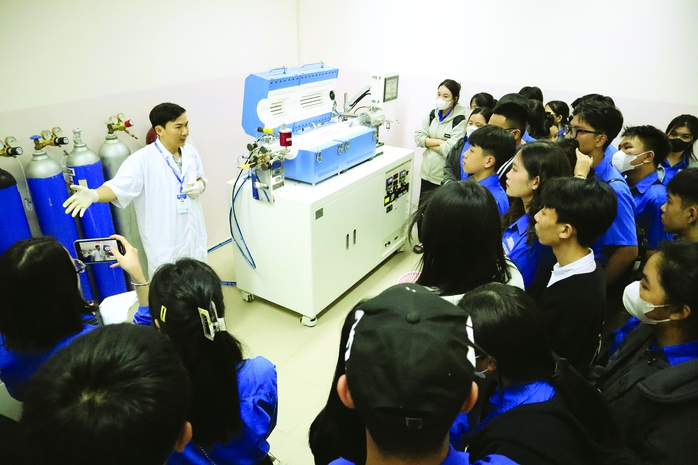
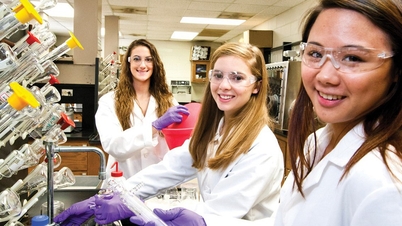
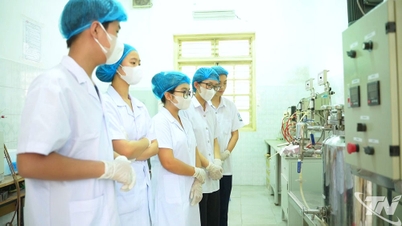
Training activities at Quy Nhon University. Photo: Anh Tu
Simultaneously, the university's collaborative network continues to expand with over 600 domestic partners and 39 international partners from numerous countries and territories. These partnerships facilitate internships, employment, academic exchange, and international integration for students.
Looking towards a new phase of development, QNU focuses on training high-quality human resources, especially teachers, while also strongly developing scientific research, innovation, and technology transfer. The goal is for QNU to achieve Southeast Asian regional quality standards by 2030 and strive to be among the top 100 universities in Southeast Asia according to QS Asia.
From achievements in training, research, and international cooperation to innovations in cultural and sports life, QNU's vision for 2025 reflects the image of a university that is persistently moving forward, with knowledge as its foundation and community service as its mission. Every day of learning and creativity at QNU contributes to writing the story of a university brand rich in responsibility, aspiration, and pride.
For further details, please contact:
Quy Nhon University - 170 An Duong Vuong Street, Quy Nhon Nam Ward, Gia Lai Province
Email: dqn@moet.edu.vn / tuvantuyensinh@qnu.edu.vn / dhqn@qnu.edu.vn
Hotline: 1800 55 88 49
Source: https://nld.com.vn/ben-bi-kien-tao-tri-thuc-196260213092332393.htm

![[Photo] General Secretary and President To Lam presides over a working session with the Central Policy and Strategy Committee on the development of the materials industry.](https://vphoto.vietnam.vn/thumb/1200x675/vietnam/resource/IMAGE/2026/05/21/1779359935432_a3-bnd-3129-1412-jpg.webp)















































































Comment (0)