|
| Terraced rice fields in Xa Phin village, Thanh Thuy commune. Photo: Hai Quynh |
For the Tay people, the kitchen is not just a place for cooking, but also a guardian spirit of the family. It is built with all the respect and meticulousness, as if it were a part of the soul of the house. The Tay people have an elaborate and meticulous way of building kitchens. Kitchen construction consists of two main parts: the kitchen frame and the kitchen loft. The kitchen frame is made of good quality wood, joined together in a square shape, each side about an arm's length long. The two long sides rest on two sturdy floor supports underneath. The inner part of the kitchen is enclosed like a box, about three or four handspans deep, used to hold earth and ash to retain heat.
Above is the kitchen loft, made of bamboo, skillfully mortised and tenon-mortared, hanging just above head level – where seeds, bundles of dried bamboo shoots, tools, and nowadays, strips of meat hung in the loft, a fragrant specialty of the highlands, are stored. When building a new house, the first thing to do is to invite the Fire God into the house. The homeowner invites a respected elder to light the first fire, praying for a bountiful harvest and a prosperous life. Next to the main stove, the Tay people place a small bamboo tube to worship the Fire God; on the 15th and 1st of each lunar month, or during Tet (Lunar New Year), they light incense and pray, asking that the fire never goes out and happiness never diminishes.
For the Co Lao people, one of the ethnic minorities living in the highlands of Ha Giang, the hearth is the center of the house, a space for labor and creativity. In their warm, smoky earthen houses, men weave baskets and make carrying bags by the hearth; women skillfully embroider dresses and dry linen threads. The hearth is where they discuss farming matters, where children gather to listen to old stories, and where they nurture their traditional weaving craft – a craft that has become a sustainable livelihood for many Co Lao households today.
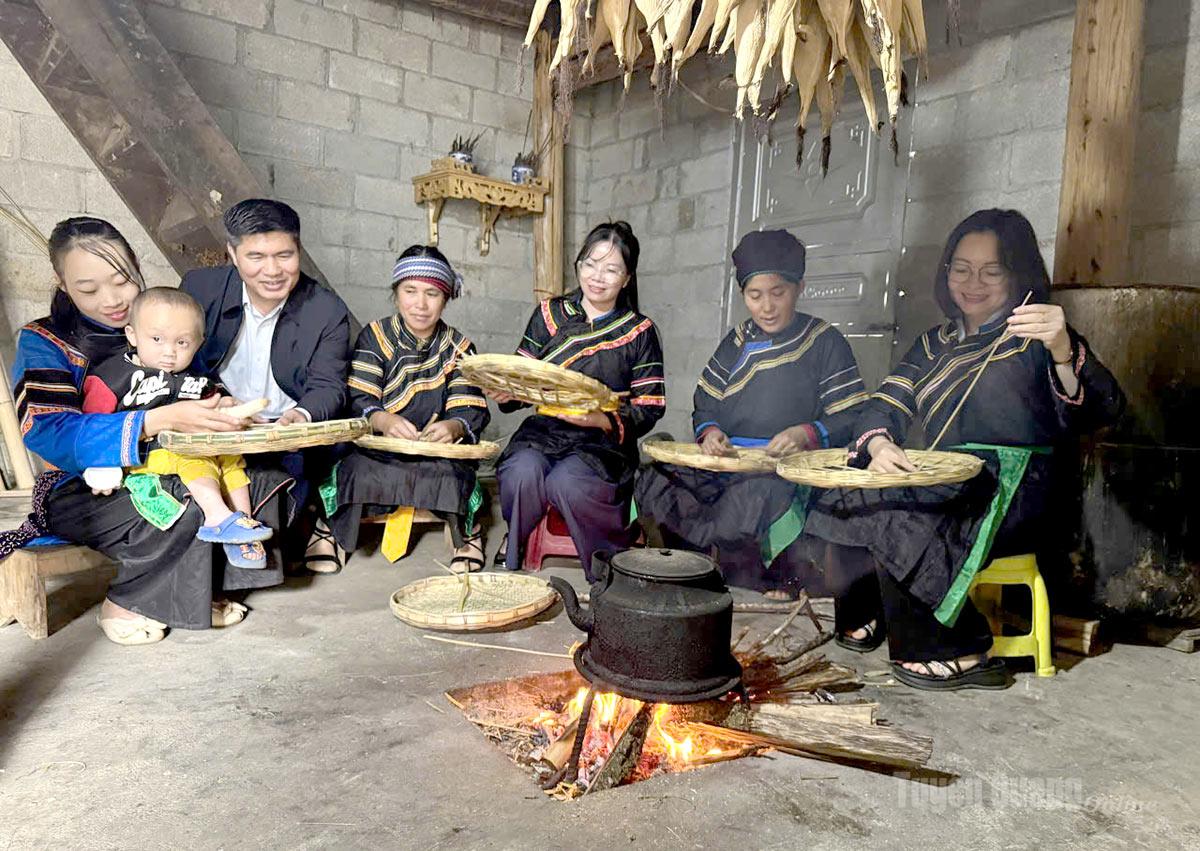 |
| Tourists experience the traditional hearth of the Co Lao people in Ma Che village, Sa Phin commune. |
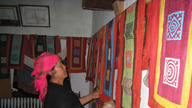
Mr. Van Phong Sai, over 90 years old, is one of the weaving artisans in Ma Che village, Sa Phin commune. He recounts: "Every house has a fireplace and skillful hands. Weaving baskets, carrying trays, and bamboo screens... are all done by the fireplace, because it's warm and the bamboo is easier to bend and hang." Therefore, the fireplace not only warms people but also preserves the ancient craft and skills of our ancestors from fading away.
In the Hmong belief system, the hearth is the dwelling place of three fire gods – symbols of life and happiness. At the end of the year, they perform a ceremony to thank the gods, offering wine and meat, and praying for a peaceful new year. No one is allowed to arbitrarily extinguish the fire or move the three stones supporting the hearth, as that is where the gods reside. The Dao people, on the other hand, have a custom of keeping the fire burning for three days during Tet (Lunar New Year), ensuring the hearth never cools down. The first fire of the year is carefully nurtured so that warmth and good fortune will spread throughout the year.
Mr. Trieu Xuan Hao, a Dao ethnic minority from Na Hang commune, shared: "Nowadays, although many families have gas or electric stoves, the traditional wood-burning stove is still preserved, as a part of the soul of the house. By the old fire, Dao women still embroider and dry medicinal leaves gathered from the forest every day."
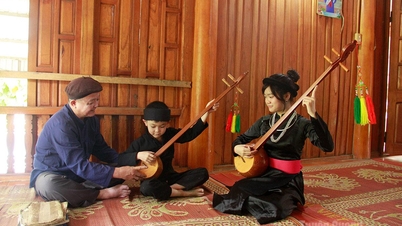
From religious beliefs to daily life, the hearth is a sacred place, but also the most intimately connected place for the people of the highlands. Every afternoon, after a day working in the fields, the elderly and children gather around the hearth. On the stove, the rice pot simmers, the aroma of roasted corn fills the air, and the sounds of conversation and laughter echo. On winter nights, the melodies of the Then folk songs rise from the Tay people's kitchens, the sounds of the reed pipes and flutes of the Co Lao and Mong boys and girls blend with the lingering smoke of the fire. There, human relationships are warmed, memories are cherished, and culture is preserved.
Amidst the hustle and bustle of modern life, as concrete roofs gradually replace traditional stilt houses, the flame of the highlands continues to burn silently and persistently. For the people there, keeping the flame alive means preserving their roots, their identity, and keeping their hearts from growing cold.


Thanh Truc
Source: https://baotuyenquang.com.vn/xa-hoi/202602/bep-lua-vung-cao-85f39e5/