

Developers are struggling to bear the costs and pay off loan interest.
Reporter (NĐT): Currently, while millions of low- and middle-income people yearn to own a home, the supply of affordable housing and social housing is almost exhausted. What do you think are the reasons for this situation?
Mr. Vo Hong Thang - Director of Consulting Services and Project Development, DKRA Group: The problem of insufficient supply of affordable housing and social housing to meet the needs of low- and middle-income people has occurred and persisted for many years.
There are many contributing factors, but two main ones directly impact the supply in this segment.
Firstly, input costs have increased. Although real estate prices have shown signs of decreasing in the last two years, it must be acknowledged that the previous real estate development cycle from approximately 2014-2020 kept property prices at a high level.
This leads to extremely high investment and construction costs for real estate project developers. With land purchase, raw materials, labor costs, etc., all increasing dramatically, it is very difficult to reduce the price of finished real estate.

Mr. Vo Hong Thang - Director of Consulting Services and Project Development, DKRA Group.
Secondly, the legal status of real estate projects is often lengthy, taking a very long time to resolve. From the land ownership stage, developers still have to obtain approvals from various levels of government, not to mention developing compensation and resettlement plans… causing the completion of a project's legal procedures to drag on for many years.
Especially for specialized businesses like real estate, which mostly use high financial leverage, borrowing from bond and bank channels is substantial. While projects are delayed due to incomplete legal procedures, businesses still have to bear the enormous interest payments from these loans. All of these associated costs will ultimately be factored into the final product price upon completion.
Therefore, it is very difficult for businesses to lower product prices to a level that is "affordable" as desired by the majority of people, especially in the current context where costs are already very high.
Investor: This illustrates how real estate developers are struggling with the cost problem. Could you elaborate on some of the costs that real estate businesses are currently burdened with, and how this affects the reduction in house prices?
Mr. Vo Hong Thang: Input costs such as land use fees, compensation for land clearance, bank loan interest, labor costs, and construction material purchases... have all increased sharply, even by several times in recent times.
A project, from the initial planning stage to the completion of legal procedures, is expected to take only about 3 years on average. However, in reality, businesses may spend up to a decade or more on paperwork to officially begin construction, resulting in wasted resources.
To own land, businesses must incur a series of costs related to compensation and land clearance through the transfer of land use rights, payment of land use fees, land rent, and fees for protecting rice paddy land to the State.
Next, construction costs, including labor and materials, increase steadily over time. For apartment building projects, construction costs account for approximately 50%, around 30% for townhouses, and 20% for villas.
Not to mention the financial burden when businesses have to repay principal and interest on loans. The longer the project takes to complete, the higher these financial costs will accumulate. And ultimately, all of these costs are factored into the selling price that customers have to pay when buying a house.

It's impossible to expect businesses to accept losses just to get rid of inventory.
In the context of a sluggish real estate market like the past two years, many developers are trying to offer attractive incentives to homebuyers and extend payment terms to stimulate demand.
In reality, it's a policy that harms the investor's profits, but they still accept it in an attempt to create liquidity. Now that costs are too high, businesses can only lower product prices to balance the interests of both buyers and sellers to a reasonable extent.
It's very difficult to force real estate businesses to lower house prices to an "affordable" level because business needs to be profitable, and it's impossible to expect them to accept losses just to sell their inventory.
Previously, many developers aimed for profits of tens of percent before undertaking any project. Now, however, they aim to break even, or even incur losses in some initial stages. The highest goal for developers today is to offer the lowest possible selling price and collect payments as quickly as possible to generate cash flow, which is already the best option for customers wanting to own real estate.
Expectations of increased housing supply due to policy changes.
Investor: The reality is that even in the generally gloomy context of the real estate market in 2023, the affordable housing segment has always received special attention from customers, and projects in this segment have consistently maintained stable transaction volumes.
However, investors seem particularly keen on developing luxury townhouses and high-end apartments. Why does this paradox exist?
Mr. Vo Hong Thang: The legal bottlenecks occurring simultaneously across thousands of projects nationwide have resulted in a very small number of projects being eligible for launch in recent years, concentrated only in a few specific segments.
Because of the limited number of projects and their reasonable prices, sales are sure to be very fast, and the lively transactions easily lead us to mistakenly believe that only low-priced projects attract public interest.
However, it's also important to acknowledge the reality that for projects located in "hot spots" like Hanoi and Ho Chi Minh City, there are almost no apartments priced below 50 million VND/m2. These projects typically have prices ranging from 70-80 million VND/m2, or even 100 million VND/m2, which are considered luxury properties.
With all these projects located in such prime locations, it's very difficult for developers to reduce product prices. Furthermore, in recent times, the number of luxury projects eligible for launch has been very scarce, which has also resulted in low transaction volumes in this segment.
Therefore, it is impossible to look at the number of transactions in the market to conclude that the luxury real estate segment is less popular than the affordable or social housing segments.
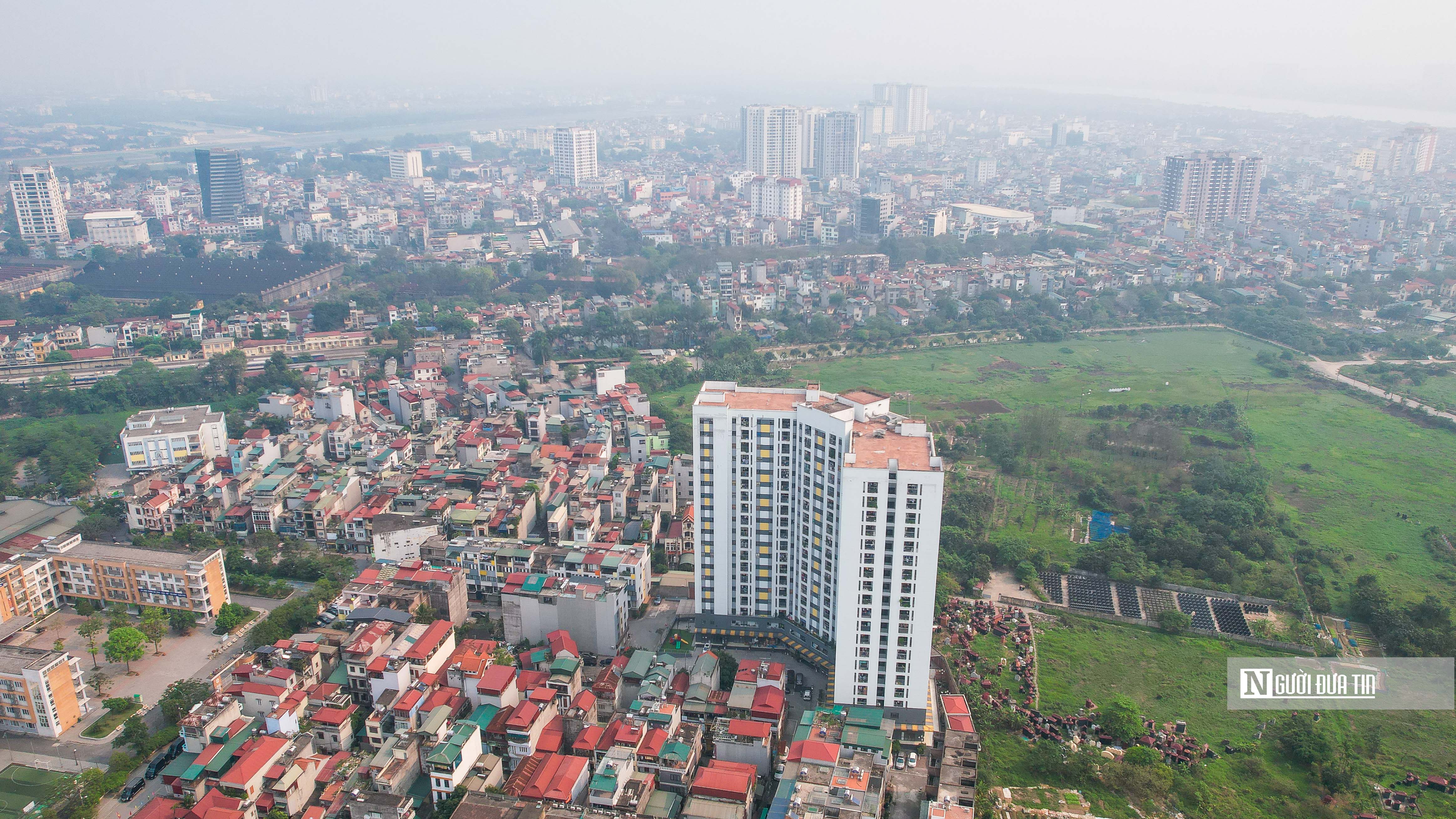
If costs can be reduced, the price of real estate products will immediately decrease.
Furthermore, for some developers, many businesses have positioned themselves from the outset to develop townhouses and high-value properties, and have a long-term strategy to develop this segment. Therefore, even though they would like to develop lower-value segments to meet market demand, they still have to accept pursuing their initial direction.
In addition, some projects have been left unfinished with very high capital investment, making it difficult for investors to easily switch to other real estate segments.
Investor: So, in your opinion, what solutions are needed to address the shortage of affordable housing? The amended Land Law has been passed and will soon be implemented. How do you assess the impact of this on the supply in the real estate market?
Mr. Vo Hong Thang: Based on the State's major policy, we can fully expect that in the next 3-5 years, the supply of social housing and affordable housing will increase dramatically, compensating for the housing shortage faced by the vast majority of the population in recent times.
To achieve this, the role of the State remains paramount, holding the leading responsibility for managing and guiding market development through policies, institutions, and regulations.
The most important thing is to resolve all legal issues for the project, shortening administrative procedures so that businesses can quickly start construction. In particular, the recently amended and supplemented laws will certainly have an immediate positive impact on market supply after they are officially implemented.
Secondly, land use costs need to be reviewed, and there should be more tax support programs for businesses developing affordable housing and social housing.
Third, Vietnam should consider establishing more housing development funds for first-time homeowners, similar to Singapore.
Finally, in our country, we should create more clean land funds and auction them off so that businesses can easily access land.
From the business perspective, the fundamental relationship remains one of supply and demand. If input costs increase, selling prices will rise, and conversely, if costs are reduced, the price of real estate products will immediately decrease. To control these costs, the State still plays a crucial role in determining the upward and downward trends of the real estate market .
Source: https://www.nguoiduatin.vn/giai-con-khat-nha-gia-re-can-hai-hoa-loi-ich-cac-ben-a668701.html





![[Photo] Delegation attending the 14th Congress of the Vietnam Trade Union visits the Mausoleum of President Ho Chi Minh.](https://vphoto.vietnam.vn/thumb/1200x675/vietnam/resource/IMAGE/2026/06/03/1780451842301_ndo_br_img-3824-jpg.webp)












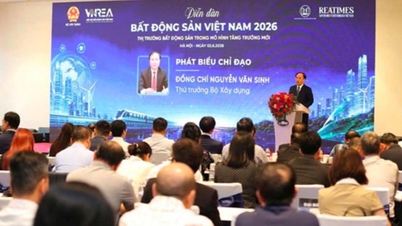










![[Image] Affirming the aspirations and new standards of the Vietnamese real estate market in the new era.](https://vphoto.vietnam.vn/thumb/1200x675/vietnam/resource/IMAGE/2026/06/03/1780441948766_giai-thuong-bat-dong-san-2026-minh-duy-6-7364-jpg.webp)







































































Comment (0)