

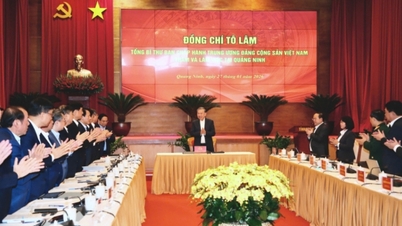
Continuing the agenda of the 8th Session, on the morning of November 22nd, the National Assembly held group discussions on the draft Law on Corporate Income Tax (amended) and the draft Law on Special Consumption Tax (amended).
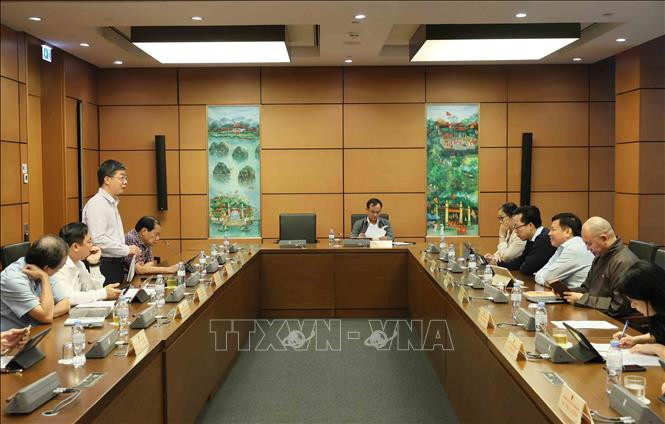
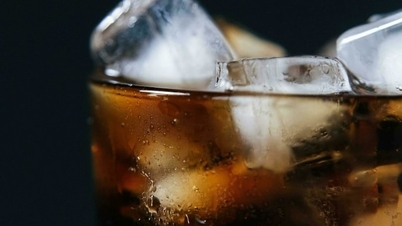
During group discussions on the draft Law on Special Consumption Tax (amended), the majority of opinions agreed with the inclusion of soft drinks meeting Vietnamese Standards, with a sugar content exceeding 5g/100ml, as subjects of special consumption tax. They also requested clarification from the Government regarding the phrase "meeting Vietnamese Standards." This regulation could lead to difficulties in implementation for imported products not manufactured according to Vietnamese Standards but still containing more than 5g/100ml of sugar. Some opinions suggested a clearer explanation of the policy's potential to achieve its objectives in protecting public health; the inclusion of information related to international experience; and a thorough assessment of its impact on consumer rights protection.
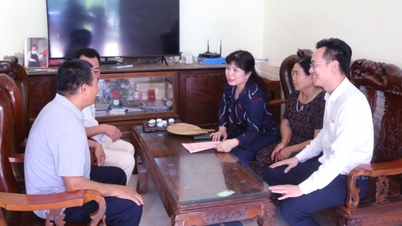
Agreeing with the proposed amendments to the current Law on Special Consumption Tax, Representative Duong Van Phuoc (Quang Nam) stated that during consultations with businesses and residents in the area, many opinions reflected concerns about the current tax policy in Vietnam, which is quite extensive, with some goods subject to high tax rates. While this generates revenue for the budget, it also creates difficulties for taxpayers. Based on this reality, the representative suggested that the drafting agency should carefully consider and calculate when adding taxable items and increasing tax rates for certain goods.
Commenting on the excise tax on alcohol and beer as stipulated in Article 8, Representative Tran Thi Hien (Ha Nam) stated: Article 8 of the draft Law currently presents two options for the roadmap to increase tax rates on alcohol and beer. According to the option proposed by the Ministry of Finance, alcoholic beverages with an alcohol content of 20 degrees or higher and beer will be subject to gradually increasing tax rates from 2026, reaching 100% in 2030. Similarly, alcoholic beverages with an alcohol content below 20 degrees will be subject to a tax rate of 70% in 2030.
According to Representative Tran Thi Hien, the Government's submission focuses heavily on analyzing the method of calculating excise tax, debating whether to continue with the current method or switch to a mixed method. However, the representative assessed that the analysis of the law's impact, especially on other industries and the economy in general, was superficial, largely relying on the World Health Organization's proposal to increase taxes to raise product prices.
Representatives from Ha Nam province argued that several aspects require further study before concluding what tax rate and tax increase schedule are appropriate. They analyzed that the alcoholic beverage industry needs to be placed within the supply chain and value chain of the overall economy to comprehensively assess its impact. In reality, the alcohol and beer industry is directly related to supporting industries such as packaging, transportation, and indirectly to tourism and the culinary sector. Therefore, Representative Tran Thi Hien suggested that it is necessary to estimate how other industries will be affected by the proposed tax increase and schedule.
"Can this impact be offset by excise tax revenue, or by reducing social pressure and the burden on the healthcare system? Specific data is needed so that delegates can visualize the impact," said delegate Tran Thi Hien.
In addition, many opinions suggested that the drafting agency should consider proposing a suitable roadmap for increasing excise tax over the next 3-5 years for certain specific items, avoiding significant impacts on businesses.
Regarding the current tax rate on tobacco products, according to Representative Dang Bich Ngoc (Hoa Binh), the draft Law on Special Consumption Tax (amended) stipulates an applicable tax rate of 75%. Agreeing with this provision in the draft law, the representative argued that maintaining the 75% tax rate is reasonable, because a sudden increase would negatively impact businesses trading in this product as well as supporting businesses.
"Given our current economic conditions, we need a roadmap to ensure that the increase is appropriate while still meeting development requirements and creating favorable conditions for businesses and organizations," said delegate Dang Bich Ngoc; she also suggested further research and review to ensure that the tax application serves as a revenue source while also supporting people in gradually transitioning to the production and processing of tobacco raw materials in the coming period.
Earlier, at the session, the National Assembly heard presentations and verification reports on the draft Law on Corporate Income Tax (amended) and the draft Law on Special Consumption Tax (amended).
Source
![[Image] Pleasant weather helps students enter the 10th grade entrance exam with confidence.](https://vphoto.vietnam.vn/thumb/1200x675/vietnam/resource/IMAGE/2026/05/29/1780034401612_ngay-1-thi-lop-10-minh-duy-8-5009-jpg.webp)



![[Photo] Ba Lang An Lighthouse - the "eye of the sea" amidst the "rock museum" of Quang Ngai province.](https://vphoto.vietnam.vn/thumb/1200x675/vietnam/resource/IMAGE/2026/05/29/1780038698840_anh-man-hinh-2026-05-29-luc-14-10-42.png)









































































Comment (0)