

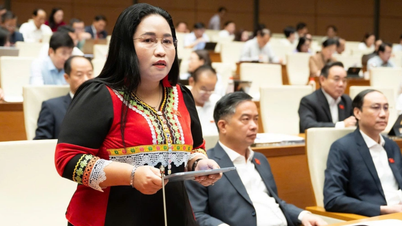
Delegates highly appreciated the process of drafting, incorporating feedback, and providing explanations by the Government and the drafting agency ( Ministry of Natural Resources and Environment ). According to Delegates, the draft law submitted to the National Assembly at the 5th session has incorporated many opinions from the people, experts, scientists, and National Assembly delegates who spoke at the 4th session and the Conference of National Assembly Delegates working in specialized fields.
Regarding the content on religious land in the draft Land Law (amended), it stipulates that "religious land includes land for constructing places of worship, headquarters of religious organizations, affiliated religious organizations, and other suitable religious structures." However, this concept needs to be reviewed and clarified on two issues: Firstly, neither the 2016 Law on Beliefs and Religions nor this draft Land Law (amended) has a definition of places of worship; therefore, there will be no legal basis to define religious land using the approach of land for constructing places of worship as stipulated in the draft Land Law.
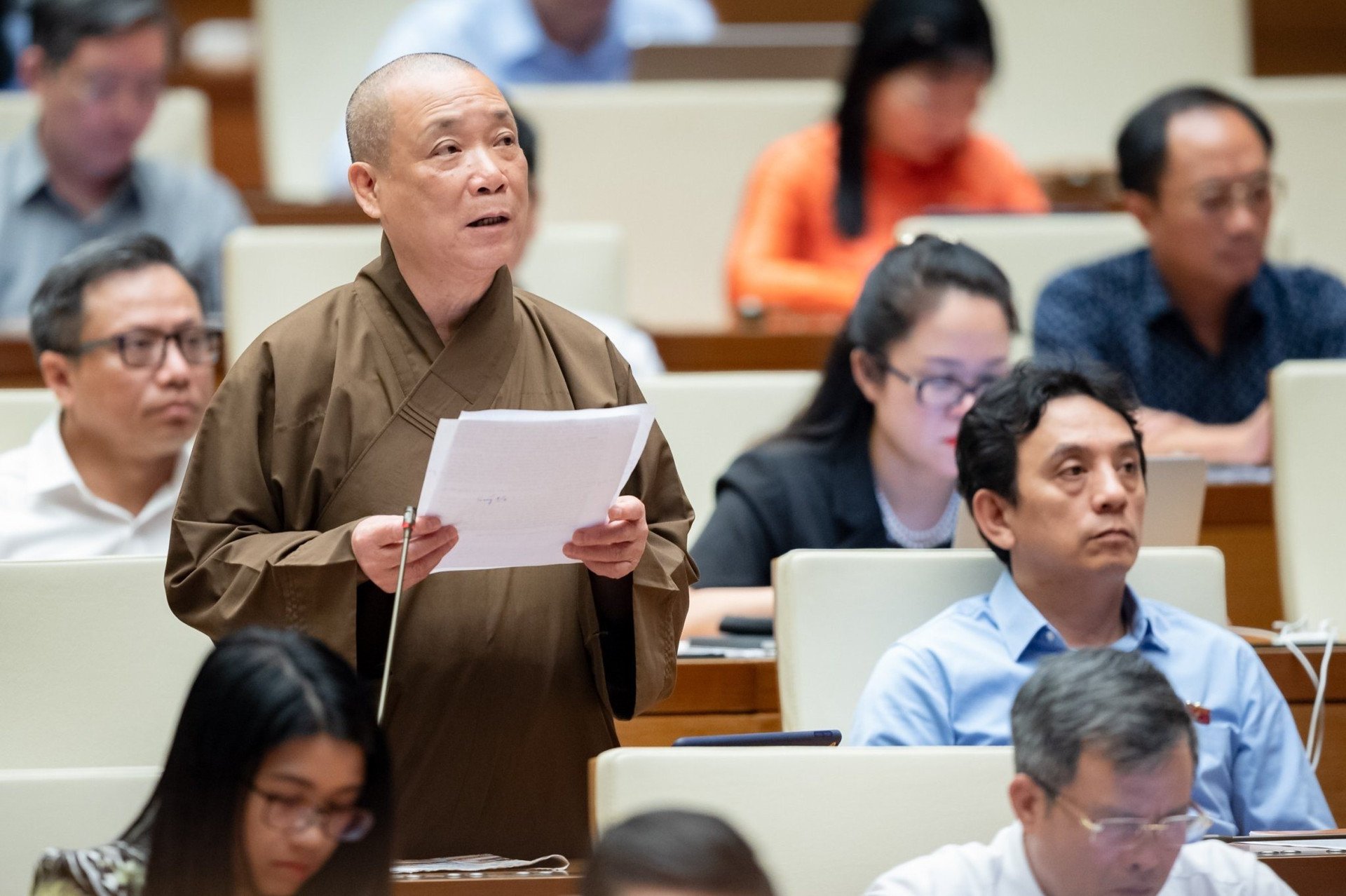
Therefore, the delegate proposed revising this regulation by removing this new concept to avoid controversy and inconsistency between land law and law on belief and religion.
Secondly, Clause 14, Article 2 of the 2016 Law on Beliefs and Religions stipulates: "Religious establishments include temples, churches, chapels, shrines, mosques, headquarters of religious organizations, and other legitimate establishments of religious organizations." With this definition, the question arises regarding land for constructing religious establishments. Furthermore, it is necessary to assess whether the approach, as defined in the draft amended Land Law, encompasses land used for constructing religious establishments.
Delegates suggested that the drafting agency should review and refine this content to ensure consistency between the draft Land Law (amended) and the Law on Beliefs and Religions, avoiding the emergence of new concepts. Furthermore, inconsistencies in understanding religious land will lead to inconsistent implementation, potentially resulting in disputes and complaints. This is a problem to avoid when defining the content of different types of land, especially land for beliefs and religions. Therefore, a unified definition of the two types of land, namely land for beliefs and religions, is necessary.
Another issue in the Draft Law is the requirement that land types must conform to land use plans and construction plans approved by competent state agencies. The regulations on religious land also stipulate: "In cases where the State reclaims religious land as stipulated in Clause 2 of this Article, a new location suitable to the local land fund shall be allocated for the religious activities of believers."
Delegates expressed agreement with this regulation but emphasized the need for consistency in understanding and implementation to clarify what constitutes religious activity. Currently, Clause 11, Article 2 of the Law on Beliefs and Religions stipulates that "religious activity is the dissemination of religion, religious practices, and the management of religious organizations."
Finally, Clause 2 of Article 82 of the draft Land Law stipulates the cases of land reclamation, including the case where the land user no longer needs the land and voluntarily returns it. Besides Article 82 in the draft, there are no other provisions addressing this issue. The representative suggested that, in addition to the provision on land reclamation due to voluntary return, further research is needed to add other content such as mechanisms, policies, and issues related to the State's land reclamation when land users voluntarily return the land, so that the policies in the draft law, including land reclamation when land users voluntarily return the land, can be effectively implemented.
Article 206. Religious land, as stipulated in the Draft Law on Land (amended).
1. Religious land includes land used for constructing places of worship, headquarters of religious organizations, affiliated religious organizations, and other religious structures.
2. The State allocates land free of charge for the construction of places of worship, headquarters of religious organizations, and affiliated religious organizations.
3. The State leases land and collects annual land rent from religious organizations and affiliated religious organizations using land that does not fall under the cases specified in Clause 2 of this Article.
4. The provincial People's Committee shall, based on the actual needs of religious activities and the availability of land in the locality, decide on the area of land to be allocated to religious organizations and affiliated religious organizations.
5. The use of religious land in combination with commercial services must comply with the requirements stipulated in Clause 2, Article 212 of this Law.
6. In cases where the State reclaims religious land as stipulated in Clause 2 of this Article, a new location suitable to the local land resources and the religious activities of the believers shall be allocated.
Source

![[Photo] General Secretary and President To Lam presides over a meeting on preparations for the review of one year of operation of the three-tiered government system.](https://vphoto.vietnam.vn/thumb/1200x675/vietnam/resource/IMAGE/2026/06/02/1780391821195_a1-bnd-4595-9717-jpg.webp)






































































Comment (0)