

Beware of clickbait tactics.
The implementation of E10 bioethanol fuel is a sound policy; however, on social media, numerous "tips" are being circulated, such as "shaking the car" before starting, adding additives, or finding ways to separate ethanol from gasoline to protect the engine... Amidst this "maze" of information, experts warn people to be extremely cautious of attention-grabbing tactics that lack scientific basis.
Speaking with a reporter from the Industry and Trade Newspaper, Associate Professor Dr. Do Van Dung, Chairman of the Ho Chi Minh City Automobile and Power Equipment Association, said that following his television interview, the trend of "shaking the car" after refueling with E10 gasoline is spreading rapidly on social media. Numerous videos "following the trend," attracting millions of views online, show drivers and car users repeatedly kicking, bouncing, or even climbing onto the roof of their vehicles to shake them after refueling with E10. Many claim this action helps the fuel mix evenly, reduces water separation, and protects the engine during operation.
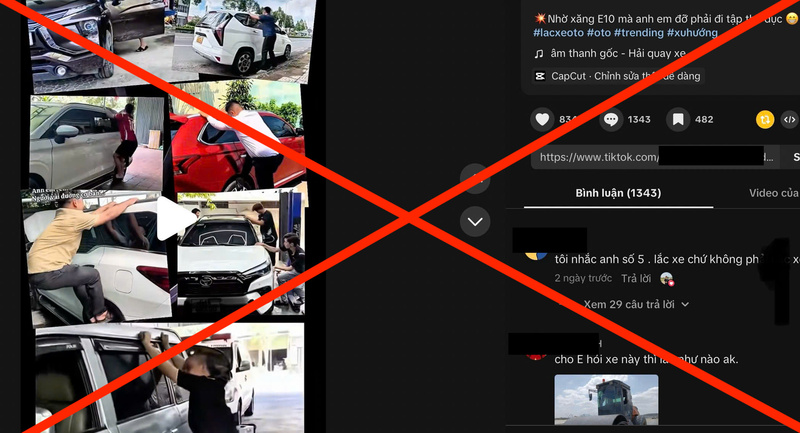
The trend of "shaking your car" after refueling with E10 gasoline, which is spreading rapidly on social media, is actually just a gimmick to gain views. (Screenshot)
However, Associate Professor Dr. Do Van Dung asserted that this is merely a publicity stunt with no scientific basis. Cars have much larger fuel tanks than motorcycles, a sealed design, and a completely different fuel pumping system. Shaking the car does not actually improve fuel mixing.

Assoc. Prof. Dr. Do Van Dung, Chairman of the Ho Chi Minh City Automotive and Power Equipment Association. Photo: Provided by the interviewee.
Associate Professor Dr. Do Van Dung further explained that, in reality, ethanol in E10 gasoline has strong hygroscopic properties. When a vehicle is left unused for a long time, moisture in the air can enter the fuel tank through the ventilation system. If a sufficient amount of water accumulates, the ethanol will mix with the water and settle at the bottom of the tank.
With motorcycles, especially those that are rarely used or left overnight for several days, a layer of fuel containing ethanol and water can accumulate in the fuel intake area. Therefore, when starting, the engine is likely to draw in this fuel first, causing difficulty starting or wetting the spark plug…
With motorcycles, because they have small fuel tanks, gently shaking or pushing the bike a few times can help the fuel mix more evenly before starting the engine.
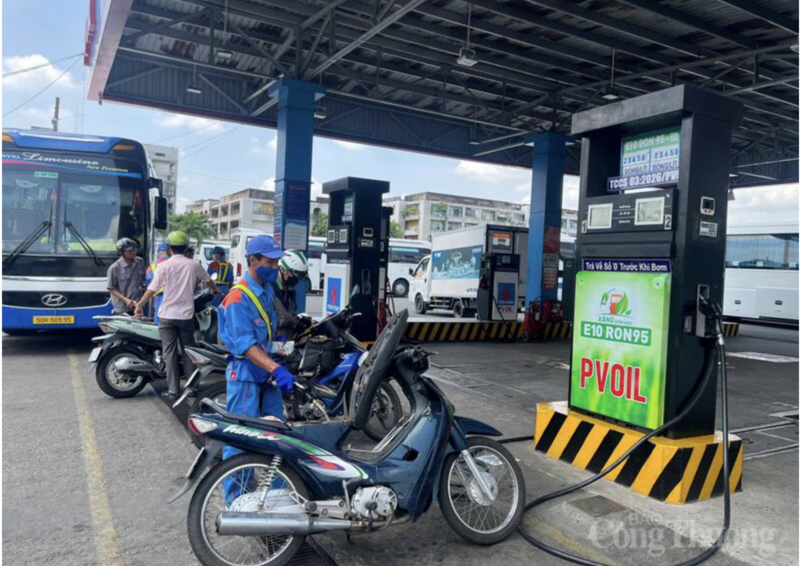
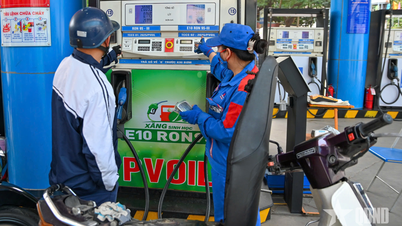
Residents of Ho Chi Minh City fill up with E10 gasoline at PVOIL gas stations. Photo: Cam An
Associate Professor Dr. Do Van Dung also affirmed that, under conditions of regular use, motorcycle users almost do not need to worry about fuel separation because gasoline is constantly circulating and being replaced.
If the vehicle is left unused for a long time or rarely used, avoid letting the fuel tank run nearly empty for extended periods. Before starting the engine in the morning or after several days of not driving, you can push or gently shake the vehicle a few times to help the fuel mix more evenly.
If a vehicle experiences difficulty starting, loss of power, or stalling after a long period of disuse, people should check the spark plugs, fuel filter, fuel injectors, or carburetor.
For cars, the most important solution is to limit moisture from entering the fuel tank. The fuel tank should always be kept full (at least 3/4 full) to reduce air space, limit moisture absorption, and slow down the separation process of E10 gasoline.
If the vehicle has not been used for a long time, it is advisable to add fresh gasoline to dilute the ethanol and water sediment at the bottom of the fuel tank. Additionally, a specialized E10 anti-separation additive can be used. However, it is important to choose products from reputable sources and avoid using unregulated additives available on the market.
Much misinformation has been circulating, causing public confusion.
In addition, following the surge in public interest in E10 gasoline, some accounts have spread information claiming that E10 gasoline "damages engines," "corrosions," or causes all types of vehicles to deteriorate quickly, creating panic among many users.
Many videos also instruct people to "separate ethanol" from E10 gasoline to convert it into pure mineral gasoline, posing a potential risk of fire and explosion hazards and affecting fuel quality.
Many social media posts also exaggerate the phenomenon of engine hesitation and difficulty starting in some older car models, attributing the entire problem to E10 gasoline, ignoring maintenance factors and the actual condition of the vehicle.
Furthermore, unverified reports have emerged about E10 gasoline being adulterated with incorrect ethanol ratios or contaminated with water on a large scale, raising concerns among the public.
Associate Professor Dr. Do Van Dung stated that in Vietnam, some users have tested the fuel at home and suspected a higher ethanol concentration (possibly due to improper blending or water contamination). However, it must be affirmed that E10 gasoline has been blended according to strict industrial standards, ensuring stability and uniformity before being released to the market. The Ministry of Industry and Trade has also provided a lot of information on this issue to reassure people about using E10 gasoline.
Therefore, the majority of daily motorcycle users will not encounter problems if they use fresh gasoline, fill the tank completely, and perform regular maintenance... However, for older models or motorcycles that have been unused for a long time, more caution is needed (shake the motorcycle's fuel tank before starting to reduce the amount of alcohol and water at the bottom of the tank entering the fuel pump or carburetor, drain the old gasoline, use a stabilizer, or find A95 or E5 if available).
Recently, on May 15th, the Government issued Decree 174/2026/ND-CP stipulating administrative penalties for violations in the fields of postal services, telecommunications, radio frequencies, electronic transactions, and information technology, effective from July 1st, 2026. Accordingly, the act of providing or sharing false information on social media that causes public panic, damages socio-economic activities, hinders the operation of state agencies or public officials, or infringes upon the legitimate rights and interests of other agencies, organizations, or individuals, but does not yet warrant criminal prosecution, may be subject to a fine of VND 30,000,000 to VND 50,000,000. Simultaneously, the offender will be required to remove the false information and block the offending account, community page, community group, or content channel.
The Cybersecurity Law 2025, effective from July 1st, also stipulates that prohibited acts related to cybersecurity include: Posting and disseminating information containing false content that causes public panic, damages socio-economic activities, or hinders the normal operation of state agencies or public officials; and fabricated or false information about products and goods on the internet (Clause 1, Article 7).
In addition, telecommunications, internet, and social media service providers are responsible for handling information that violates the law within a maximum of 24 hours from the time they receive a legitimate request from the competent authority. For emergency situations related to national security, the processing time shall not exceed 6 hours.
Therefore, social media users need to be cautious when accessing and sharing unverified information that lacks scientific basis, particularly regarding E10 gasoline and other information in general.
Associate Professor Dr. Do Van Dung affirmed that the transition to E10 gasoline requires not only time to upgrade infrastructure but also increased user awareness. In addition, strict inspection and management are necessary to avoid causing confusion and anxiety among the public.
Source: https://congthuong.vn/canh-bao-chieu-tro-cau-view-lien-quan-toi-xang-e10-458625.html

































































































Comment (0)