

 |
| People in Hue use the Hue-S app as a digital interaction channel. Photo: Bao Phuoc |
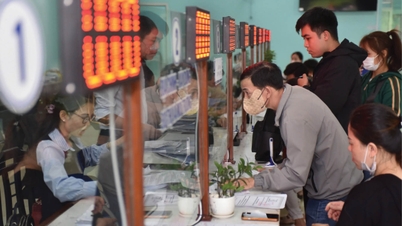
A crucial foundation is the synchronized involvement of the entire political system. Digital transformation has become a continuous task in governance and service innovation. It is from this foundation of awareness that Hue has achieved quite comprehensive results. 16 out of 18 targets for 2025 have been completed and exceeded. In particular, in the field of digital government, Hue continues to be one of the leading localities nationwide. The electronic document management and operational system has been implemented synchronously; online public services have developed strongly; the percentage of applications processed online is increasing; and the "centralized one-stop shop" model is gradually proving effective.
Even more noteworthy is that Hue has built a distinctive digital platform: Hue-S. From an initial application, Hue-S has become a "digital ecosystem" integrated into the daily lives of its citizens. With hundreds of thousands of regular users, Hue-S is not just a technological product, but a manifestation of a new method of interaction between the government and society, where citizens not only receive services but also participate in the urban governance process.
In the digital economy , the proportion of the digital economy is expected to reach approximately 15% of GRDP by 2025. The majority of businesses have already applied information technology in their production and business operations; e-commerce is beginning to spread to specialty products and OCOP (One Commune One Product) products. The number of digital technology businesses has exceeded the set target, indicating that a new ecosystem is gradually forming, albeit on a modest scale...
However, the biggest bottleneck probably remains data. Specialized data is still scattered, inconsistent, not standardized, and not fully interconnected. Meanwhile, digital transformation in its new phase cannot stop at digitizing processes, but must move towards data-driven governance. Until data becomes a "shared resource" of the system, intelligent analysis, forecasting, and management will remain limited. In addition, uneven development remains a challenge. Some localities lack infrastructure and equipment; the IT workforce is still small; and the digital awareness and skills of officials and citizens are not uniform.
Digital transformation currently relies heavily on state budget funding, while the mobilization of social resources, attracting technology companies, and developing an innovation ecosystem remain limited. This prevents many initiatives from progressing further and many models from being replicated. It can be seen that Hue's digital transformation over the past five years has progressed well in the "foundation building" and "application expansion" phases. However, entering a new phase, with Hue officially becoming a centrally-governed city, the requirements are for a deeper, smarter, and more value-generating approach.
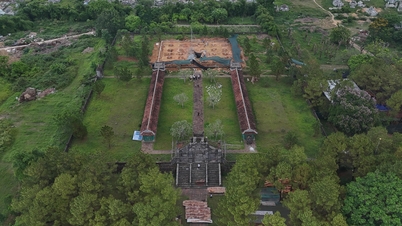
First and foremost, digital transformation needs to be closely linked to Hue's new urban development model. A heritage, cultural, ecological, and smart city cannot simply be a place for applying technology; it must be a place where technology serves the preservation and promotion of heritage values, improves the quality of life, and creates new economic sectors. This requires an integrated mindset, in which digital transformation is inseparable from urban planning, economic development, and social governance.
Secondly, data must become the central focus of the next phase. Building a shared data warehouse, standardizing industry data, connecting the city to the grassroots level, and establishing analysis and forecasting centers should be considered top priorities. Only when data is effectively utilized can Hue move into the smart governance phase and genuinely apply artificial intelligence.
Thirdly, digital transformation must be linked to Hue's advantageous sectors. Smart tourism, digital heritage, digital museums, digital education, digital healthcare, e-commerce for distinctive products… these are not just concepts, but need to be concretized into high-value-added products and services. This is the path for digital transformation to directly contribute to economic growth and enhance the city's competitiveness.
Fourth, digital human resources need to be identified as a breakthrough area. It's not just about training civil servants, but also about building a training-research-business ecosystem, linked to Hue University and innovation centers. A centrally-governed city in the digital age cannot function without a high-quality workforce.
Ultimately, the most important thing is to preserve Hue's identity during digital transformation. Hue doesn't need a noisy, ostentatious digital transformation, but rather a subtle, effective, and humane one, where technology serves people, not replaces them; where heritage is preserved through new methods; and where every citizen feels convenience, safety, and trust in the digital environment.
Ahead lies a long journey, with higher demands and greater challenges. If it continues to maintain its spirit of innovation, perseverance, and the right focus, Hue can absolutely transform from a locality that "does well in digital transformation" into a model of a digital city with its own identity, where the past, present, and future are connected by technology, while still preserving the essence of a heritage city.
Source: https://huengaynay.vn/kinh-te/khoa-hoc-cong-nghe/chuyen-doi-so-tu-nen-tang-vung-chac-den-yeu-cau-but-pha-165547.html


![[Image] Nearly 125,000 Hanoi students completed the Literature exam for the 10th grade entrance exam.](https://vphoto.vietnam.vn/thumb/1200x675/vietnam/resource/IMAGE/2026/05/30/1780117233041_ndo_br_thiet-ke-chua-co-ten-2-png.webp)





































































































Comment (0)