

The mark of cinema
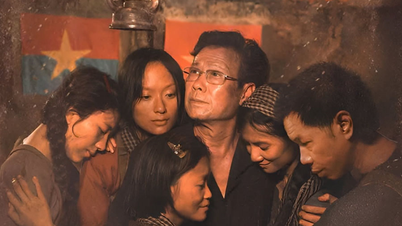
"The Silver Bracelet" (koong hu), directed by Lam Son and produced by the Ho Chi Minh City General Film Enterprise in 1982, is a film about the Central Highlands with an epic theme: fighting to protect the villages. To capture the most authentic scenes of the people, landscapes, and culture of the Central Highlands, the film crew chose Ktang village and a village in An Khe as filming locations.
Sitting under the shade of a tree in front of the communal house, Mr. Poc (born in 1962), the village elder of Ktăng, fondly recalled the joyful days when the film crew came to the village: In the film, the village reenacted the buffalo sacrifice ceremony "Celebrating Victory" right in front of the communal house. No one knew what "filming" meant, so everything happened very naturally. The film crew stood on the communal house cheering and dancing to the rhythm of the gongs and drums, making the villagers even more excited.
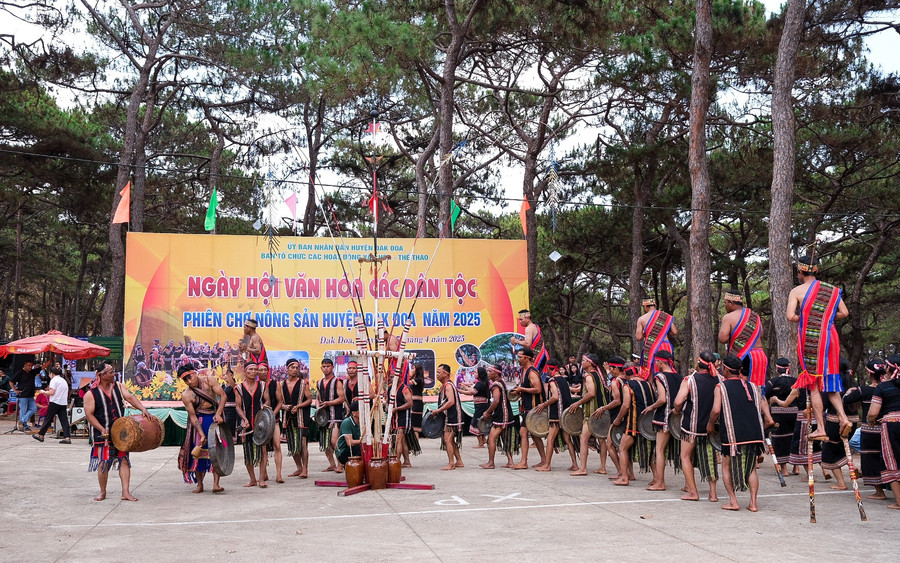
The scene that year featured people of all ages, young and old, dressed in traditional costumes, gathered in front of the communal house in a lively and bustling atmosphere. Mr. Poc, then just 20 years old, was assigned to handle the logistics. After filming, he and the young men in the village "slaughtered a buffalo," preparing it into a traditional dish to share with the film crew at a farewell party.
More than 40 years have passed, but People's Artist Xuan La, former Deputy Director of the Dam San General Music and Dance Theatre - who played H'Lan in the film - still has a strong impression: "The men played the gongs very powerfully, while the women's dances were mesmerizingly beautiful. Especially, dozens of young people on stilts performed alongside them, walking and dancing to create a visually stunning dance. It's rare to find a gong ensemble that includes such a unique stilt-walking performance as a special accompaniment."
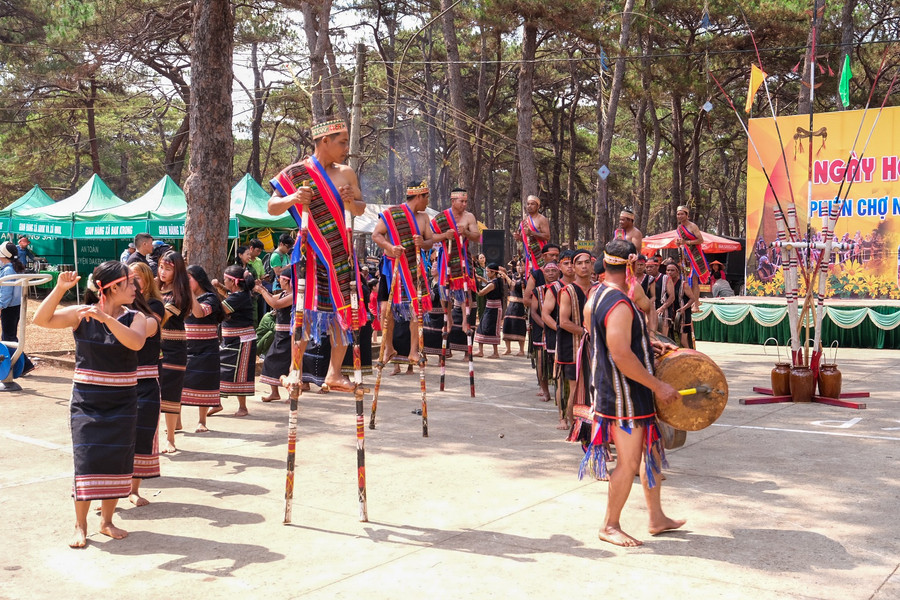
People's Artist Xuan La still vividly remembers the scorching sun of the dry season, when the villagers, dressed in thick, hot brocade costumes, were still enthusiastically dancing and playing gongs. They seemed to forget everything around them, fully immersed in the sounds of the festival.
"The victory gong performance at the end of the film was like a beautiful finale, expressing the indomitable spirit of the Central Highlands, resonating in people's hearts forever," recalled People's Artist Xuan La.
Mr. Poc continued that memory by mentioning another unique detail that gives the gong music its vitality. He recounted: "In the past, unmarried young men would sleep in the communal house. During the rainy season, the red dirt village roads would be flooded up to their ankles, so most people used stilts to get around. When People's Artist Y Brơm (now deceased) helped the film crew with the choreography, he creatively incorporated the stilt dance into the gong ensemble, walking on stilts while tapping rhythmically together. Not only did it create a lively harmony, but the stilt dance also recreated a part of the life of the people living in the mountains."
The motivation to preserve and pass on
From a village that once "entered the silver screen," Ktăng today continues the heroic spirit of the resistance, preserving its identity so that culture not only "lives" on screen but also exists in real life.
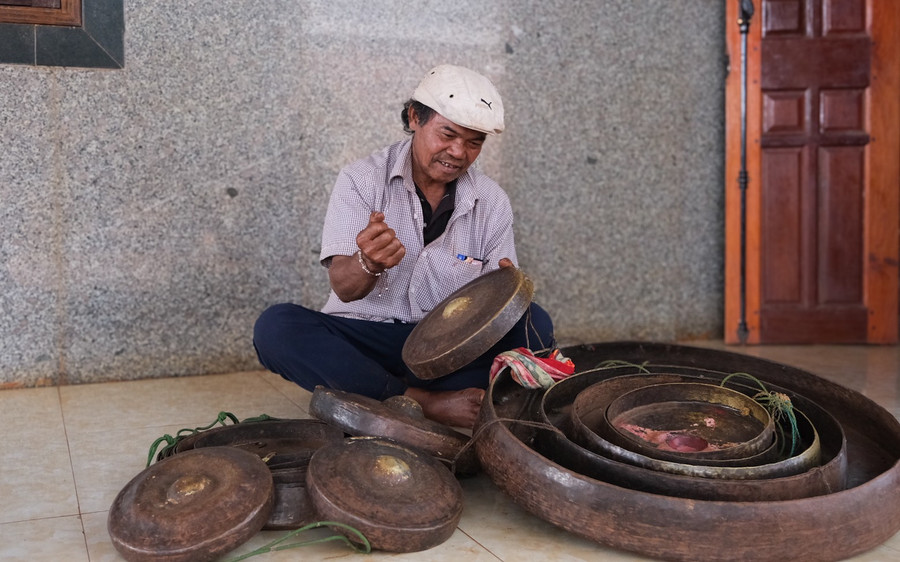
Mr. Poc vividly remembers the times when the villagers had to retreat deep into the forest to escape enemy raids or relocate due to lack of water or disease outbreaks. During those relocations, the villagers took turns guarding and protecting the gong set.
Mr. Poc added: "This is the set of gongs that was featured in the film 'The Silver Bracelet'. Because of frequent use, some of them are damaged. The village has repeatedly invited skilled gong repair artisans to 'patch' the cracks and breaks and adjust the sound of the gongs."
The village featured in the film has also moved to its current location, nestled amidst vast rubber and coffee plantations and sheltered by towering mountain ranges. Mr. Poc said: “Every time we build a new village, construct a new communal house, or overcome an epidemic, the villagers celebrate victory by eating buffalo meat and beating gongs. The gong music is like a spiritual source, reflecting the indomitable will of the community in their journey to conquer difficulties. After being featured in the film, the villagers have become even more conscious of preserving, practicing, and performing it at many large and small events.”
A film can capture the most beautiful aspects of a village, turning it into an immortal moment on the silver screen. But when culture is consciously preserved and practiced by the community in daily life, as in Ktăng village, that is true immortality.
For over 40 years, Mr. Poc has remained a core member of the gong ensemble. The stilt dance has been interrupted at times, making the gong performances less distinctive. Therefore, he has both directly taught gong playing to the younger generation and campaigned to revive the stilt dance so that the village's gong ensemble always retains its unique character.
He proudly stated, "When the gong ensemble performs in Hanoi , many people immediately recognize it as the gongs, the cultural identity of the Central Highlands." He can't remember how many performances he's had or how many awards he's won. But most recently, the Ktang village gong ensemble won first prize at the Cultural Festival of Ethnic Groups in Dak Doa district (formerly) and will represent the village at the provincial-level festival in April 2025.
Based on the story told by the village elder, Mr. Xuin, the Party Secretary and Head of the village, and also the leader of the gong team, said: Currently, 198 out of 199 households in the village are Bahnar people, mostly Protestant or Catholic, so many traditional festivals have disappeared. "That is a big challenge in cultural preservation, but the gong team still maintains its role, a testament to the spirit of preserving identity across generations," Mr. Xuin said.
Almost every household in the village of Ktăng used to have someone who followed the revolution, and many families had relatives who were martyrs. That tradition is like a lifeline nourishing life today. Ktăng still retains the spirit of a heroic village in both wartime and peacetime, with achievements in economic development. The village has risen from poverty to become a new rural village, with many households earning 400-500 million VND per year.
A film can capture the most beautiful aspects of a village, turning it into an immortal moment on the silver screen. But when culture is consciously preserved and practiced by the community in daily life, as in Ktăng village, that is true immortality.
Source: https://baogialai.com.vn/chuyen-ngoi-lang-bahnar-tung-buoc-vao-phim-post565450.html

![[Image] Vietnam's colorful journey of innovation](/_next/image?url=https%3A%2F%2Fvphoto.vietnam.vn%2Fthumb%2F1200x675%2Fvietnam%2Fresource%2FIMAGE%2F2025%2F12%2F14%2F1765703036409_image-1.jpeg&w=3840&q=75)






















































![[Image] Vietnam's colorful journey of innovation](https://vphoto.vietnam.vn/thumb/402x226/vietnam/resource/IMAGE/2025/12/14/1765703036409_image-1.jpeg)


























Comment (0)