


On November 10, two powerful earthquakes shook eastern Cuba as the country was recovering from Hurricane Rafael, according to the Prensa Latina news agency.
The Cuban National Center for Seismological Research (CENAIS) reported two earthquakes with magnitudes of 6 and 6.7 on the Richter scale, followed by several aftershocks. The epicenter of the first earthquake was at a depth of 14.2 km, located in the sea approximately 47 km south of the town of Pilon, Granma province.
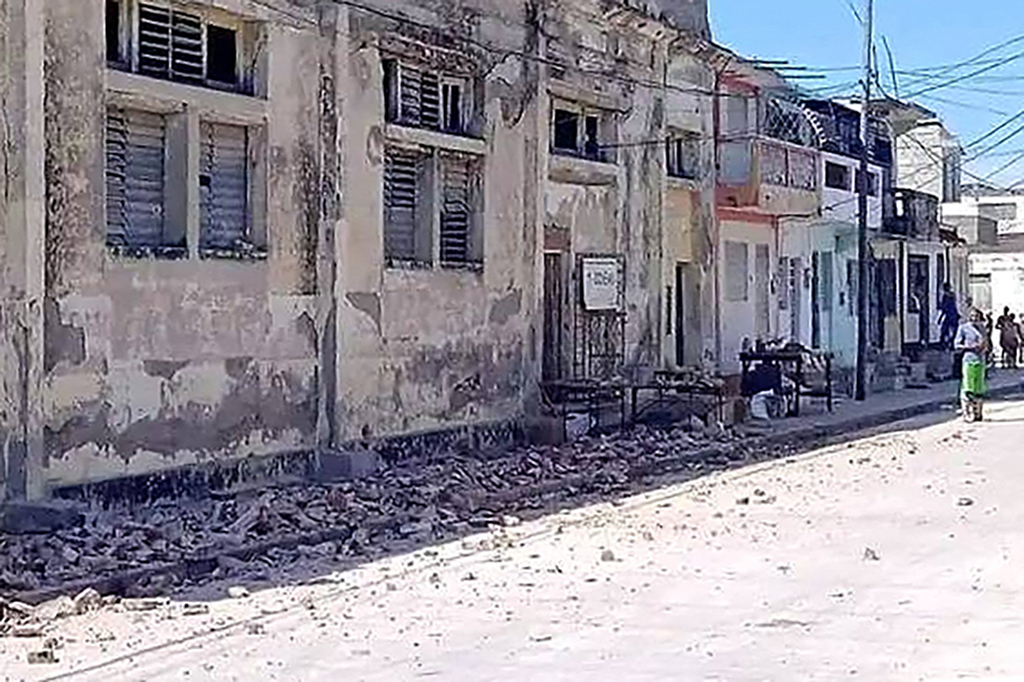
Houses damaged by earthquake in Santiago de Cuba province, Cuba, on November 10.
CENAIS director Enrique Arango said that the provinces of Santiago de Cuba and Granma were most severely affected and local authorities are assessing the damage. Authorities in Granma confirmed damage to some homes and buildings but reported no casualties. Cuban state media published images showing many houses with collapsed roofs, damaged facades, walls, and windows. In addition, the earthquake destroyed other public infrastructure.
Residents in mountainous areas are advised to remain vigilant, particularly regarding the risk of landslides. Mild tremors have also been reported in eastern Cuba and the Bahamas, the Cayman Islands, Jamaica, Haiti, and the remote islands of the United States.
According to CMKC radio in Santiago de Cuba, thanks to prior education and information, most residents in the province remained calm during the earthquake. First Secretary of the Central Committee of the Communist Party of Cuba and President Miguel Diaz-Canel Bermudez announced on social media that he had contacted the secretaries of the Santiago de Cuba and Granma provinces after the earthquake. The leader said there had been landslides causing damage to houses and power lines. "We have begun assessing the damage in order to proceed with restoration. The first and most important task is to save lives," the Cuban leader wrote.
The earthquake followed Hurricane Oscar in October and Hurricane Rafael last week, which damaged large areas of Cuba and caused widespread power outages. Hurricane Oscar killed at least six people. According to Prensa Latina, as of November 10, 85% of residents in the capital Havana had their power restored, while units were deploying personnel and equipment to fully restore electricity. Meanwhile, more severely affected provinces such as Artemisa and Pinar del Rio remain largely without power, according to Reuters.
First Secretary and President Miguel Diaz-Canel Bermudez declared that Cuba has remained resilient after the natural disaster thanks to the solidarity of all sectors of society, including young people, students, and the armed forces.
Hurricane Rafael swept through western Cuba on November 6th with winds reaching 185 km/hour, toppling trees, power poles, and destroying many homes. On November 9th, Cuban authorities announced the arrest of several people in Havana and central provinces on charges of assault, disturbing public order, and property damage following Hurricane Rafael, according to AFP.
Source: https://thanhnien.vn/cuba-hung-dong-dat-manh-sau-bao-18524111123023053.htm




































































Comment (0)