


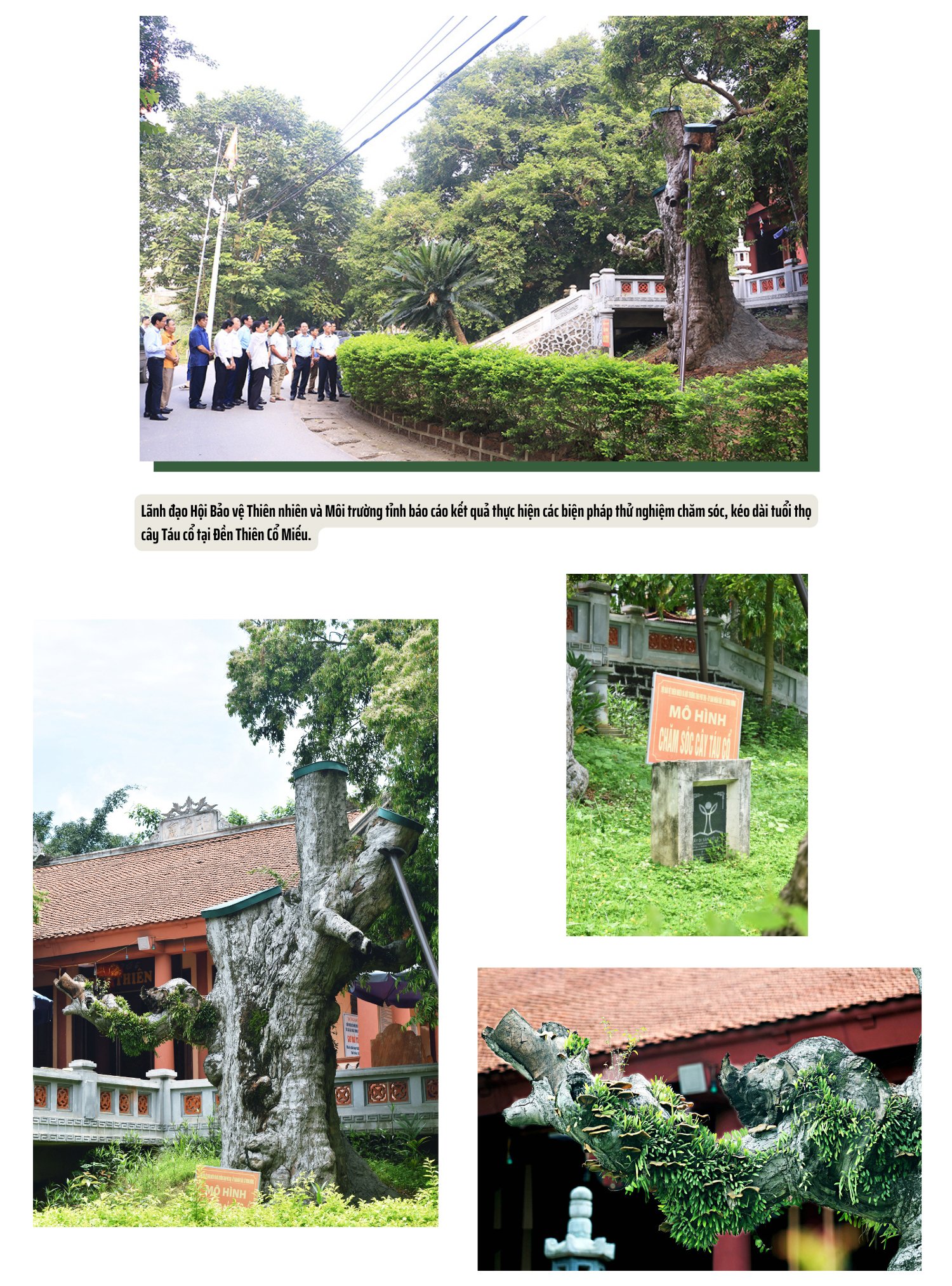
The two thousand-year-old "táu" trees at Thien Co Mieu Temple are rare and precious, but according to the laws of nature and the impact of human activity, the trees are aging and showing signs of decline. In early 2022, the silver táu tree was left with only a small branch, its base and trunk completely hollowed out by fungi and termites. In May 2022, the Provincial Association for the Protection of Nature and Environment, in coordination with the People's Committee of Trung Vuong commune and the Management Board of Thien Co Mieu Temple, implemented technological solutions to care for, protect, and extend the tree's lifespan. To date, the silver táu tree has been "revived," sprouting new leaves and branches.

Unlike the two "ancient" trees, the cluster of 86 Barringtonia trees – Heritage Trees over 1,000 years old – in Go Tho, Chuong Xa commune, Cam Khe district, has become desolate and withered. The cluster of thousand-year-old Barringtonia trees sits on a large plot of land in the middle of the Lang Chuong rice field, with an ancient tomb covered in green moss, said to be the burial place of Princess Ngoc Hoa, daughter of King Hung Vuong XVIII, who died while boating to admire the moon when her boat was unfortunately capsized by strong winds. This cluster of ancient Barringtonia trees has become a historical witness – a sacred source of pride in the hearts of the people of Chuong Xa village.

Four years ago, the ancient Banyan tree in Zone 4, Tien Du commune, was cut down for safety reasons during the rainy season, leaving an irreplaceable loss in the hearts of the local people. The Banyan tree was the "soul" of this land, having been there for nearly 500 years, and was recognized as a Heritage Tree in 2018. However, just a few months after receiving the title, the tree gradually deteriorated due to environmental and human impact. The people here want another Banyan tree to replace the old one, but how long will it take for it to reach the same stature as the original Banyan tree, a Heritage Tree?
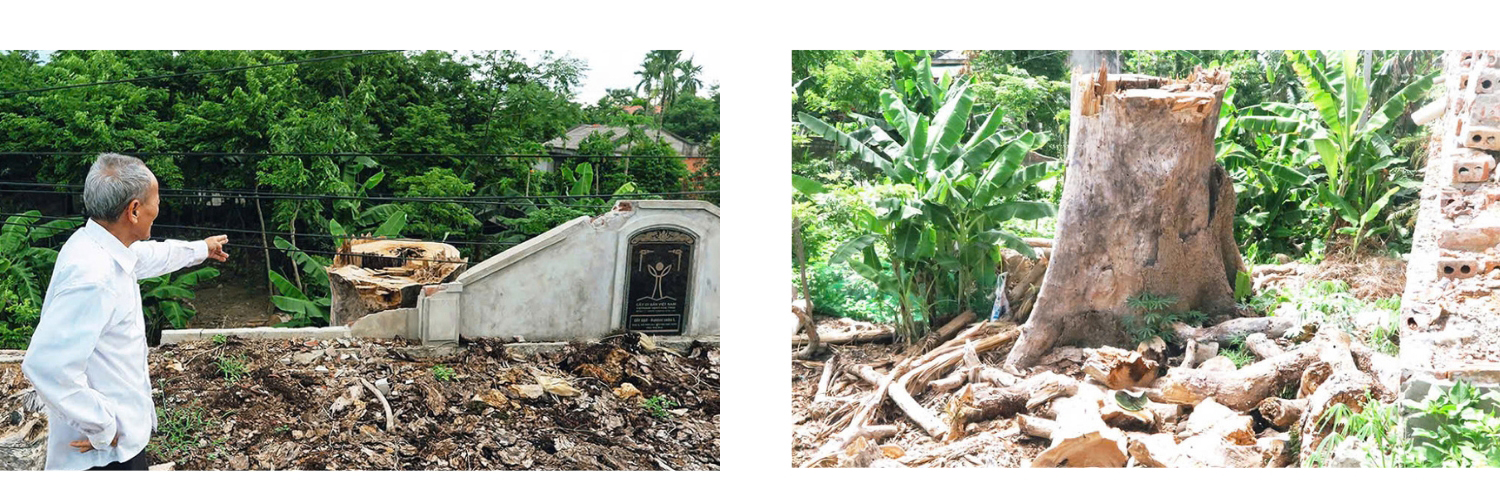
Sharing the same fate as the Gạo Chùa tree, many Heritage Trees in the province have died or been cut down due to old age and weakness caused by lack of careful care and adverse impacts from nature, the environment, and human activities. As of June 2024, out of 87 recognized Heritage Trees, only 56 remain alive in the province, many of which show signs of decline and wilting.

Over the past period, the Provincial Association for Nature and Environment Protection has coordinated with local authorities to disseminate information and encourage people to implement measures to care for and preserve Heritage Trees. However, the most difficult "problem" here is the lack of funding and technical expertise to preserve Heritage Trees.


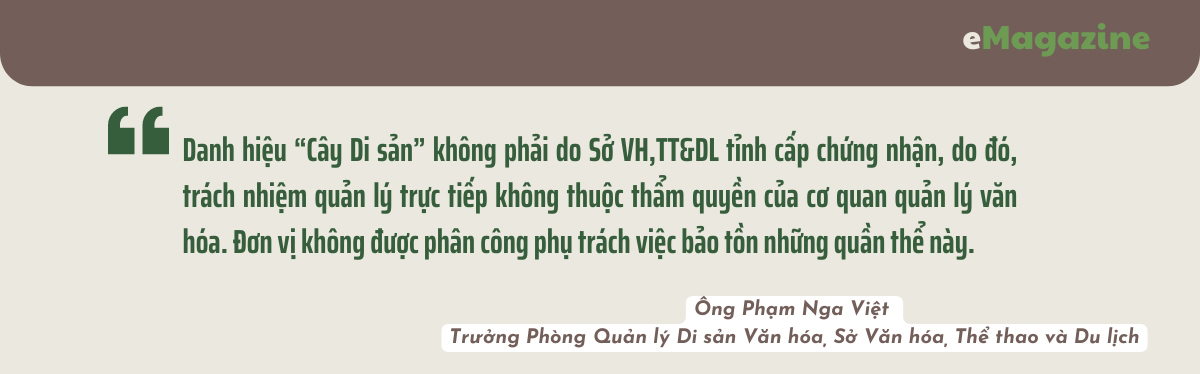
It is evident that, due to the lack of specific, unified regulations and decentralized management, Heritage Trees are not allocated funding for care and conservation. Depending on the actual conditions, each locality and unit has its own way of preserving Heritage Trees, but it remains largely spontaneous and uncoordinated. Meanwhile, these Heritage Trees are old and require technical expertise and funding for care, but the resources of some localities are still limited and cannot meet the needs for tree care and protection.
Heritage trees are "treasures" and the pride of each locality. Preserving heritage trees means safeguarding and honoring cultural, historical, and spiritual values, and protecting rare genetic resources. However, if we simply put up plaques recognizing them as heritage trees and then leave them to weather storms and termites, the trees will wither and die. We will forever lose their core and genuine value, leaving only a meaningless facade of concrete signs and iron poles!

Thanh An
Source: https://baophutho.vn/ky-ii-da-vinh-danh-phai-huu-danh-219800.htm
























![[Photo] Reception to welcome General Secretary and President To Lam and his wife on their State visit to the Philippines](https://vphoto.vietnam.vn/thumb/1200x675/vietnam/resource/IMAGE/2026/06/01/1780295488620_vna-potal-chieu-dai-chao-mung-tong-bi-thu-chu-tich-nuoc-to-lam-va-phu-nhan-tham-cap-nha-nuoc-toi-philippines-8798060-7855-jpg.webp)
























































Comment (0)