

SGGPO
"To enhance the rice value chain and reduce carbon emissions, we need synchronized solutions in managing and utilizing rice straw to thoroughly address the issue of burning rice straw in the fields," said Mr. Truong Canh Tuyen, Vice Chairman of the People's Committee of Hau Giang province.
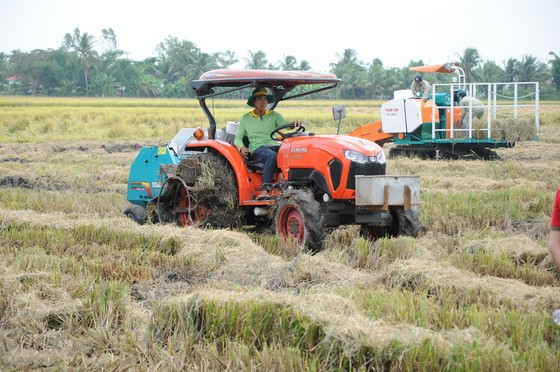 |
| Straw baler |
On July 14th, in Hau Giang, the Department of Crop Production (Ministry of Agriculture and Rural Development), the International Rice Research Institute (IRRI), and the Hau Giang Department of Agriculture and Rural Development jointly organized a field demonstration event on sustainable straw collection, processing, and utilization technology.
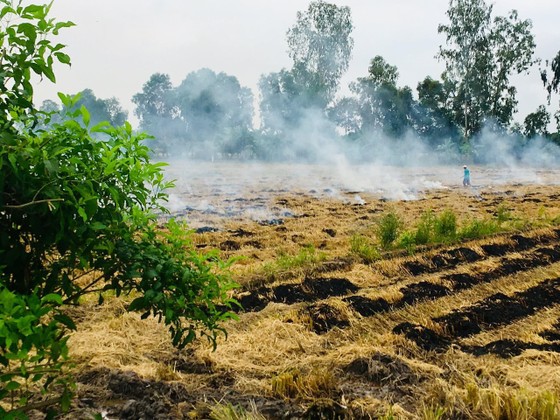 |
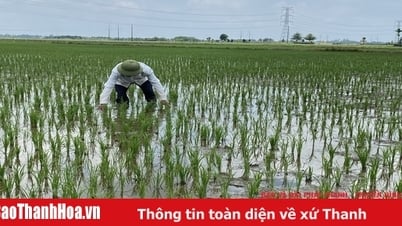
Currently, after harvesting the rice, the practice of farmers in the Mekong Delta burning straw in the fields is still quite common. |
The event aimed to showcase the mechanization of post-harvest straw collection and technologies for processing straw to create green, low-emission products.
According to IRRI, out of approximately 47 million tons of rice straw produced annually, only about 20% is collected and used for purposes such as mushroom cultivation, animal feed, and fruit transport bedding; the majority is burned in the fields or buried in paddy paddies (currently, Vietnam burns over 20 million tons of rice straw annually).
These problems can be solved through a circular economy solution based on straw, harvesting straw from the fields and using it to produce products such as straw mushrooms, cattle feed, biofertilizers, bioplastics, and urban agriculture... in order to maximize the recycling of raw materials in production, all of which can be primary products in agricultural production.
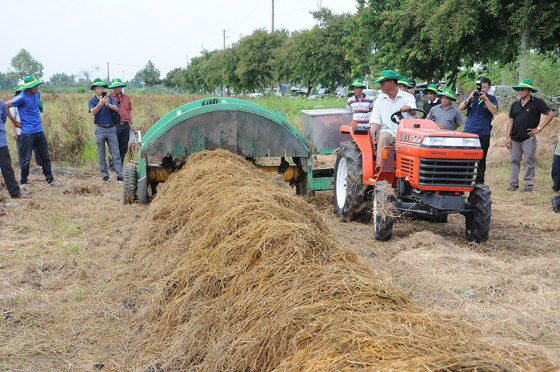 |
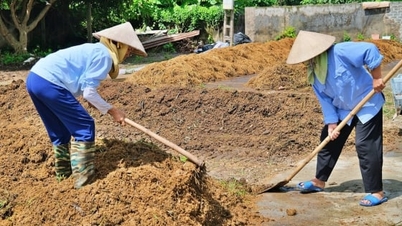
A straw mixer for making organic fertilizer was demonstrated in Vi Thuy district, Hau Giang province. |
“To enhance the rice value chain and reduce carbon emissions, we need synchronized solutions in managing and utilizing rice straw to thoroughly address the issue of burning rice straw in the fields. This is also a concern raised by the agricultural sector in many localities in the Mekong Delta when contributing to the development of the Sustainable Development Plan for 1 million hectares of high-quality rice cultivation associated with green growth in the Mekong Delta,” said Mr. Truong Canh Tuyen, Vice Chairman of the People's Committee of Hau Giang province.
According to Deputy Minister of Agriculture and Rural Development Tran Thanh Nam, agricultural by-products are a valuable resource that needs to be utilized to increase their value and help farmers improve their income. Currently, Vietnam's rice production reaches approximately 42 million tons per year, equivalent to over 40 million tons of straw released into the environment. The Mekong Delta region accounts for more than half of this amount, and this enormous quantity of straw needs to be used to create added value beyond just rice grains.
Recently, IRRI has collaborated with the Ministry of Agriculture and Rural Development and relevant partners to implement technological solutions for high-quality, low-emission rice cultivation in Vietnam, organizing field demonstrations on precision mechanized sowing, and technologies and equipment supporting circular agriculture such as mechanized dry and wet straw collection, and the production of organic fertilizer from straw…
Source
![[Image] The tenacious fighting spirit of Vietnamese women's football](/_next/image?url=https%3A%2F%2Fvphoto.vietnam.vn%2Fthumb%2F1200x675%2Fvietnam%2Fresource%2FIMAGE%2F2025%2F12%2F17%2F1765990260956_ndo_br_4224760955870434771-copy-jpg.webp&w=3840&q=75)
![[Image] Leaked images ahead of the 2025 Community Action Awards gala.](/_next/image?url=https%3A%2F%2Fvphoto.vietnam.vn%2Fthumb%2F1200x675%2Fvietnam%2Fresource%2FIMAGE%2F2025%2F12%2F16%2F1765882828720_ndo_br_thiet-ke-chua-co-ten-45-png.webp&w=3840&q=75)
![[Photo] Prime Minister Pham Minh Chinh receives Lao Minister of Education and Sports Thongsalith Mangnormek](/_next/image?url=https%3A%2F%2Fvphoto.vietnam.vn%2Fthumb%2F1200x675%2Fvietnam%2Fresource%2FIMAGE%2F2025%2F12%2F16%2F1765876834721_dsc-7519-jpg.webp&w=3840&q=75)

![[Live] 2025 Community Action Awards Gala](/_next/image?url=https%3A%2F%2Fvphoto.vietnam.vn%2Fthumb%2F1200x675%2Fvietnam%2Fresource%2FIMAGE%2F2025%2F12%2F16%2F1765899631650_ndo_tr_z7334013144784-9f9fe10a6d63584c85aff40f2957c250-jpg.webp&w=3840&q=75)
![[Photo] Prime Minister Pham Minh Chinh receives the Governor of Tochigi Province (Japan)](/_next/image?url=https%3A%2F%2Fvphoto.vietnam.vn%2Fthumb%2F1200x675%2Fvietnam%2Fresource%2FIMAGE%2F2025%2F12%2F16%2F1765892133176_dsc-8082-6425-jpg.webp&w=3840&q=75)





































![[Live] Closing Ceremony and Award Presentation for the "Impressive Vietnam Tourism" Video/Clip Creation Contest 2025](https://vphoto.vietnam.vn/thumb/402x226/vietnam/resource/IMAGE/2025/12/17/1765974650260_z7273498850699-00d2fd6b0972cb39494cfa2559bf85ac-1765959338756946072104-627-0-1338-1138-crop-1765959347256801551121.jpeg)











Comment (0)