

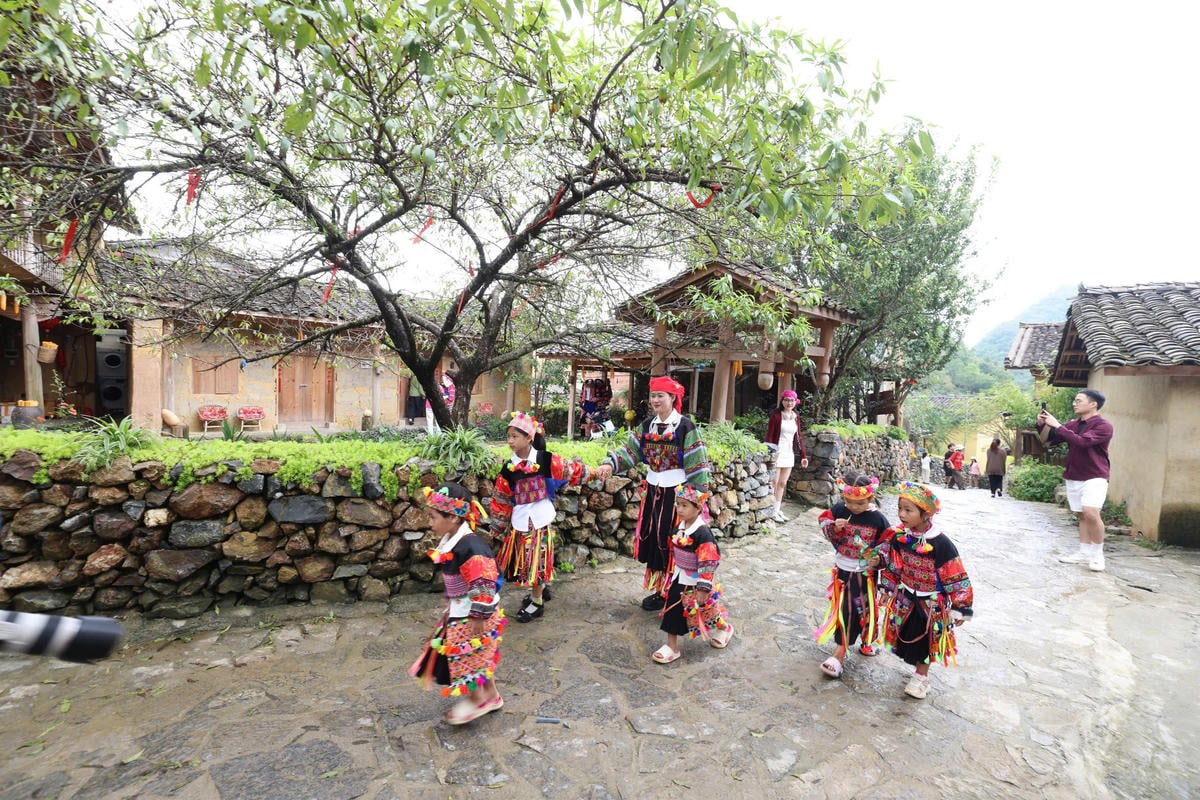
Lo Lo Chai (Tuyen Quang province) was recently voted one of the world's most outstanding community tourism villages. Photo: P. Sy
Ore veins for tourism development
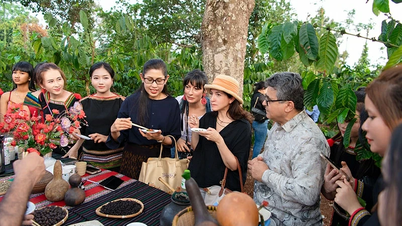
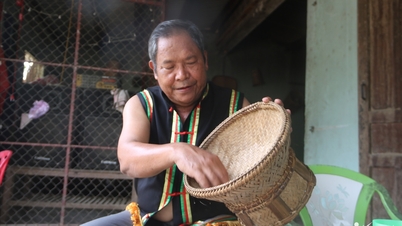
Furthermore, the ethnic minority and mountainous regions of Vietnam also boast many handicrafts and souvenirs that are popular with foreign tourists, such as brocade fabrics with eye-catching patterns reflecting the daily life of Vietnamese people, and a variety of rich culinary specialties. In addition, these areas preserve long-standing traditional games and festivals, as well as unique songs and dances specific to each ethnic group. Each ethnic group also possesses its own distinct culture, customs, and way of life. These values constitute attractive cultural tourism resources, forming the basis for developing unique tourism products.
In fact, many localities and people have effectively utilized their indigenous cultural values to develop tourism and boost the economy. For example, Lo Lo Chai village in Tuyen Quang province is a case in point. Here, the local people have effectively exploited their unique ethnic identity for tourism, resulting in economic development and cultural preservation.
After many years of development, the attractiveness of tourism in ethnic minority areas is gradually increasing, and the value of many tourism resources is being strongly exploited. It can be affirmed that community-based tourism has become one of the favorite types of tourism for visitors when coming to the northern mountainous provinces such as Phu Tho, Tuyen Quang, Lao Cai...
Associate Professor Dr. Nguyen Thi Song Ha - Academy of Social Sciences, Vietnam Academy of Social Sciences, stated: In the current context, the cultures of ethnic minorities have many opportunities to become an important resource and capital for development, creating new livelihoods for people and gradually eradicating poverty.
Sharing the same view, Professor Bui Quang Thanh from the Vietnam Institute of Culture, Arts, Sports and Tourism believes that Vietnam possesses a vast treasure trove of tangible and intangible cultural heritage. This is an inexhaustible natural and human resource for the harmonious and sustainable development of cultural tourism. It provides the necessary conditions for exploiting, creating, and developing cultural industries in general, and for creating unique and attractive cultural tourism products characteristic of ethnic minorities in particular, within the context of current and long-term international cultural and economic integration.
Clear direction is needed.
Despite their immense potential, experts believe that tourism in ethnic minority and mountainous regions has not developed proportionally. In reality, only a few destinations have successfully exploited their natural and cultural values to create sustainable tourism products year after year. However, in these very places, the risk of cultural identity fading is beginning to emerge due to the lack of systematic or fundamental solutions in cultural preservation and environmental resource protection.
This is precisely why, to date, Vietnam lacks a unified brand for ethnic minority cultural tourism. Each locality operates independently, without a comprehensive branding strategy, leading to fragmentation and weak brand recognition. Many models have not linked their brands to the ethnic communities that own the culture. National tourism strategies mention community tourism and cultural tourism, but there is no strategy for building a specific brand for ethnic minority cultural tourism.
Dr. Trieu Thi Nhat, from the Faculty of Tourism Management and International Languages at Hanoi University of Culture, believes that to continue promoting the value of cultural preservation in conjunction with tourism development, it is necessary to strengthen coordination among functional sectors, cultural entities, and individual tourism product operators. This includes selective and systematic presentations that are easy to understand, highlight key features, and provide suitable performance spaces. This will contribute to promoting the unique cultural characteristics of the locality to tourists, while simultaneously creating attractiveness and enhancing the value of the tourist destination. Therefore, it is crucial to enhance the role of all stakeholders, with the three main pillars in the process of building and developing cultural tourism products in ethnic minority areas being the government, businesses, and local people. These three components are vital to the success or failure of tourist destinations.
According to Dr. Tran Huu Son, Director of the Institute for Applied Cultural and Tourism Research, developing community-based tourism in ethnic minority areas is an important driving force for building new rural areas and contributing to poverty reduction. However, for it to be effective, localities must promote the cultural identity of ethnic groups to build unique tourism products suitable for each region, avoiding mass-market community-based tourism development and instead focusing on sustainable development with selective planning.
On the other hand, Mr. Son argued that developing community-based tourism requires research to create attractive tourism products suitable for different types of tourists. These tourism products must have a unique identity based on the tourism resources of each locality, avoiding the current situation of being too similar to each other. Emphasis should be placed on the benefits of local people, and attention should be paid to the carrying capacity of tourist destinations to avoid overcrowding, rather than chasing the number of tourists to increase revenue...
Source: https://bvhttdl.gov.vn/de-du-lich-vung-dan-toc-thieu-so-phat-trien-ben-vung-20251125144704366.htm



















![[Photo] Election atmosphere at polling station No. 7, Xuan Dinh ward, Hanoi city](https://vphoto.vietnam.vn/thumb/402x226/vietnam/resource/IMAGE/2026/03/15/1773543204075_img5935-1773539854991135573309-154-0-1707-2484-crop-17735409472061858573395.jpeg)























































Comment (0)