


The links...
At the end of 2023, when deciding to discontinue three services – food delivery, parcel delivery, and ride-hailing – the Laco app's operations team understood that a local startup could almost certainly not compete in the "money-burning" race with large platforms that had dominated the market for years. Instead of continuing to spread resources thinly, the company began to downsize its operations to focus on services where local factors and community networks still held a unique advantage, such as ride-hailing, table reservations, and connecting with essential services.
Mr. Ha Nhat Anh, founder of the Laco application (Hoa Cuong ward), believes that for local technology startups, collaboration has almost become a condition for survival because the core value of the business lies not in the application itself, but in its ability to connect with a network of operating partners behind it.
“Laco is not a manufacturing company, so the product is essentially a network of collaborators and local partners. The ride-hailing service is provided by collaborating drivers, table reservations are made through partner restaurants, and repairs are handled by local garages and mechanics. Without this ecosystem, the app would be practically just an empty shell,” Anh shared.
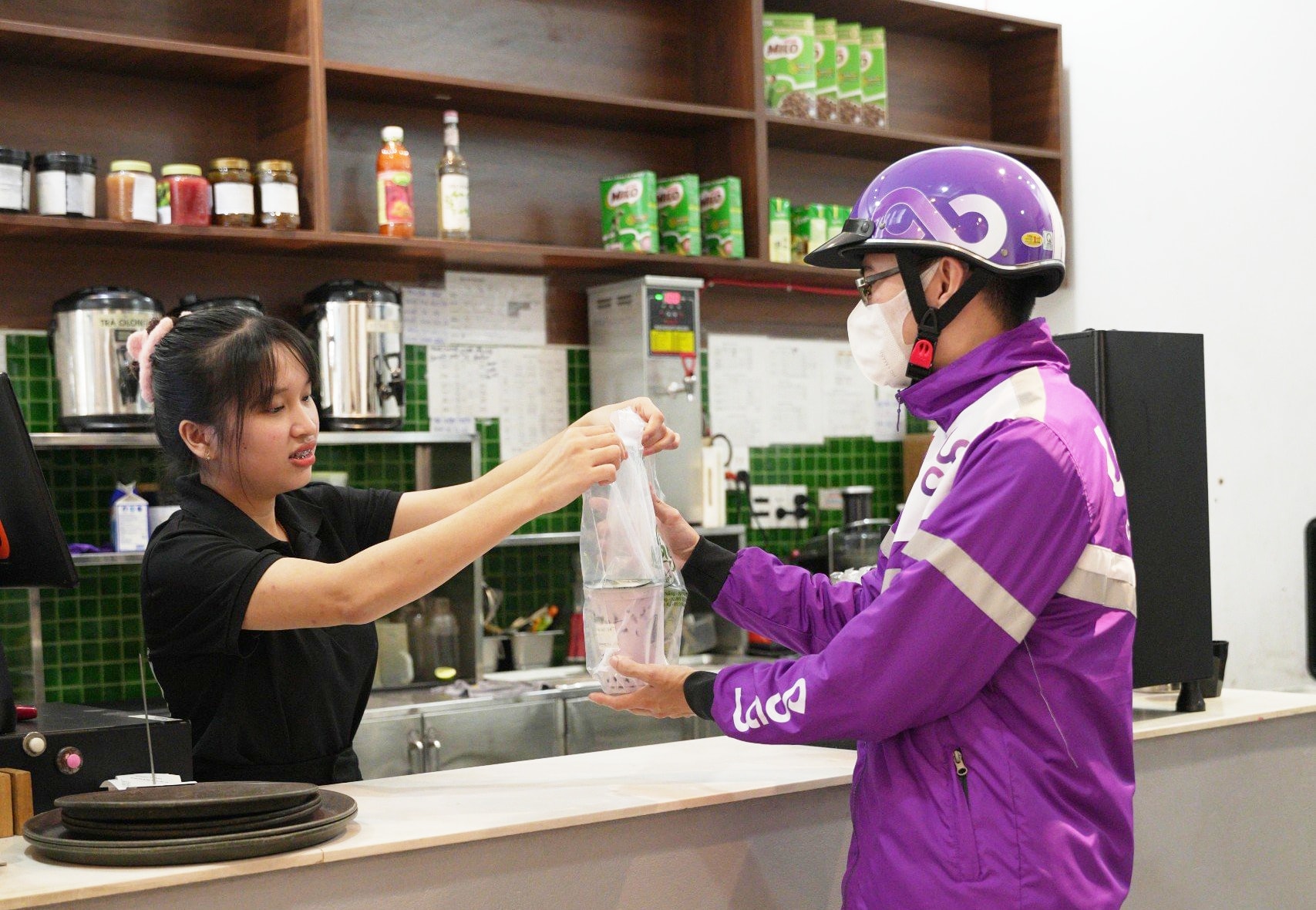
Following its restructuring, Laco now connects with approximately 80 ride-hailing drivers and over 50 restaurants, eateries, and beer clubs within Da Nang city to create a synchronized service chain. According to Mr. Anh, the most significant benefit of this collaboration is the substantial reduction in customer acquisition costs while the number of orders has increased rapidly. After focusing on partnerships with the restaurant ecosystem, the number of ride-hailing orders in 2026 is expected to double compared to the previous year.
While tech startups seek to form local service ecosystems, many agricultural businesses and OCOP product owners are linking up to expand their product chains to increase customer retention.
In Que Son commune, Ms. Nguyen Thi Hien, Director of Son Mai Agricultural Cooperative, believes that small businesses currently find it very difficult to develop sustainably if they only sell a single type of product. Currently, in addition to key products such as Lac Son fermented pork sausage, brown pigs, and herbal chicken, Son Mai Farm also distributes many other OCOP products and local specialties through the system of Lac Son Clean Food Joint Stock Company (Ngu Hanh Son ward).
“This model allows customers to access a wide range of local products at a single point of sale, while also reducing the pressure on small businesses to expand their individual systems. Many businesses still have a short-term mindset, focusing on immediate sales rather than building a long-term ecosystem. For effective cooperation, we must truly see each other as development partners, not just as consumers,” Ms. Hien observed.
Linking together to preserve livelihoods
In mountainous areas, the story of linkages begins with the challenge of maintaining livelihoods for local communities. Ms. Nguyen Thi My Suong, Director of the Vietnam Indigenous Livelihood Cooperative (Hung Son commune), believes that for cooperatives and small businesses in ethnic minority areas, linkages are almost a mandatory path if they want to create stable outlets for local products.
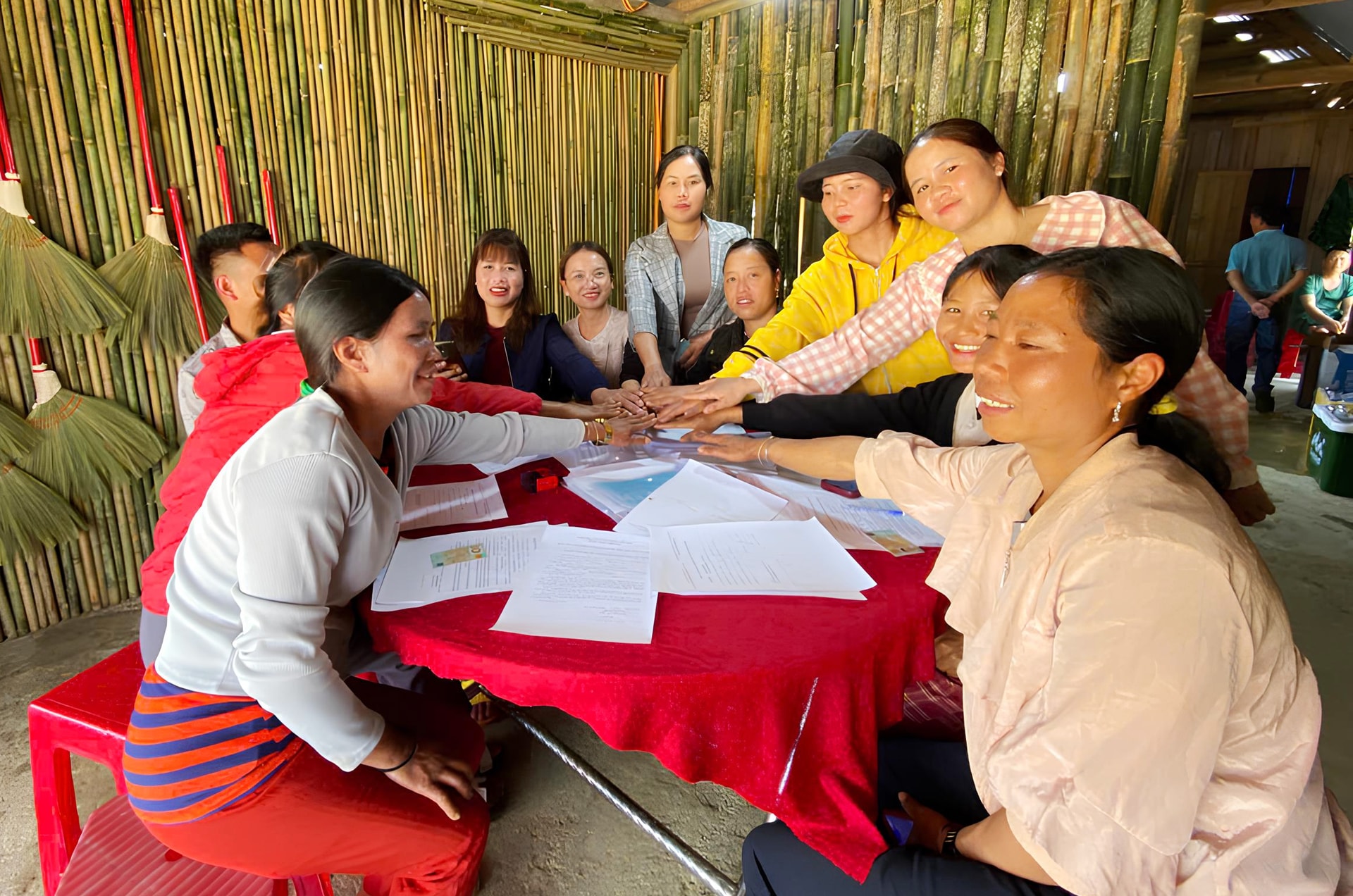
Small businesses often lack capital, skilled personnel, market access, and especially brand strength; operating independently makes it very difficult to create a stable market for their products.
One of the cooperative models currently being implemented is the production and consumption chain of broomsticks made by the Co Tu ethnic group in Hung Son commune. Previously, the people mainly made them by hand and sold them on a small scale.
After the cooperative took the initiative to organize the raw material area, control quality, and connect with commercial enterprises, the product began to be developed more systematically, from packaging and brand identity to the cultural story associated with the local community.
“People focus on production, cooperatives organize raw material areas and control quality, while businesses focus on trade and market expansion. This is how units with limited resources can work together to create greater value. The most obvious benefit of this linkage is that it significantly reduces operating costs while creating a stable product output, allowing people to confidently maintain their craft in the long term,” Ms. Suong said.
Ms. Nguyen Thi Minh Ngoc, Deputy Executive Director of the Da Nang Business Incubator (DNES), believes that the trend of small businesses linking together is becoming a necessary requirement in the context of increasingly fierce competition. Developing individually makes it difficult to form a sufficiently large scale to access new market opportunities. By working together, businesses can share raw materials, coordinate production, support product distribution, and jointly build brands.
However, the biggest weakness currently remains the lack of long-term collaborative thinking and the ability to standardize among small businesses. Many units are still accustomed to a self-sufficient mindset and want to control all their operations, while forming a strong ecosystem requires accepting shared development along a common value chain.
"Although these collaborative models are still modest, they are beginning to show a different direction compared to the previous stage of individual development. As competitive pressure increases, sharing markets, resources, customers, and even operating systems is gradually becoming the way for small businesses to survive through ecosystems instead of standing alone in the market," commented Ms. Nguyen Thi Minh Ngoc.
Source: https://baodanang.vn/di-xa-cung-nhau-3336220.html




![[Photo] General Secretary and President To Lam receives Amazon's Senior Vice President David Zapolsky](https://vphoto.vietnam.vn/thumb/1200x675/vietnam/resource/IMAGE/2026/05/22/1779466547770_a1-bnd-3513-6601-jpg.webp)




















































































Comment (0)