


But what impressed me most was how the Muong people know how to combine different kinds of vegetables and leaves to create unique flavors in their dishes…
In terms of cuisine, the Muong people have a saying that encapsulates their profound and valuable experience: "Steamed rice, stilt houses, carried water, roasted pork, days pass, months come / Sticky rice, steamed rice, on the fields, on the hills / Small fish, big fish, in the pond, in the stream / Hunting in the forest yields animals and birds / Gathering and searching yields vegetables and fruits..."
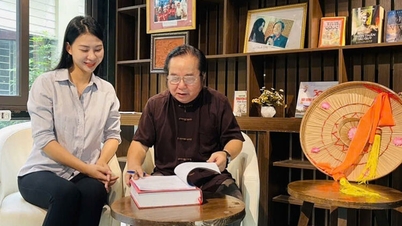
According to Meritorious Artisan Bui Thanh Binh, the Muong ethnic cuisine in Hoa Binh is rich and diverse, with many delicious, attractive, and distinctive dishes. These dishes and drinks are all made from natural products. Some characteristic dishes include: bitter bamboo shoots dipped in cham cheo sauce, chicken cooked with sour bamboo shoots and dổi seeds, wild vegetable patties, sắng vegetables, and yam... The Muong people also use many spices including: onions, garlic, ginger, and especially dổi seeds; some places also add mắc khén.
Every dish, whether simple and rustic or elaborate and luxurious, contains stories and values about the culture, lifestyle, flavors, and customs of the people in each region.
While the midland region of Luong Son is known for its buffalo meat with lalom leaves, the limestone mountainous areas of Kim Boi and Lac Thuy boast free-range chicken; Muong Vang rice wine (Lac Son); and the Da River reservoir has long been famous for its many delicious fish varieties such as catfish, carp, sturgeon, eel, and mudfish…
The high mountainous region of Mai Châu boasts specialties such as the Mường people's "piglet carried under the arm," a diverse array of wild leafy vegetables, and the traditional sticky rice cooked in bamboo tubes by the Mường people. This dish uses fragrant, sticky upland rice placed in bamboo tubes and cooked over hot coals.
However, what truly makes Muong cuisine special are rice wine, bamboo-cooked rice, grilled stream fish, free-range chicken, and a feast served on leaves.
When discussing the uniqueness of Muong cuisine, sticky rice cooked in bamboo tubes (com lam) is perhaps the dish that most tourists find appealing. In the past, when Muong people had to go to work in the fields or forests far from home, they would carry a small amount of sticky rice with them. If they missed a meal, they would cut a fresh bamboo tube, put some rice and water inside, and then roast the tube over a fire to create rice for when they were hungry. Today, this dish has become a specialty of the Northwest mountainous region.
It's worth noting that sticky rice cooked in bamboo tubes (com lam) is found in many places, among the Tay, Thai, Nung, and Muong ethnic groups. However, com lam from Muong Dong (Kim Boi, Hoa Binh) is particularly praised for its deliciousness, thanks to the fragrant and sticky upland rice grown there. This fragrant upland sticky rice is mixed with coconut milk, placed in small bamboo or reed tubes (the "banh te" type), and then grilled over hot charcoal, creating a truly delicious dish.
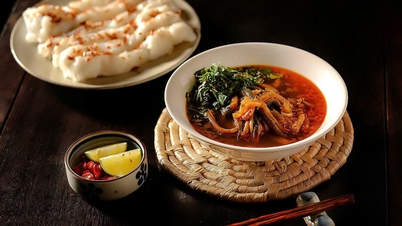
In addition, the Muong people have many delicious dishes made with leaves and vegetables. Among them, their steamed vegetable dish is very unique. This dish combines many types of vegetables such as bitter greens, spotted leaf greens, young figs, plantain leaves, and male papaya flowers. All are washed, finely chopped, mixed together, and then steamed in a wooden pot until cooked. When eaten, this vegetable dish has a bitter, astringent, sweet, and slightly spicy taste.
Next, we can mention the dish called "chả cuốn lá bưởi" (pork rolls wrapped in pomelo leaves). The main ingredients for this dish include pork, pomelo leaves, along with other ingredients such as pork fat, onions, garlic, sesame seeds, nutmeg seeds, perilla leaves, and betel leaves, and of course, charcoal.
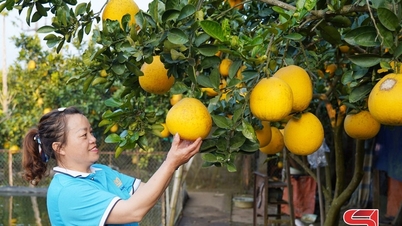
For the pork, choose pork belly with a good mix of lean and fatty meat. As for the pomelo leaves, select young, tender leaves with a glossy green surface and a pliable texture. However, be sure to choose leaves from native, wild, or sour pomelo varieties, as these leaves are more fragrant, pungent, and flavorful than hybrid varieties.
According to experience, leaves that are too young will be bitter, while leaves that are too old will easily tear when wrapping the meat. The Muong people believe that pomelo leaves are best used to prepare this dish in the spring. At that time, the pomelo tree will bloom, bear young shoots, and the leaves will be green and fragrant, carrying the scent of sunshine, wind, and rain…
The preparation of pork rolls wrapped in pomelo leaves is not too complicated. After picking, the pomelo leaves are washed and drained. Thinly sliced or finely minced pork belly is mixed with onions, star anise, sesame seeds, and various herbs, seasoned with a little good quality fish sauce and MSG, and left to marinate for about 15 minutes to allow the meat to absorb the flavors.
The meat filling is placed in the center of a pomelo leaf, then rolled horizontally. Once the entire surface of the leaf is rolled, a toothpick is used to skewer the meatball horizontally to secure it in place and make it firm.
After wrapping the meat rolls, the cook places them on a bamboo rack or stick and grills them over hot coals. During grilling, they must be turned frequently to prevent the pomelo leaves from burning. When the pomelo leaves turn gray, the meat rolls are cooked and ready to be enjoyed.
To make delicious and visually appealing pomelo leaf-wrapped pork patties, the griller must be meticulous, knowing how to adjust the charcoal temperature appropriately and maintain the correct distance between the patties and the charcoal. This ensures the patties cook evenly while the pomelo leaves don't burn, retaining their beautiful greenish-purple color and delicious taste.
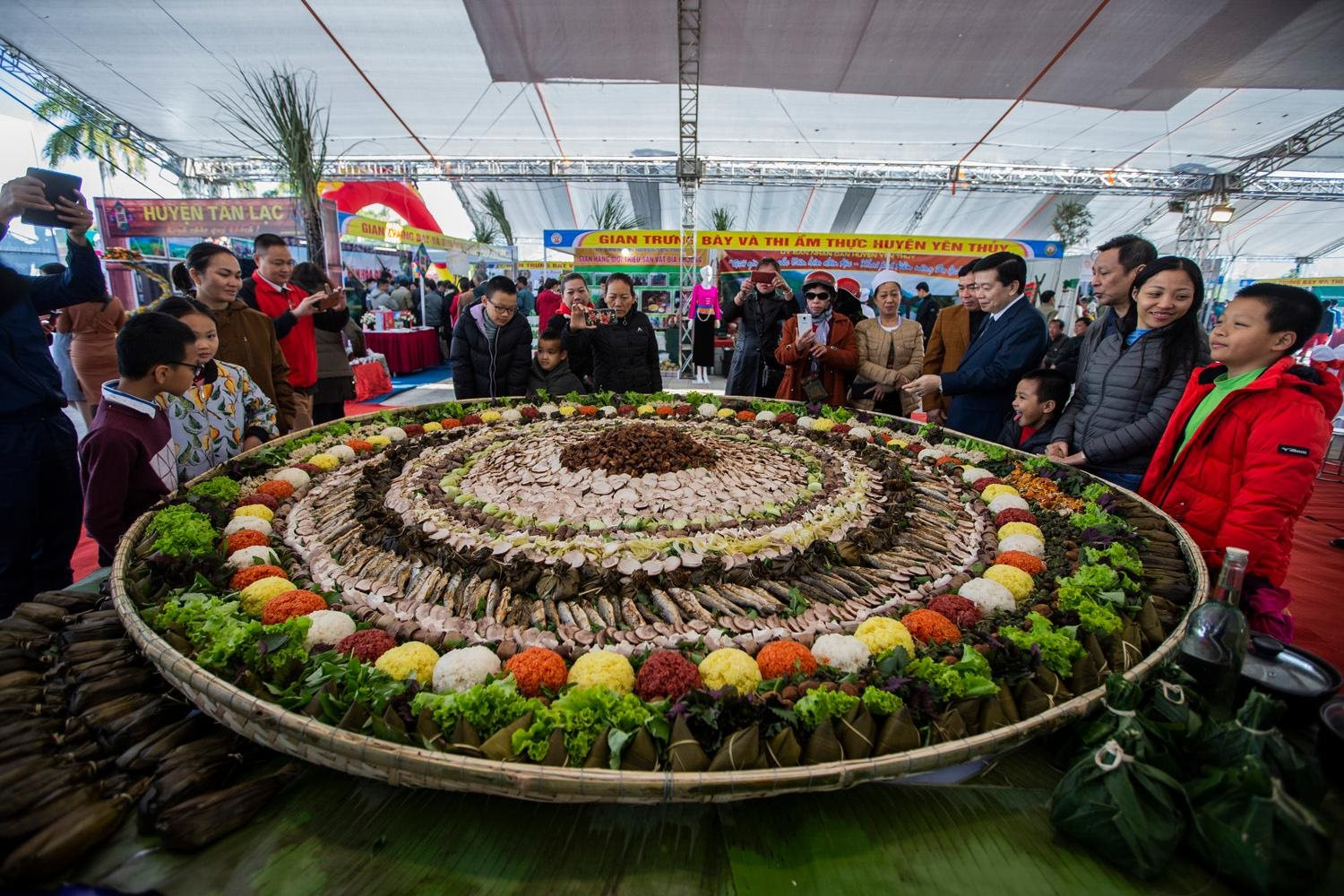
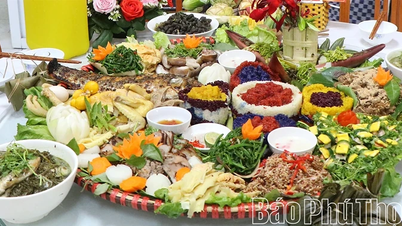
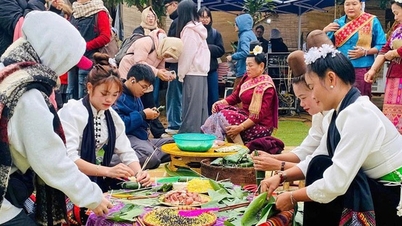
In particular, the Muong people's leaf-wrapped feast is often considered a very attractive meal to welcome guests from afar. The leaf-wrapped feast is round, symbolizing completeness, and is elaborately arranged. The ingredients for a leaf-wrapped feast include many different types of food, which can be pork, chicken, buffalo, beef, etc.
However, Muong pork is indispensable. Pork is prepared in many different ways, such as boiled, grilled, steamed, and in salads; it must include all the "offal," especially the pig's intestines. The Muong people arrange a feast on a platter already lined with banana leaves. These can be wild banana leaves or young, local banana leaves that have been softened and fragrant over a fire.
In the traditional Vietnamese feast served on leaves, the food is also arranged in a circular shape and in order of different cooking methods. Boiled pork intestines, heart, and liver are placed first, followed by boiled and steamed meat, and finally, fragrant grilled meat.
The Muong people often pay great attention to the combination of spices when preparing dishes. The spices used in the Muong region are usually gathered from the forest, such as the seeds of the "xeng" plant, "doi" seeds, bitter leaves, galangal root, wild bananas, or found in their gardens, such as the leaves of the five-colored sticky rice plant and various aromatic herbs. When cooking, the ingredients are usually marinated beforehand to allow the flavors to penetrate and create a rich taste when cooked.
The dishes of the Muong people are not only delicious but also contain traditional folk remedies passed down through generations.
The Muong people believe that leafy vegetables such as spotted lettuce, plantain, papaya flowers, pomelo leaves, banana stalks, and various spices help to improve health, regulate blood circulation, aid digestion, and relieve colds.
The Muong people live in many places, such as Phu Tho, Yen Bai, Lai Chau, Son La... Even in Hanoi , there are many Muong villages in Thach That and Ba Vi districts… But perhaps Hoa Binh province is the area with the largest Muong population. The long-standing life of the Muong people in Hoa Binh has created the cradle of Muong culture. The Muong Bi, Muong Vang, Muong Thang, Muong Dong… villages have been frequently mentioned in Vietnamese culture.
Source: https://daidoanket.vn/doc-dao-am-thuc-xu-muong-10280796.html




































































Comment (0)