

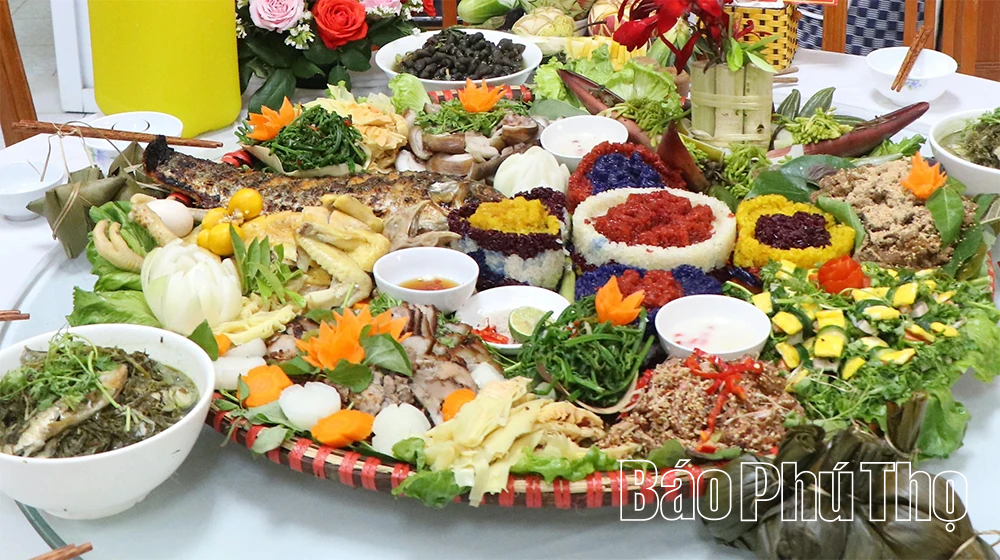
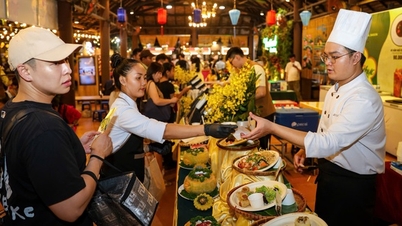
The Tet feast features many dishes characteristic of the Muong people.
The Tet feast is primarily offered to ancestors. After the ceremony, descendants gather around the feast, enjoying the meal together and wishing each other good fortune in the new year. The atmosphere of Tet is therefore always deeply communal, close-knit, and harmonious. In many Muong villages, after the ancestral worship ceremony in each family, people also hold a communal Tet feast, sharing rice wine, singing folk songs, and playing gongs and drums, creating a lively and warm atmosphere.
The most recognizable feature of the Muong people's Tet feast is the food served on leaves. The leaf-covered tray is not only practical and close to nature, but also reflects the Muong people's philosophy of living in harmony with the earth and sky. Wild banana leaves, after being harvested, are trimmed to fit the size of the tray and then briefly heated over a fire to increase their flexibility and softness.
The aroma of wild banana leaves, combined with the flavors of the dishes, creates an unforgettable and rich taste for diners. Serving food on leaves has become a distinctive cultural feature, associated with important ceremonies such as Lunar New Year, the new rice harvest festival, and housewarming celebrations.
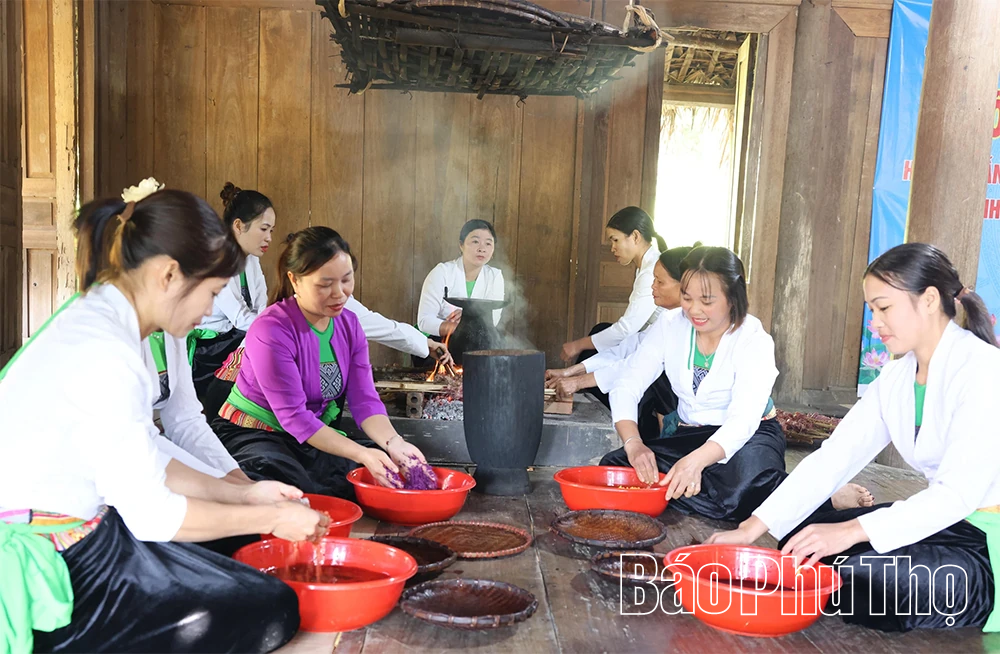
Women in Kha Cuu commune work together to prepare five-colored sticky rice.
The Tet feast isn't overly elaborate in appearance, but it's meticulously arranged. At the center is sticky rice, a symbol of abundance and closely associated with the rice- farming agricultural tradition . The rice is made from upland rice, with round, fragrant, and chewy grains, sometimes naturally colored with forest leaves to create five-colored sticky rice, representing the aspiration for harmony between earth, sky, and humanity.
Besides sticky rice, there are dishes like boiled pork, stream fish, pork rolls wrapped in pomelo leaves, steamed vegetables, and traditional soups. Each dish has its own meaning, reflecting the lifestyle, living environment, and culinary knowledge of the community.

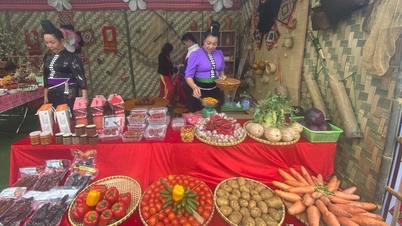
The Tet feast is beautifully presented.
Ms. Dinh Thi Thanh Ha from the Muong Kha Cuu Ethnic Culture Club shared: "The cuisine of the Muong people here is very rich. From sticky rice, five-colored bamboo-tube rice, brown root salad, sour meat, grilled stream fish, we use many kinds of roots and leaves from the forest as spices to make the dishes more attractive and create the distinctive flavors of the mountains and forests."
In the Muong New Year feast, many dishes are deeply rooted in their cultural identity, evoking the festive atmosphere of the Muong village just by mentioning them. Uoi cake is one such typical dish. Uoi cakes are usually made from finely ground glutinous rice, with a filling of mung beans and roasted sesame seeds. These cakes showcase the skill of Muong women. Another indispensable dish is pork sausage wrapped in pomelo leaves.
Minced or ground pork is mixed with spices, wrapped in pomelo leaves, and steamed until cooked. The delicate aroma of the pomelo leaves blends with the richness of the meat, creating a unique characteristic that is hard to mistake for other regional cuisines. Along with this is rice wine – a drink closely associated with festivals and celebrations. Rice wine is not only for drinking but also a means of communication, connection, and expressing the community spirit and solidarity of the Muong people.
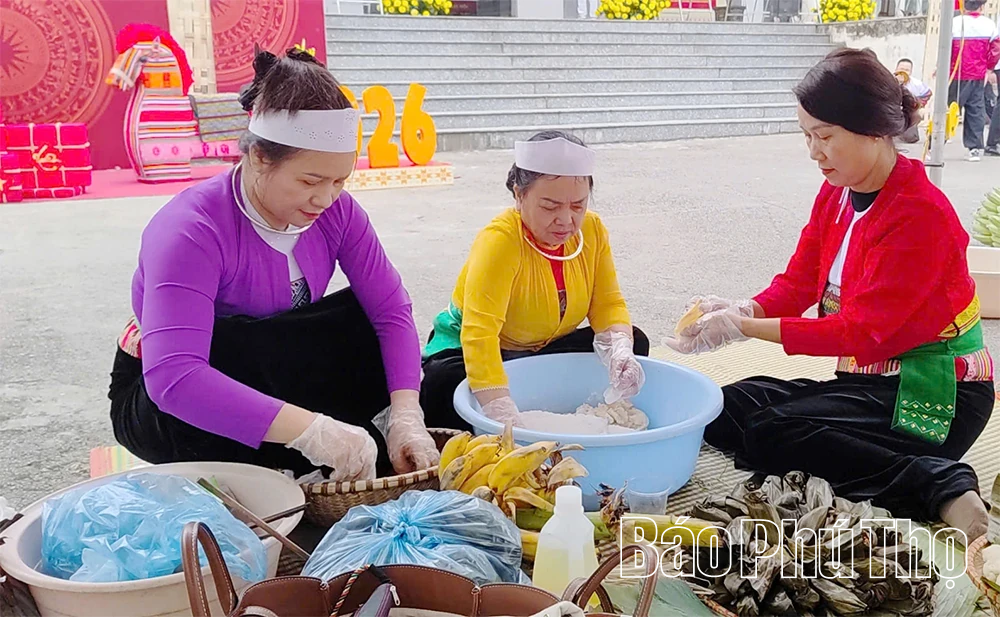
Artisans in Thong Nhat ward are making uoi cakes in preparation for the Tet feast.
Five-colored sticky rice, or five-colored bamboo-cooked rice, is an indispensable dish for the Muong people during festivals, New Year celebrations, and weddings. The five colors of the sticky rice—green, red, yellow, purple, and white—symbolize the five elements: metal, wood, water, fire, and earth. These colors are created from various flowers and leaves found in nature. The colors of the sticky rice also represent the Muong people's aspirations for a harmonious life with heaven and earth, family reunion, community cohesion, and good fortune.
A signature dish that cannot be missing from the feast is steamed vegetables (rau xôi rau đồ hột) made with readily available vegetables and leaves such as banana blossoms, papaya leaves and flowers, sweet potato leaves, eggplant, purslane, and various other leafy greens. After harvesting, these vegetables and fruits are mixed, washed, and finely chopped before being steamed. They are steamed for about 20 minutes to retain their green color and a sweet taste with a slight bitterness.
Modern life and cultural exchange have led many young families to simplify rituals, and the traditional Tet feast has also undergone certain changes. To preserve ethnic identity, localities with large Muong populations have focused on cultural preservation combined with the development of community-based and experiential tourism . Some community-based tourism models have incorporated activities such as participating with locals in preparing Tet feasts, cooking, and enjoying Muong cuisine into their programs, creating livelihoods while contributing to the preservation of cultural identity.
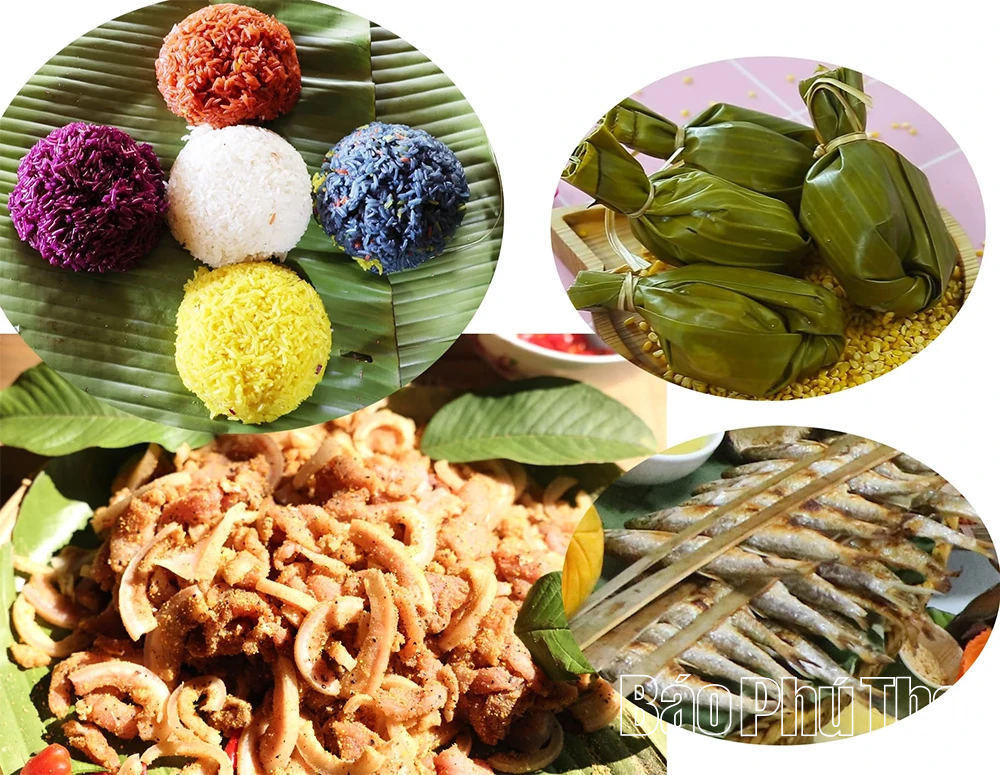
Typical dishes of the Muong people.
The New Year's feast of the Muong ethnic group is therefore not just a story of the past, but is present in today's life with flexible adaptations. Preserving the essence of the leaf-wrapped feast and traditional dishes, while selectively absorbing new elements harmoniously, is the path for Muong culture to continue spreading within the broader cultural space.
From the New Year's feast, one can clearly see the vitality of Muong culture – a vitality nurtured by communal memories, by the responsibility of each family and each village. And it is in this gathering around the New Year's feast that cultural identity is passed down and preserved, so that the Muong New Year remains an indispensable part of the spiritual life of the ancestral land today.
Phuong Thanh
Source: https://baophutho.vn/co-tet-xu-muong-247596.htm
![[Photo] General Secretary To Lam attends the ceremony commemorating the 75th anniversary of the founding of the Central Military Hospital 108.](https://vphoto.vietnam.vn/thumb/1200x675/vietnam/resource/IMAGE/2026/03/30/1774866343623_a1-bnd-5435-7415-jpg.webp)
![[Photo] General Secretary To Lam presents the Military Merit Order and Party Badge to senior leaders.](https://vphoto.vietnam.vn/thumb/1200x675/vietnam/resource/IMAGE/2026/03/30/1774878643606_a1-bnd-5651-8284-2398-1124-jpg.webp)
![[Photo] The moment of seasonal change at Thong Nhat Park](https://vphoto.vietnam.vn/thumb/1200x675/vietnam/resource/IMAGE/2026/03/30/1774870546141_ndo_br_b773e4e7b1a230fc69b313-jpg.webp)












































Comment (0)