

 |
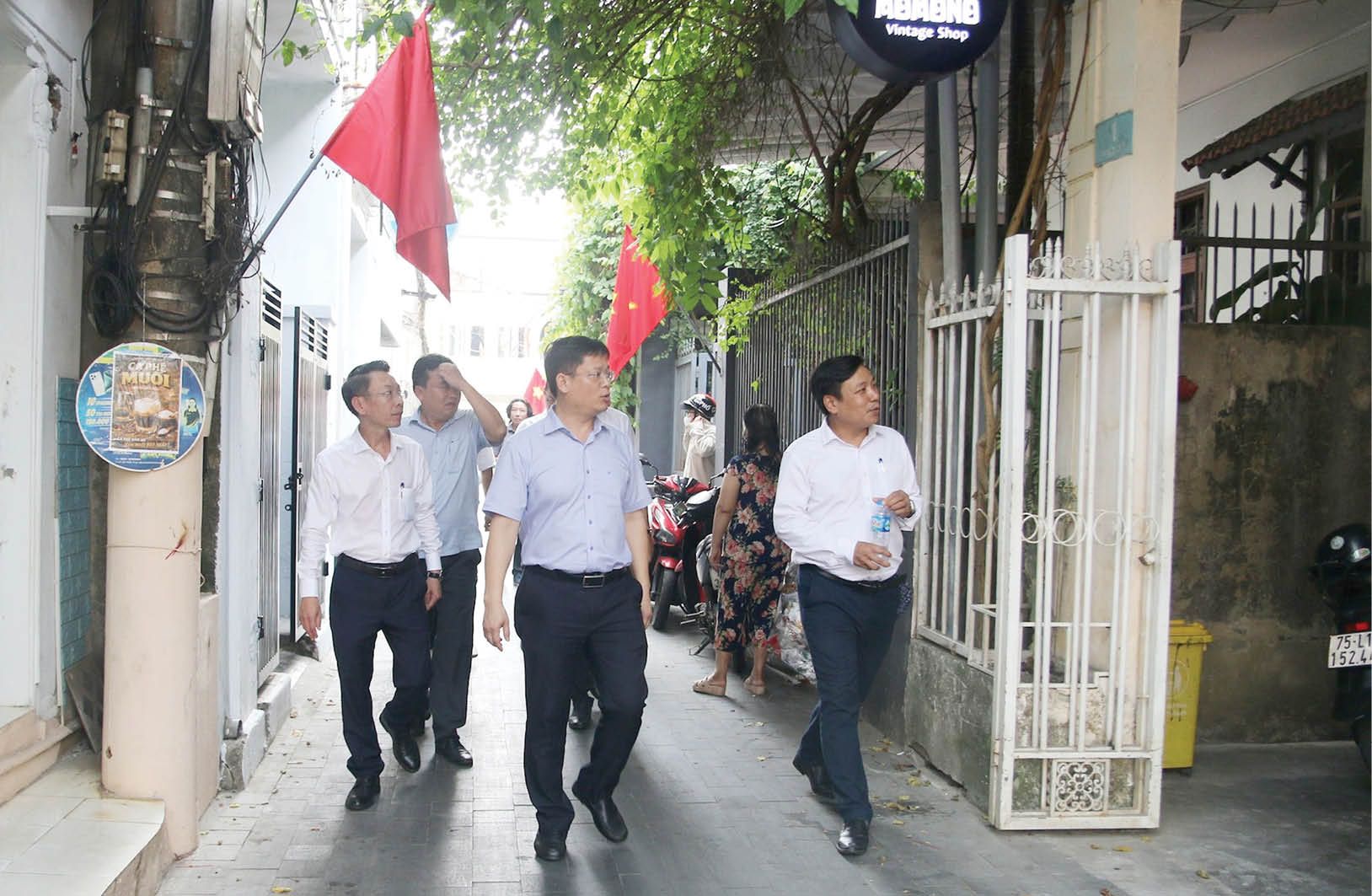
| Leaders of Thuan Hoa ward conduct a field survey of alleyways in the area. Photo: Ba Vuong. |
Synchronization method
On weekends, many roads in the central area of Thuan Hoa ward are frequently congested with vehicles due to a lack of designated parking spaces. This infrastructure pressure not only affects traffic but also impacts commercial, service, and tourism activities in the city center. This is also one of the issues that the local authorities have repeatedly noted based on feedback from residents and practical urban management.
Based on that reality, the Party Committee of Thuan Hoa Ward organized a comprehensive review and assessment of issues related to urban planning, infrastructure, and management to identify key areas requiring focused leadership and guidance. Following the review, the Party Committee worked with relevant agencies and units, clearly assigning responsibilities to each department in advising, coordinating, and implementing the plan. Instead of handling individual cases separately, the Party Committee chose a holistic approach, working directly with relevant departments and agencies to find comprehensive solutions for the development of the central urban area.
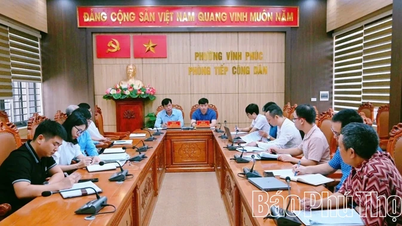
The working session between the Standing Committee of the Thuan Hoa Ward Party Committee and the Hue City Department of Construction in May further demonstrated the leadership and coordination role of the Party Committee in handling issues arising from the grassroots level. Many issues related to zoning planning, infrastructure investment, urban beautification, and mechanisms for granting autonomy to local authorities were discussed directly, addressing specific problems. Based on the unified direction reached at the working session, the Ward Party Committee assigned the Ward People's Committee to take the lead in coordinating with relevant agencies to further concretize and implement the tasks and solutions outlined.
The noteworthy aspect lies not only in the content of the recommendations but also in the work process. After the Party Committee clearly identified the practical issues, the Ward People's Committee and specialized departments proactively developed plans and coordinated with relevant departments and agencies to resolve them, minimizing the need for documents to be passed through multiple intermediate levels.
According to Nguyen Thanh Binh, Secretary of the Party Committee of Thuan Hoa Ward, the City Party Committee member, reforming working methods is not just about shortening the document processing time, but more importantly, about changing the way agencies and units coordinate. When the Party Committee directly provides guidance, the government proactively implements, and relevant units participate in processing, the work progresses faster and efficiency increases.
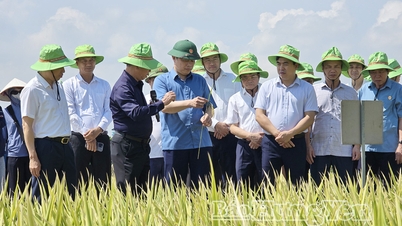
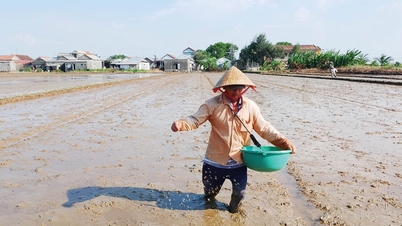
In Hoa Chau ward, driven by the need to restructure agriculture towards a green and sustainable direction, the ward's Party Committee issued a resolution on developing organic agriculture and a circular economy along the value chain for the period 2026-2030. Following the Party Committee's directive, the local government quickly concretized this into specific tasks and practical implementation models.
Local authorities are focusing on reorganizing production, forming concentrated production areas, developing organic farming models, and increasing linkages between farmers and cooperatives and businesses. Many households are gradually changing their farming practices, moving towards safer and more sustainable production models. From these initial pilot models, many effective practices are gradually being replicated at the grassroots level.
A highlight of Hoa Chau is the synchronized participation of the entire political system. The Party Committee provides direction; the government organizes implementation; and the Fatherland Front and other mass organizations intensify propaganda and mobilization efforts to encourage people's participation. As a result, many new policies receive high levels of consensus from the grassroots.
When each step moves together
Experience from local areas shows that reforming working methods is only truly effective when there is close coordination between leadership, management, and supervision stages throughout the entire political system.
In recent times, the City Party Committee and its Standing Committee have focused on reforming leadership methods towards closer engagement with the grassroots, clearly defining responsibilities and tasks. Meetings with local authorities have gone beyond simply listening to reports; they have focused on directly addressing practical difficulties and obstacles. Simultaneously, the implementation of a two-tiered local government system, organizational restructuring, and the acceleration of digital transformation are placing new demands on the operational capacity at the grassroots level. The requirement is for work to be handled more quickly, proactively, and with clearer accountability assigned to each official and unit.
In the process of reforming working methods, many localities are also shifting strongly from an "administrative management" mindset to a "service-oriented" approach. Instead of waiting for feedback, many establishments proactively review emerging issues to address them promptly; strengthen dialogue with the people; and maintain interconnected meetings between Party committees, government agencies, and specialized units.
During recent meetings with the standing committees of commune and ward Party committees, Nguyen Dinh Trung, Member of the Central Committee of the Party, Secretary of the City Party Committee, and Head of the City's National Assembly Delegation, particularly emphasized that reforming leadership methods and improving the effectiveness of coordination between Party committees, government, and the Fatherland Front is an urgent requirement.
In reality, wherever Party committees are decisive in leadership, the government is proactive in administration, and the supervisory system is effective, many emerging issues are handled more quickly, reducing the tendency to shirk responsibility or delaying action due to lack of coordination. When each link in the political system moves together towards a common goal, many issues at the grassroots level are addressed more quickly and in a way that is closer to the people. The cohesion in leadership, administration, and supervision not only enhances the effectiveness of task implementation but also creates a foundation for building a people-friendly, flexible, and responsive system to the demands of development in the new era.
Source: https://huengaynay.vn/chinh-polit-xa-hoi/doi-moi-phuong-thuc-lam-viec-tu-thuc-tien-co-so-166173.html
![[Image] Pleasant weather helps students enter the 10th grade entrance exam with confidence.](https://vphoto.vietnam.vn/thumb/1200x675/vietnam/resource/IMAGE/2026/05/29/1780034401612_ngay-1-thi-lop-10-minh-duy-8-5009-jpg.webp)


![[Photo] Ba Lang An Lighthouse - the "eye of the sea" amidst the "rock museum" of Quang Ngai province.](https://vphoto.vietnam.vn/thumb/1200x675/vietnam/resource/IMAGE/2026/05/29/1780038698840_anh-man-hinh-2026-05-29-luc-14-10-42.png)














































































Comment (0)