


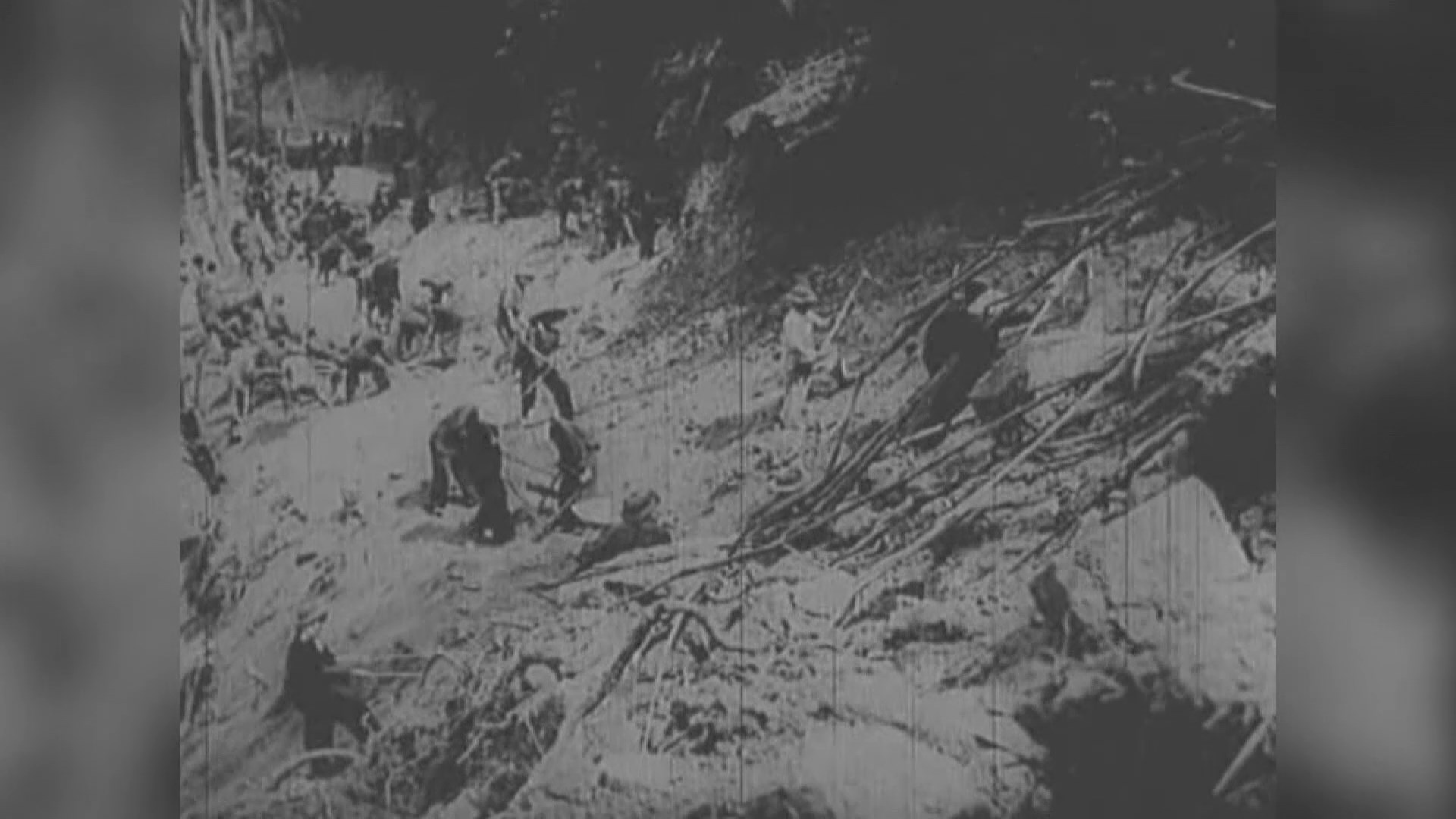
The army that made glorious history.
On February 15, 1961, the Liberation Army of South Vietnam was established on the basis of unifying the People's Armed Forces in the South; this was a component of the Vietnam People's Army directly operating on the Southern battlefield. The Liberation Army coordinated with other forces and, together with the people, defeated the "Special War," "Local War," and "Vietnamization of the War" strategies of the US imperialists. In particular, with the victory in the Hanoi -Hai Phong Air Defense Campaign at the end of 1972, our army and people, with the Air Defense and Air Force as the core, defeated the large-scale strategic air attack codenamed "Linebacker II," shooting down 81 aircraft, including 34 B-52s and 5 F-111s. This victory decisively contributed to forcing the US imperialists to sign the Paris Agreement on ending the war and restoring peace in Vietnam (January 27, 1973).
With the assistance of the US imperialists, the Saigon puppet regime brazenly violated the Paris Agreement, relentlessly implementing its "territorial inundation" plan and aggressively encroaching on our liberated areas. To end the war quickly, at the suggestion of the Central Military Commission and the Ministry of National Defense , from late 1973 to early 1975, the Politburo approved the establishment of the following corps: Corps 1 (October 1973), Corps 2 (May 1974), Corps 4 (July 1974), Corps 3 (March 1975), and Group 232 (equivalent to a corps, February 1975). To prepare for the front lines, the Truong Son Army mobilized more than 7,000 vehicles, deploying three main army corps, with hundreds of thousands of troops and weapons and military equipment, over thousands of kilometers at lightning speed and with absolute safety, in preparation for the historic Ho Chi Minh Campaign.
Following the Politburo 's directive, in March 1975, our troops launched the Central Highlands Campaign, the Tri Thien-Hue Campaign, and the Da Nang Campaign, achieving victories. Based on these victories, the Politburo decided to liberate Saigon and the entire South. The campaign to liberate Saigon was named the Ho Chi Minh Campaign. Implementing the guiding principle: "Speed, boldness, surprise, and certain victory," on April 26, 1975, our forces formed a siege of Saigon from five directions, led by the 1st, 2nd, 3rd, and 4th Corps, the 232nd Regiment, and the 8th Division (Military Region 8). After many fierce battles to capture the outer perimeter and achieve victories, on the morning of April 30, 1975, our troops launched a general offensive into the inner city of Saigon.
At 11:30 AM on April 30, 1975, the flag of the Liberation Army was planted on the roof of the Independence Palace, marking the complete victory of the Ho Chi Minh Campaign. This was the largest-scale, most successful combined-army operation, marking a significant leap forward in the maturity of our Army in terms of both organizational structure and the level of command and control of combined-army operations; it was the pinnacle of Vietnamese military art.
Thu Huong
Source: https://danangtv.vn/view.aspx?ID=157313
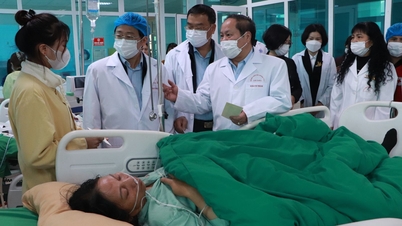
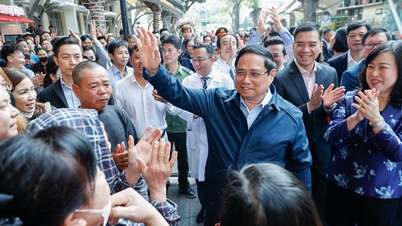
![[Photo] Prime Minister Pham Minh Chinh visits and encourages doctors, nurses and patients.](https://vphoto.vietnam.vn/thumb/1200x675/vietnam/resource/IMAGE/2026/02/16/1771235096645_ndo_br_dsc-3514-jpg.webp)



































Comment (0)